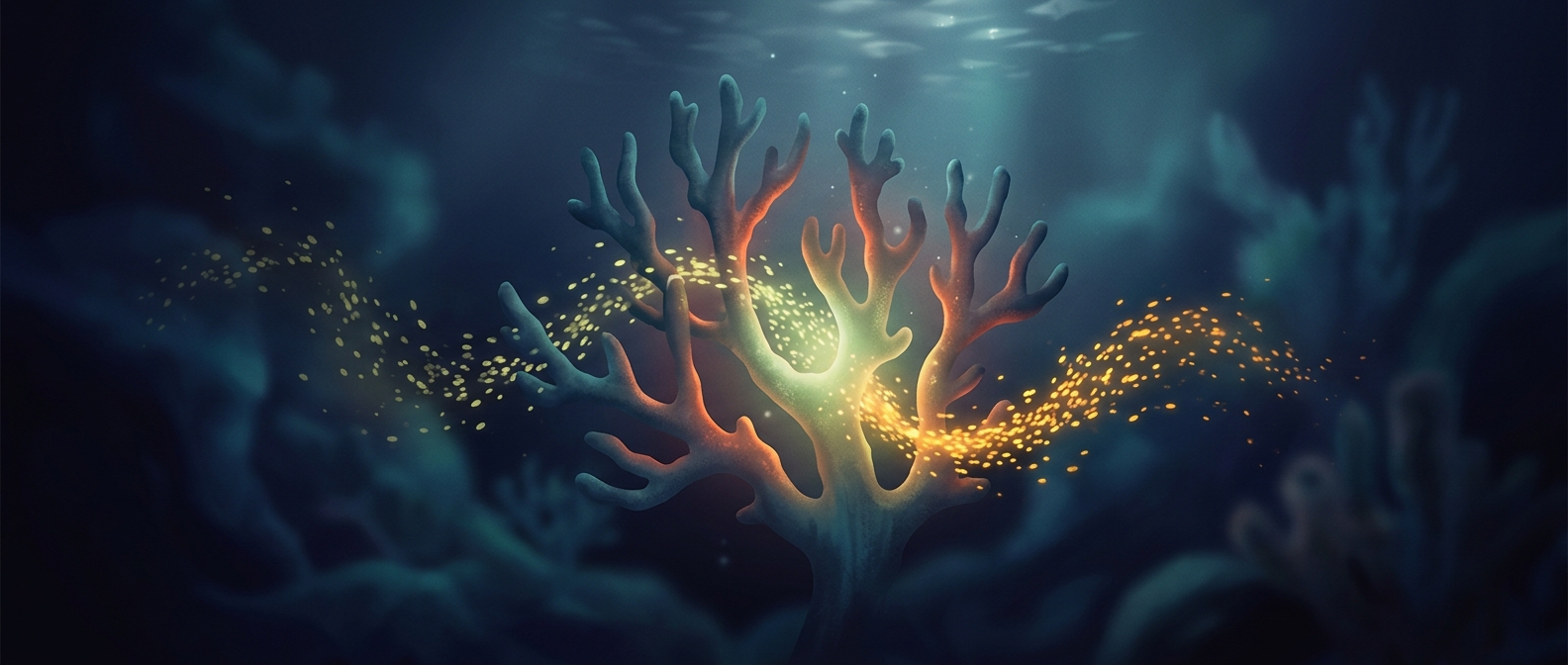
How a coral’s algae partner helps feed it
Many reef-building corals house microscopic algae inside their tissues. The algae use sunlight to make energy-rich sugars, some of which they share with the coral. In return, the coral provides shelter and access to nutrients. This partnership supplies much of the energy a coral needs to grow and build its skeleton.
Heat can disrupt the exchange
When seawater stays unusually warm, the algae’s photosynthetic machinery can become stressed. The partnership then delivers less usable energy and may produce harmful by-products. A coral under severe stress can expel many of its algae; its pale tissue reveals the white skeleton beneath, a condition called bleaching. Bleaching is not automatically fatal, but a coral left without enough energy for too long can weaken and die.
Some Red Sea corals appear able to alter which algae live in their tissues. If a more heat-tolerant partner becomes more common, it may continue functioning under warmer conditions and help sustain the flow of food. Scientists call this kind of change a shift in symbionts: the coral’s resident microscopic partners.
A helpful adjustment, not immunity
Changing partners does not make a coral invulnerable. The replacement algae must be available and able to establish itself, and heat can still overwhelm the coral or disrupt the new partnership. A more tolerant algae partner may also provide energy differently, so survival through heat does not necessarily mean normal growth or reproduction.
The important consequence is that a coral’s prospects may depend partly on which microscopic algae share its tissue. In warm Red Sea waters, that relationship can change—and a change of partner may buy a coral time, but it cannot guarantee that the reef survives rising heat.