Why a fallen tree can stay afloat
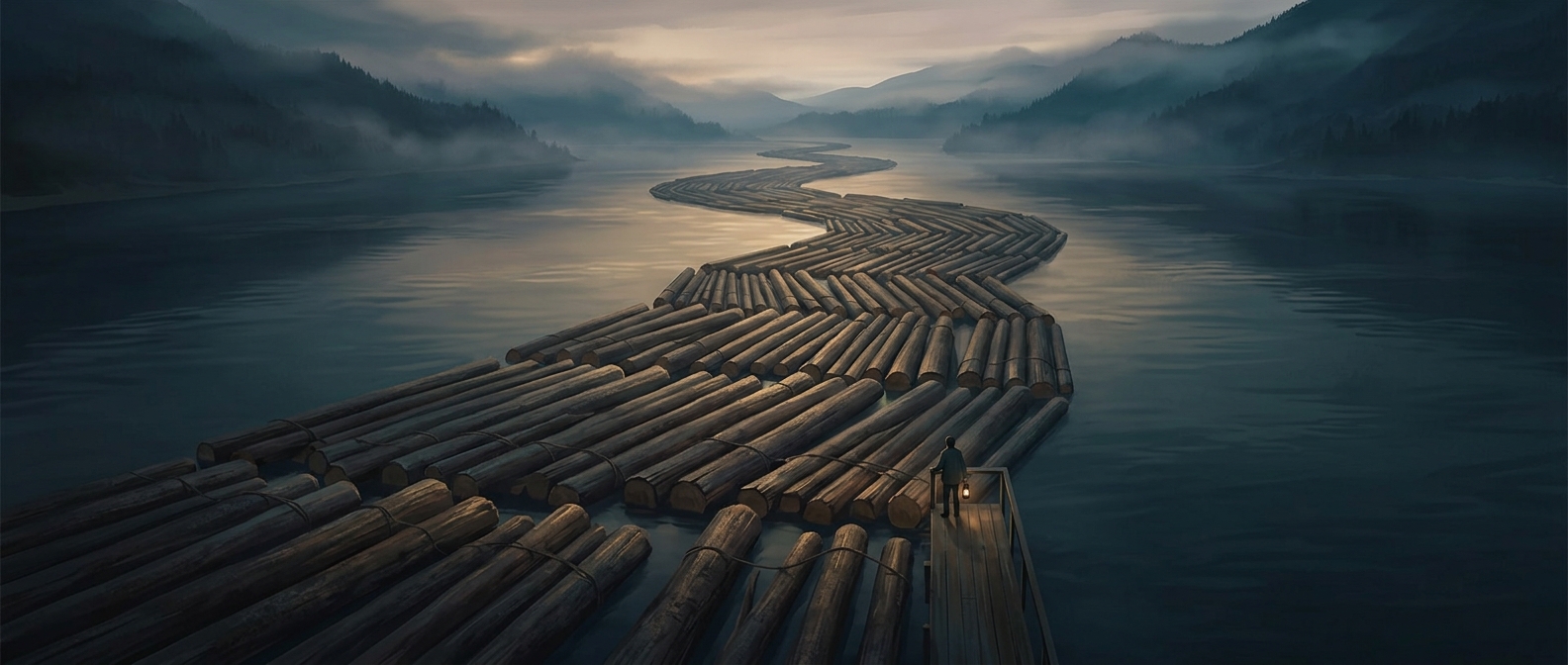
Wood is a porous material: its cells and tiny spaces can hold air. When a trunk falls into water, that trapped air helps make the whole piece less dense than the water it displaces, so it floats. A log’s shape matters, too. A broad trunk can displace enough water to support its weight even as it becomes waterlogged.
Floating does not mean staying dry. Water gradually enters the wood, and waves can strip away bark and branches. How long a trunk remains buoyant depends on its size, species, condition, and the conditions it encounters along the way.
The ocean supplies the route
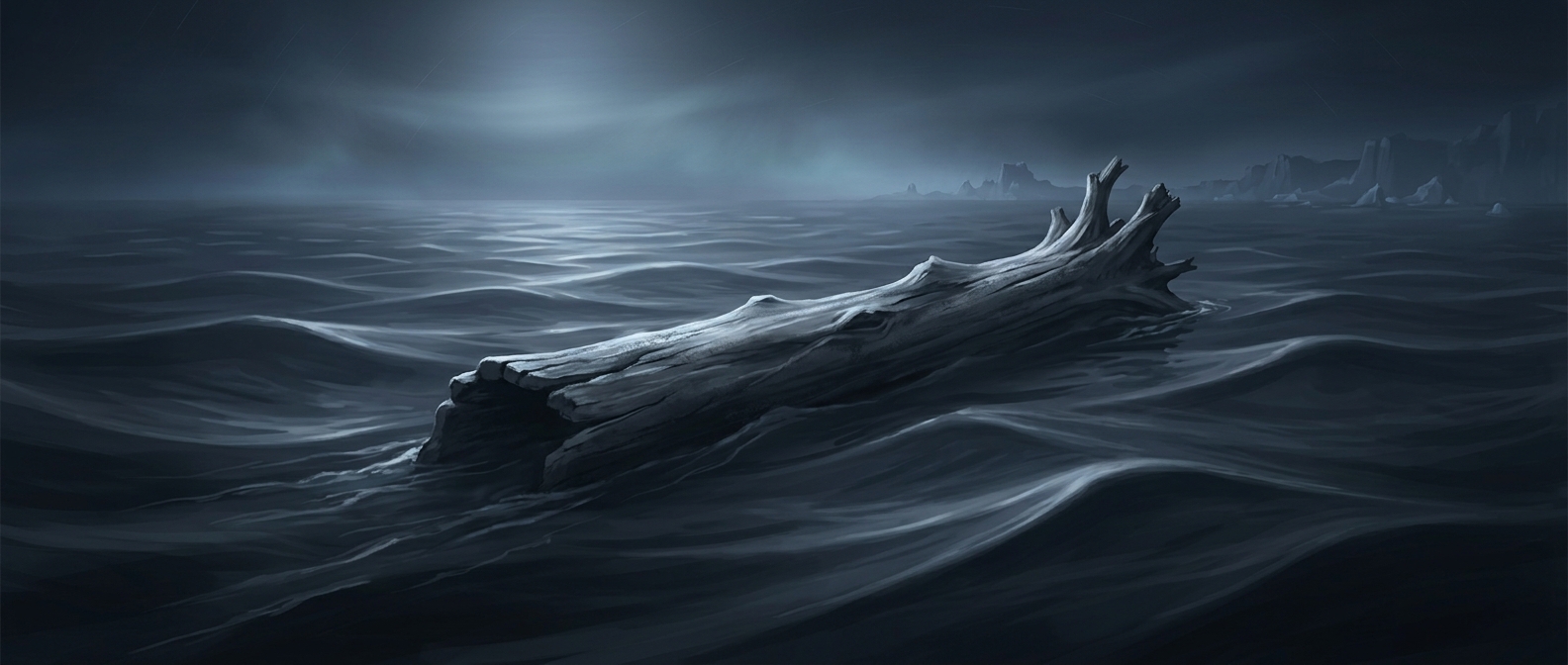
Once offshore, a log is carried mainly by moving surface water. Winds push water directly, while large, persistent currents can steer floating material across ocean basins. The route is not a straight line: currents curve, split, and change with winds and seasons, and storms can send a log toward a coast or back out to sea.
That makes a long drift less like a scheduled voyage than a slow, variable ride through a moving network. A trunk may travel far before currents strand it, or it may sink or break apart first. The ocean can carry some trees thousands of miles, but no single current guarantees that distance.
A drifting trunk carries more than wood
As it moves, a log can shelter small organisms and transport them beyond their usual range. When it finally washes ashore, it may also provide food and habitat as it decays. So the same buoyancy that keeps a tree afloat can turn a fallen trunk into a temporary raft—and, eventually, a new piece of coastal habitat.