How a Board Turns a Wave Into Forward Motion
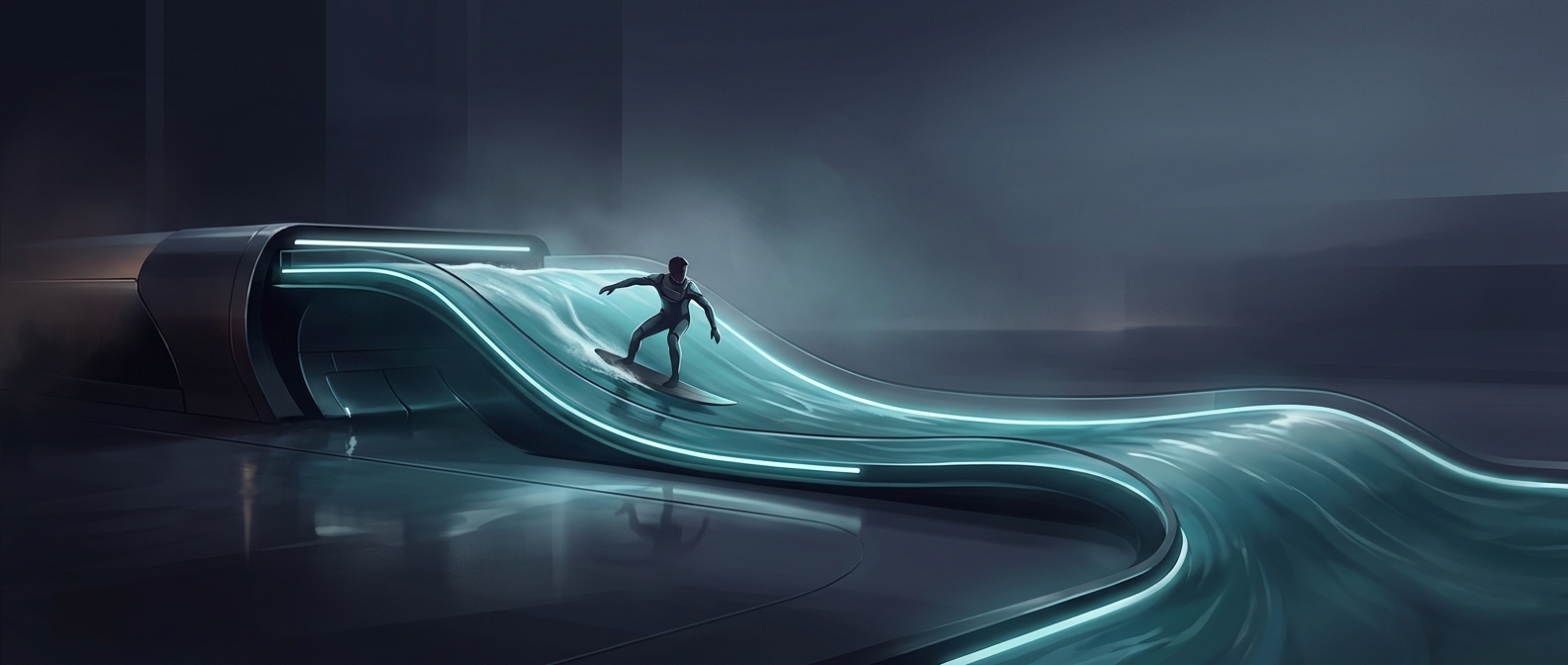
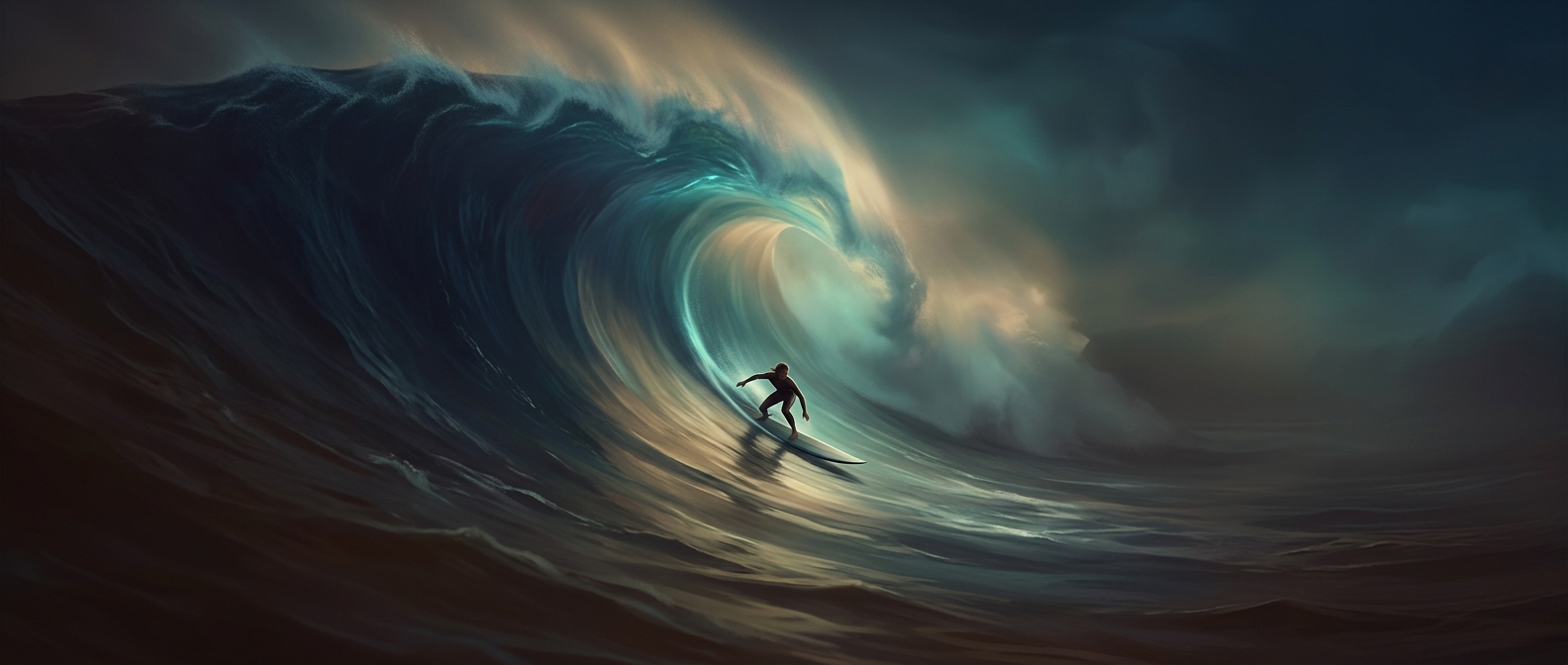
A breaking wave is not simply a wall of water carrying a surfer toward shore. Much of the water moves in circular paths as the wave passes, while the wave itself carries energy forward. Near shore, the wave steepens and its face becomes a sloping surface that a board can descend.
At first, the board displaces water like a float. As it gains speed down the face, water flowing beneath its underside creates upward pressure. The board rises and begins to plane—skimming across the surface rather than pushing through it like a slow-moving boat. That shift cuts drag and lets the wave’s energy carry the surfer along.
Steering Without a Rudder
A surfer steers by changing how the board meets the water. Leaning and pressing on an edge, or rail, makes one side bite more deeply and guides the board into a turn. The fins provide resistance against sideways slipping, giving the board something to pivot around. They help control direction, but they do not steer on their own: the rider’s balance and pressure determine how the board responds.
The board’s shape sets the tradeoffs. A longer, wider board tends to offer more flotation and stability, while a narrower or more curved shape can respond differently to turns and speed. The right shape depends on the wave and the kind of ride the surfer wants.
Reading the Moving Surface
Because the ocean supplies the push, the surfer’s job is partly timing: catch the wave as it begins to lift the board, then use the changing slope to accelerate or turn. Too far ahead of the steepening face, the board may not gain enough speed; too far behind it, the wave can break over the rider.
That is why surfing is not just sliding downhill. It is a repeated adjustment between a changing wave, a board that planes only when moving fast enough, and a rider shifting pressure to keep the ride under control.