A Wave That Stays Put
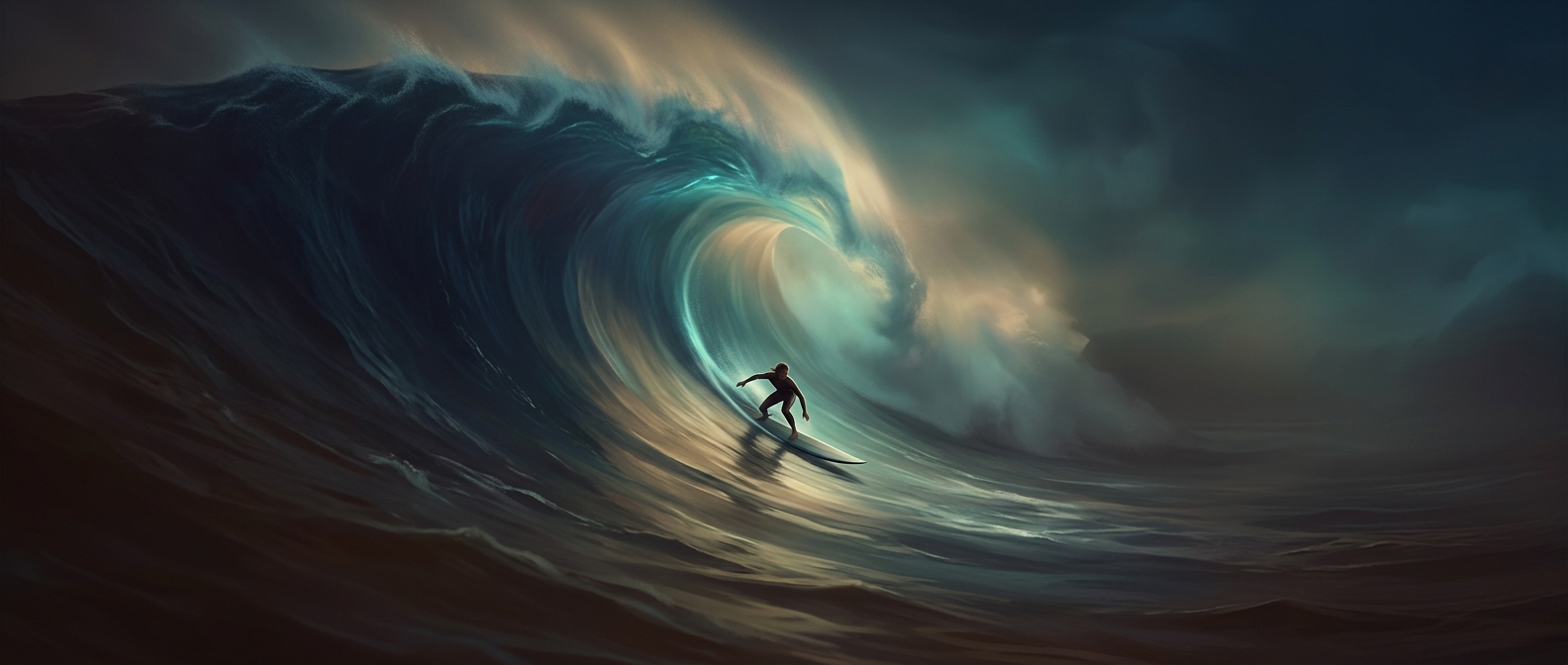
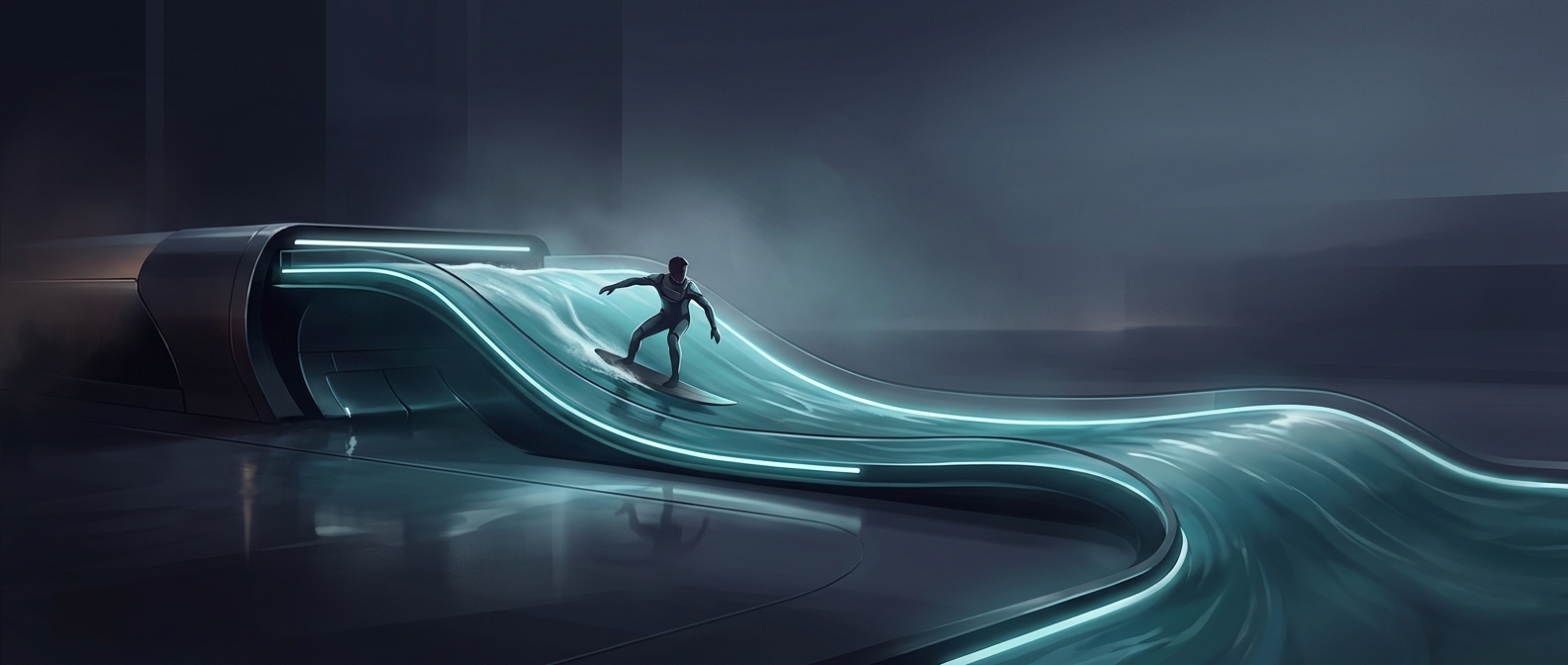
In the ocean, a wave travels toward shore while the water itself mostly moves in a circular motion. On a sheet-wave ride, the key motion is different: a pump drives a thin layer of water down a fixed, carefully shaped surface. The water keeps moving, but the wave’s usable shape remains in one place.
As the flow meets changes in the ramp’s contour, it rises into a standing wave—a stable feature formed by moving water, rather than a swell traveling across the surface. The board planes on top of that flow, much as it does on a real wave. By shifting weight and edging the board, a rider can turn across the face while staying within the ride’s fixed area.
The Shape Does the Work
The ramp is not just a slide. Its angle and contours help determine where the water lifts and how steep the rideable face becomes. Pump speed supplies the moving water; the surface beneath it helps convert that flow into a wave-shaped face. Change either, and the balance between a smooth sheet and a rideable wave changes too.
That fixed geometry is the engineering tradeoff. An ocean wave changes with wind, tide, and seafloor, while an artificial wave can offer a more repeatable face—but only within the limits of its design and water flow. The pump must keep circulating water to maintain the ride, and the ramp has to shape that flow reliably.
The result is surfing without needing a wave to arrive: the water continually passes under the board, while the ramp holds the action in place.