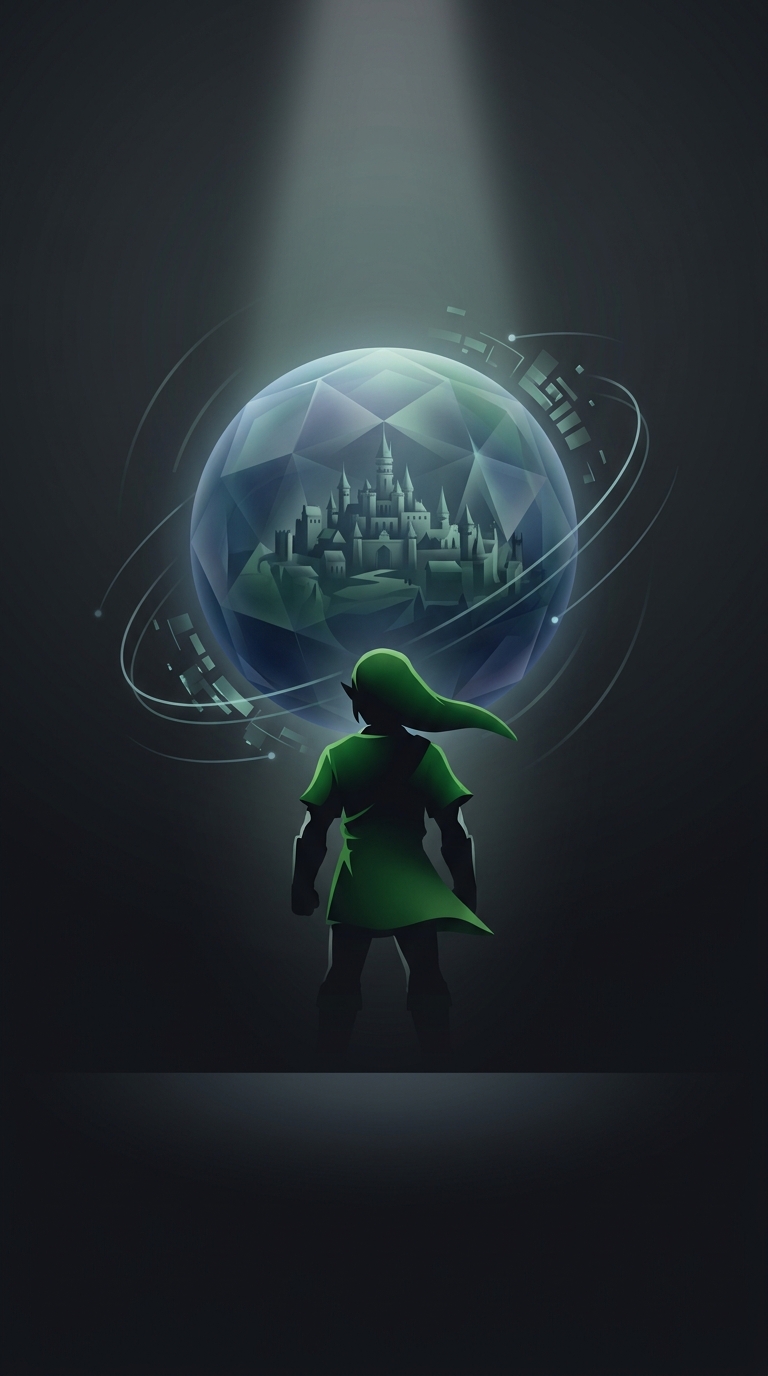
Why Ocarina of Time Needed Link in the Frame
A first-person camera puts the player’s view where the hero’s eyes would be. That can make a 3D world feel immediate, but it also removes the hero from view. For Ocarina of Time, that would have meant exploring Hyrule without seeing the character the team had worked to bring into three dimensions.
Keeping Link visible made the game’s 3D design do two jobs at once: the world could feel spacious and navigable, while the player could watch a recognizable character move through it. Link’s body also makes actions easier to read. A turn, jump, or attack is not just a change in the camera; it is something the player can see the hero do.
A Compromise in the Camera
The game did not have to choose one viewpoint for every moment. Its regular play keeps Link on screen, while certain actions—such as aiming a projectile—switch to a first-person view. That shift is practical: when the task is to line up a shot, seeing directly through the aiming view helps the player judge where it will go.
The contrast reveals the underlying design tradeoff. First person can make looking and aiming feel direct; third person keeps the avatar’s movement and presence visible. Ocarina of Time uses each perspective where it serves the task, rather than letting the immersive view erase Link from the adventure.
That choice made the hero part of the 3D spectacle, not merely the camera’s unseen operator.