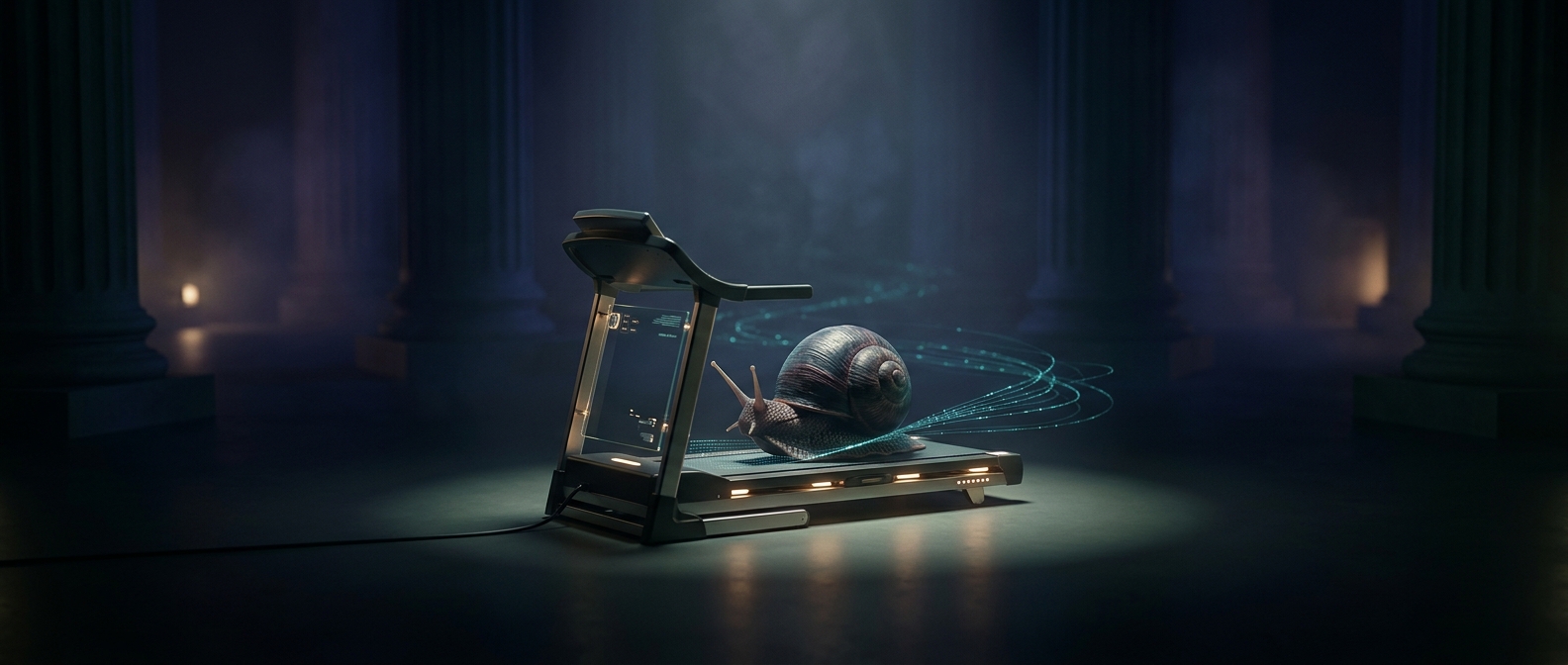
Why Put a Snail on a Treadmill?
A snail’s pace makes fatigue difficult to study by simply watching it cross a surface. The animal may pause or change direction, and a short walk offers little chance to see how sustained movement affects it. A miniature treadmill gives researchers a way to keep the snail walking while they observe what happens over time.
The key idea is to treat fatigue as something visible in performance, rather than something a snail can report. As the animal walks, researchers can track whether its movement changes as the effort continues. The treadmill makes that ongoing effort the focus of the experiment.
What the Setup Can—and Can’t—Show
A treadmill does not make a snail’s movement resemble human exercise. Snails travel using muscular contractions along the broad underside of the body, while secreting mucus that helps them glide. Their slow, distinctive way of moving is exactly why a specially scaled setup is useful: ordinary exercise equipment would be meaningless for them.
The experiment can reveal how a snail’s walking changes during continued activity. That is a narrower question than whether a snail feels tired in the human sense. But by making slow movement observable under sustained conditions, the tiny treadmill turns an easily overlooked process into something researchers can measure.