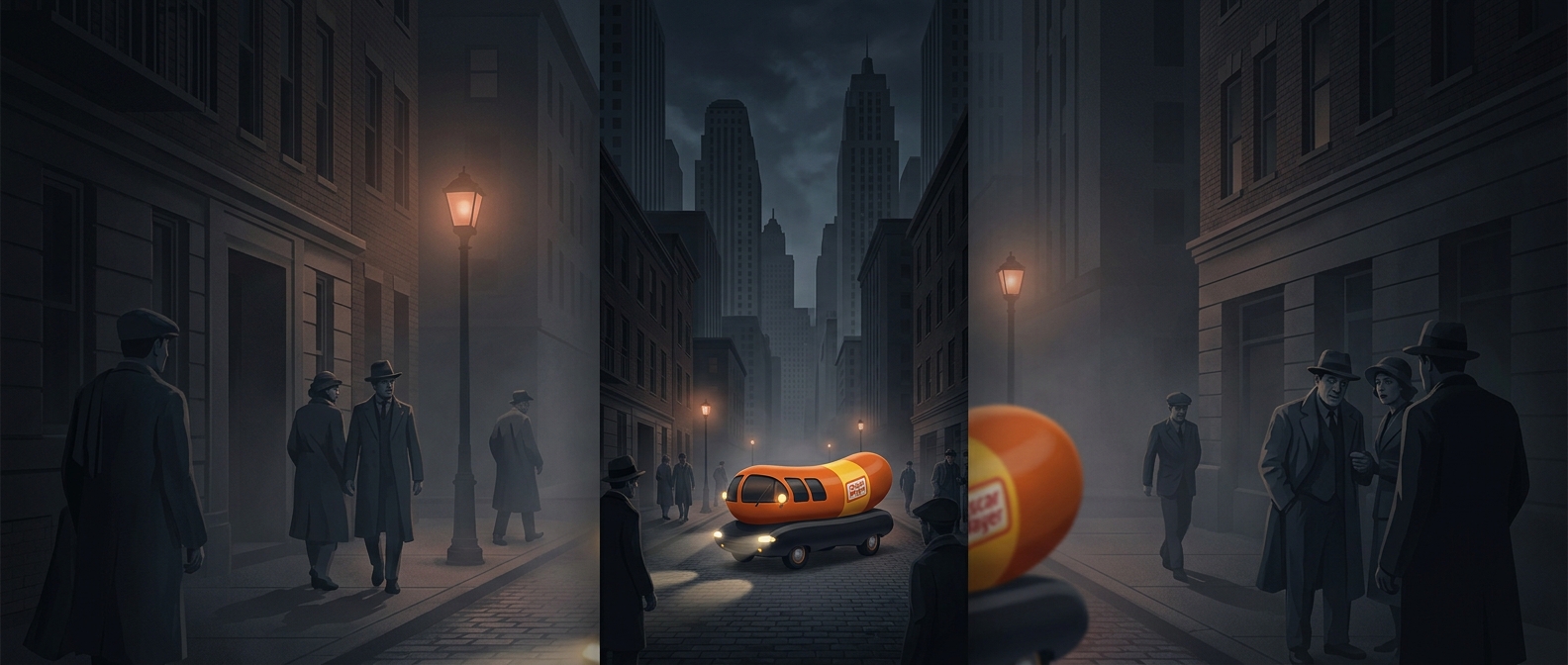
A billboard you could recognize at a glance
In the 1930s, an ordinary sign had to compete for attention with storefronts, newspapers, and other advertisements. A vehicle shaped like an enormous hot dog solved that problem by making the product itself the message. Its outline was legible from a distance, and its sheer oddness gave people a reason to look twice.
That mattered for an inexpensive food. The goal was not only to make sausages familiar, but to make buying them feel cheerful at a time when many households were watching every cent. The car turned a modest purchase into a bit of public theater: people could notice it, talk about it, and connect the spectacle with the food.
The vehicle made advertising mobile
A printed advertisement waits for someone to encounter it. A promotional vehicle can carry the image through different places, bringing the brand into view rather than relying on shoppers to seek it out. Its shape also did much of the explaining without words: the oversized hot dog pointed directly to what was being sold.
The tradeoff was practical as well as theatrical. A novelty vehicle had to function as transportation, but its greatest value was its visibility. The 13-foot design made that priority unmistakable. It was less a conventional delivery vehicle than a moving landmark—an advertisement people might remember because it looked unlike anything else on the road.
The idea joined two things that could otherwise seem mismatched: a conspicuously oversized spectacle and a low-cost meal. The vehicle made the sausage memorable without making the product itself seem extravagant.