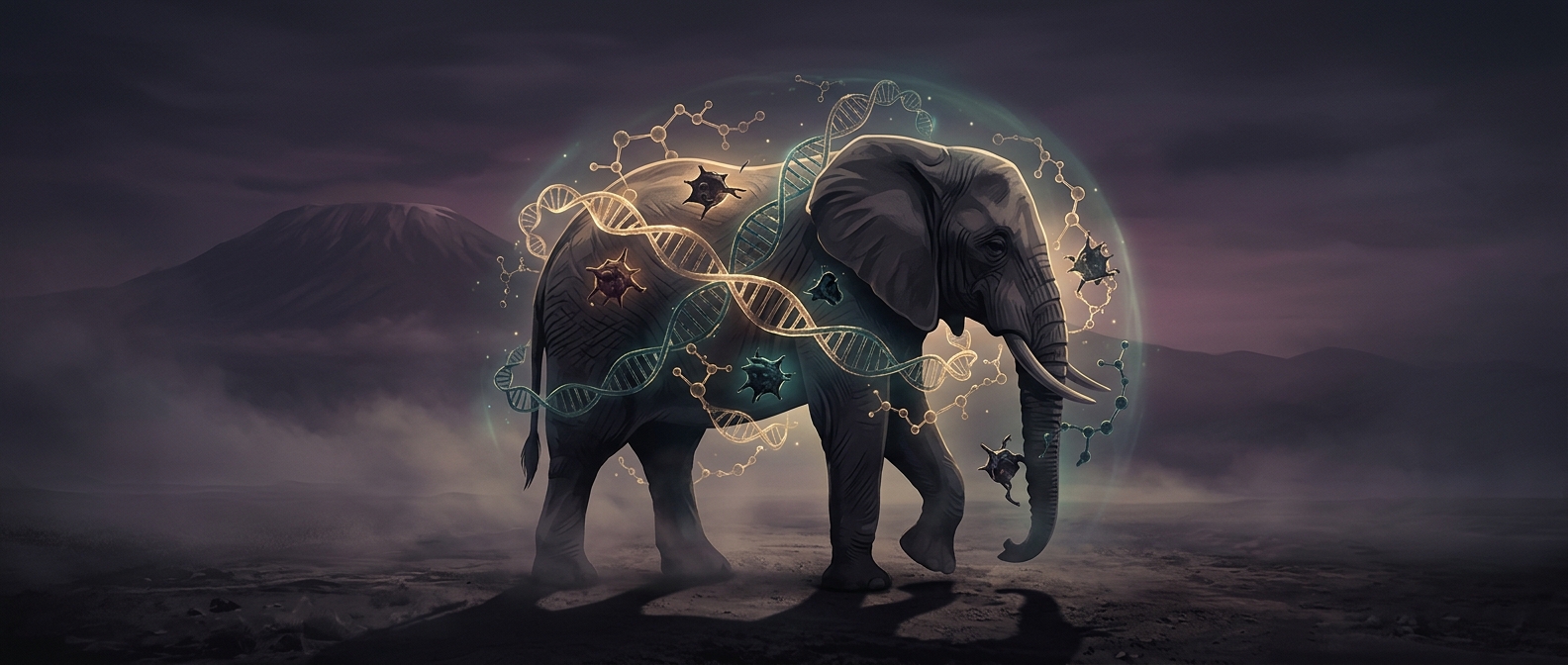
How extra TP53 copies help elephant cells stop
A tumor often begins when a cell acquires DNA damage but survives and continues dividing. The gene TP53 helps interrupt that chain. It provides instructions for making p53, a protein that acts like a damage checkpoint: when a cell is under serious stress, p53 can pause division while damage is addressed or, if the damage is too severe, prompt the cell to die through a controlled process called apoptosis.
Elephants have many copies of TP53-related sequences. More copies do not simply mean twenty independent switches, all working identically. But the extra genetic material appears to strengthen the cell’s response to damage: elephant cells are more likely than human cells to undergo apoptosis after certain kinds of DNA injury. That can remove a potentially dangerous cell before it has a chance to multiply.
A defense, not a guarantee
This cellular safeguard helps explain a long-standing puzzle: elephants have vastly more cells than people, and each cell division is another chance for a cancer-causing mutation, yet elephants do not experience cancer at rates that rise in proportion to their size. Their TP53 system is one part of that protection; cancer risk also depends on other biological defenses and on the kinds of mutations cells acquire.
The tradeoff is that destroying damaged cells means losing cells that might otherwise have recovered. In a healthy organism, that cost can be worthwhile if it prevents a damaged cell from founding a tumor. An elephant’s extra genetic backup makes the early decision—repair or self-destruct—more likely to end with a risky cell removed. It reduces danger, but it does not make elephants cancer-proof.