How a painted route can steer a train
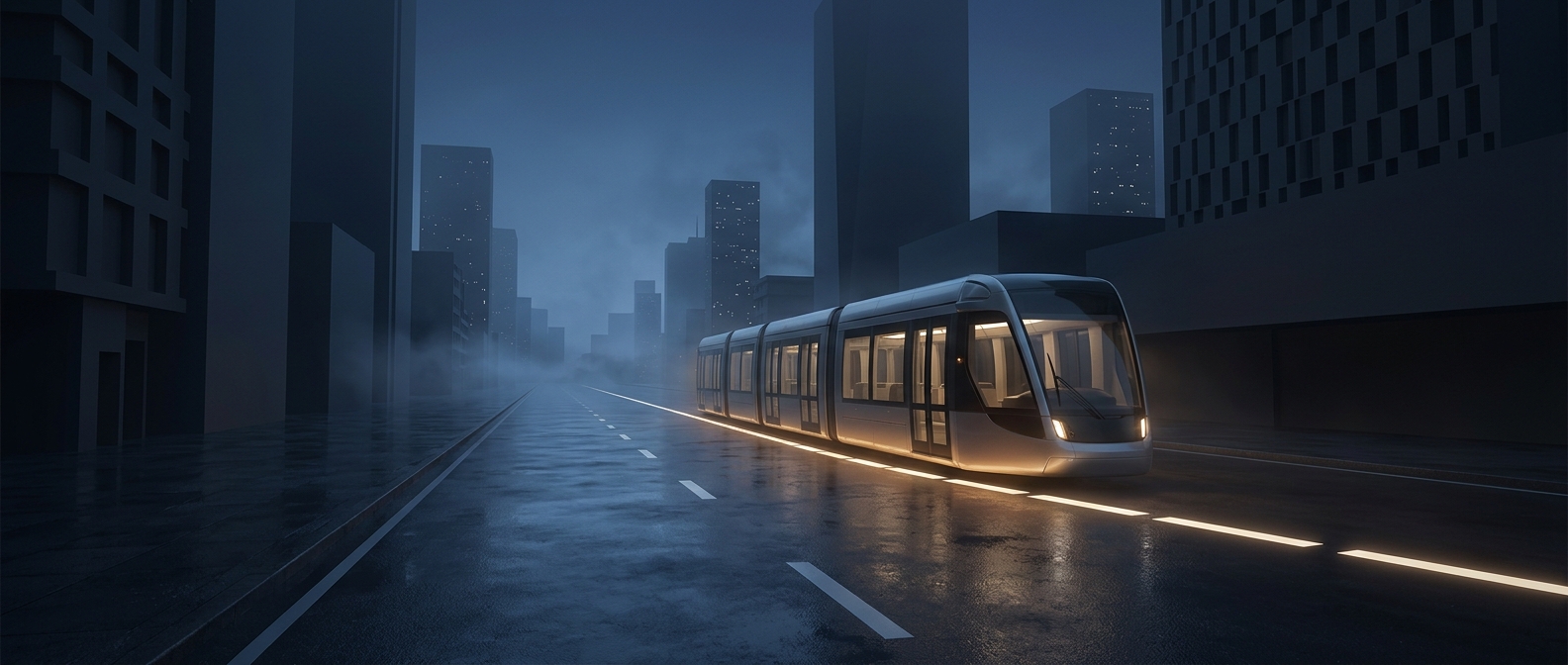
The key is that the pavement markings are not rails in disguise. They act as a guide for an onboard control system. Cameras watch the marked route, and the vehicle’s computers use what they see to work out where the vehicle sits relative to the path. If it begins to drift, the system can adjust the steering to bring it back toward the route.
Because the train runs on rubber tires, it can steer across ordinary pavement rather than being locked into the direction of steel rails. The markings define where it should go; the tires and steering system do the physical work of following them.
A different kind of fixed route
A conventional rail line depends on steel track to both support and guide a train. This design shifts much of that guidance into the vehicle: instead of wheels being constrained by rails, sensors and steering keep the vehicle aligned with a marked path. That changes what has to be built and maintained along the route. A painted guideway can avoid laying continuous steel track, though the road surface and markings still need to remain suitable for the vehicle and its guidance system.
The arrangement also makes the route less permanent than a railway. Its path is defined by markings on the pavement, rather than by embedded rails. That can make it possible to alter a route without rebuilding a steel track, but it also means the vehicle’s ability to follow the route depends on its sensors being able to read the markings.
The striking consequence is that a vehicle can behave like a train—following a planned corridor and carrying passengers—without being mechanically bound to rails. Its “track” is a visible line, and its steering system is what turns that line into a route.