Why a Trolleybus Needs Two Wires
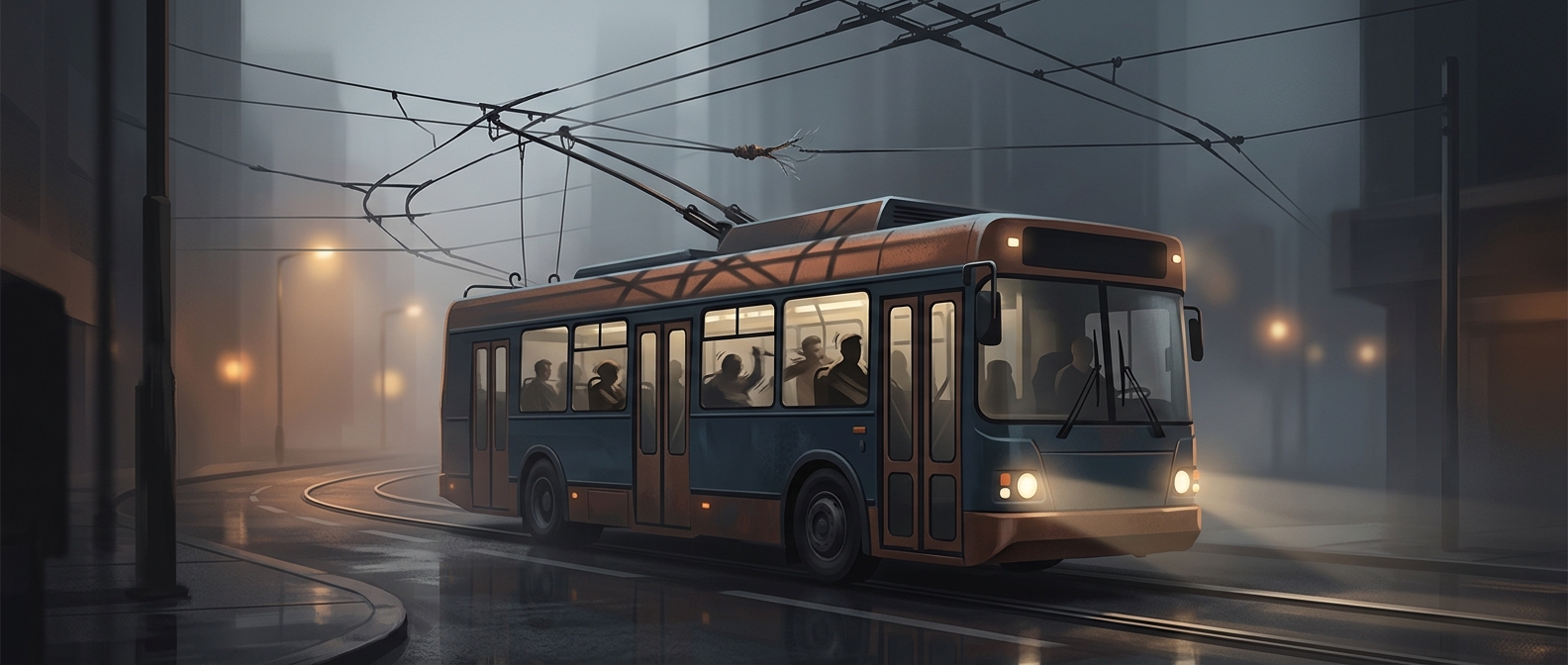
A trolleybus’s rubber tires insulate it from the road, so electricity cannot return through the pavement as it can on a rail system. One overhead wire supplies current; the other carries it back. The pair forms a complete circuit above the street, while the bus’s electric motor turns that power into motion.
The poles are not rigid arms bolted to the wires. Their spring pressure keeps the contact shoes pressed against the conductors as the bus moves, even when the road bends or rises. That lets the driver steer around small obstacles, but only within the poles’ limited reach. The wires still define the bus’s usable path.
A Route Drawn in Cables
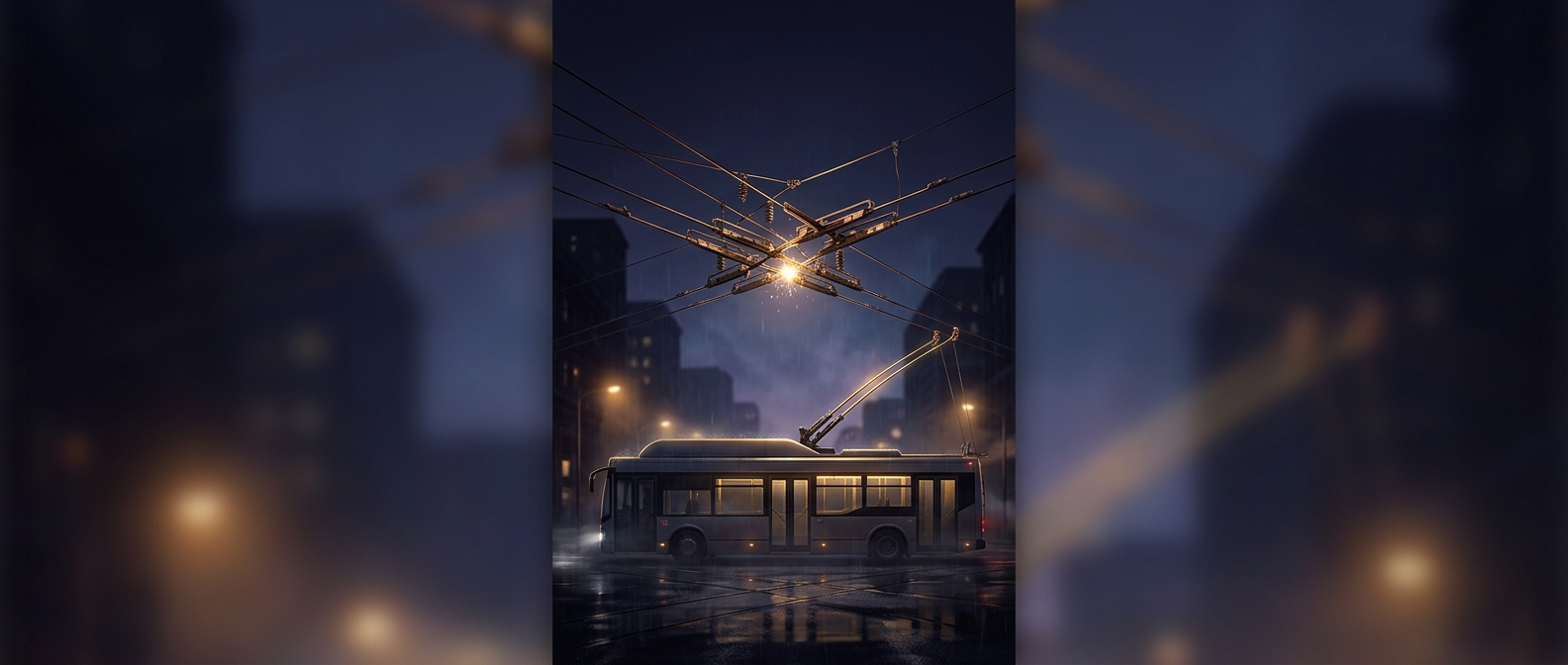
At a junction, overhead wire switches direct each pole onto the correct branch. This makes the network’s layout visible in a way a conventional bus route is not: a street can be added to the route only if the electrical infrastructure can reach it. Extending service therefore means installing and maintaining not just poles and wires, but also the junctions that let vehicles change direction.
The tradeoff is a bus that runs on electricity without carrying all of its energy onboard. It can avoid exhaust from its own operation, but it depends on a fixed supply above the street. In a trolleybus city, the route map is partly a map of the power grid.