How a forensic image became a game prop
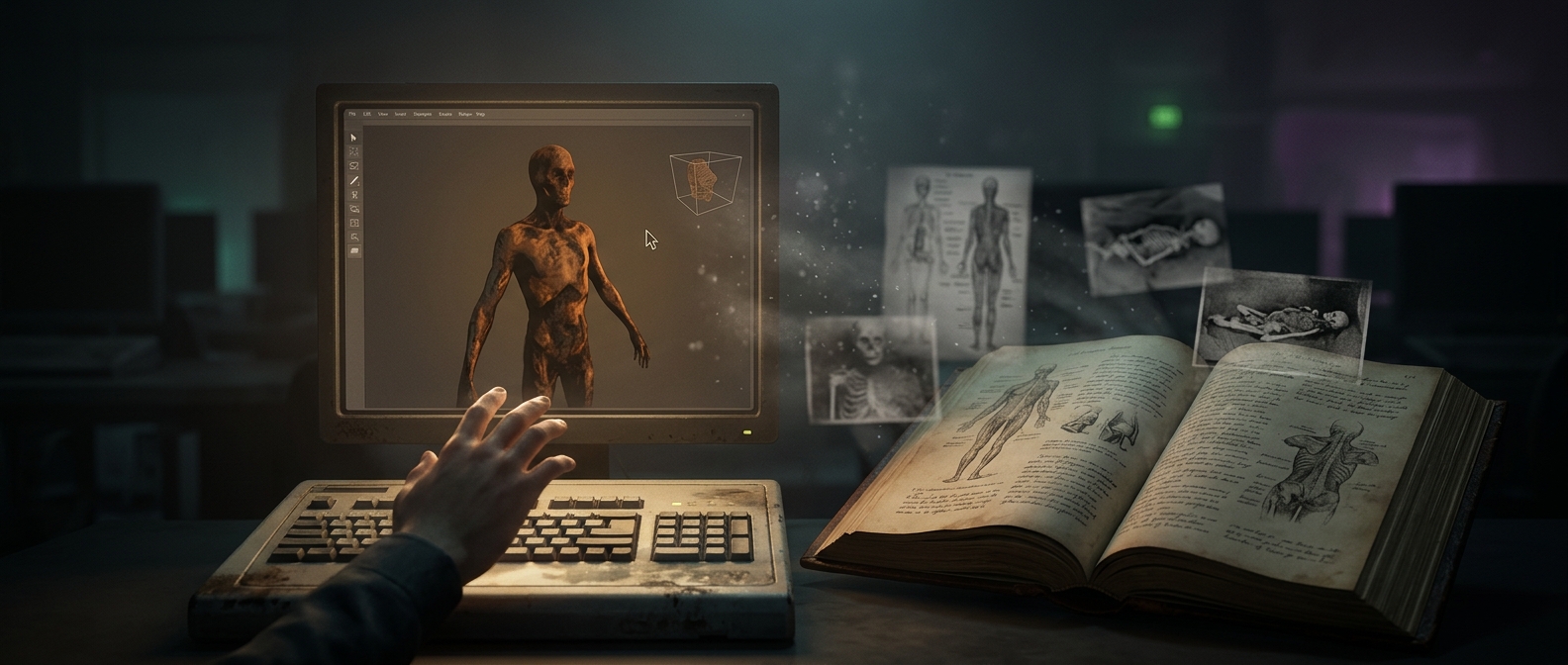
A corpse in Half-Life 2 reportedly owes its surface detail to a forensic textbook. Rather than inventing every mark with a digital brush, an artist used reference images from the book on the model—the three-dimensional shape that appears in the game.
That process depends on a texture: a flat image fitted to a 3D object, much like a printed pattern wrapped around a shape. It can supply details such as skin tone and discoloration while the model provides the body’s form. The image still has to be made to fit; a flat picture does not automatically sit neatly on a curved surface, and the game’s lighting helps determine how the finished object reads on screen.
Why use a textbook image?
Forensic photographs show bodies as physical evidence, not as polished movie effects. Their uneven, specific details can make a prop feel less like a generic design and more like something encountered in the real world. Using an image as a starting point also shifts some of the work from drawing every surface detail by hand to adapting existing visual reference.
The result is a small example of how game art can combine two different kinds of craft: a carefully built digital model and details borrowed from photography. In this case, the realism of a fictional body reportedly began with images made to document real ones.