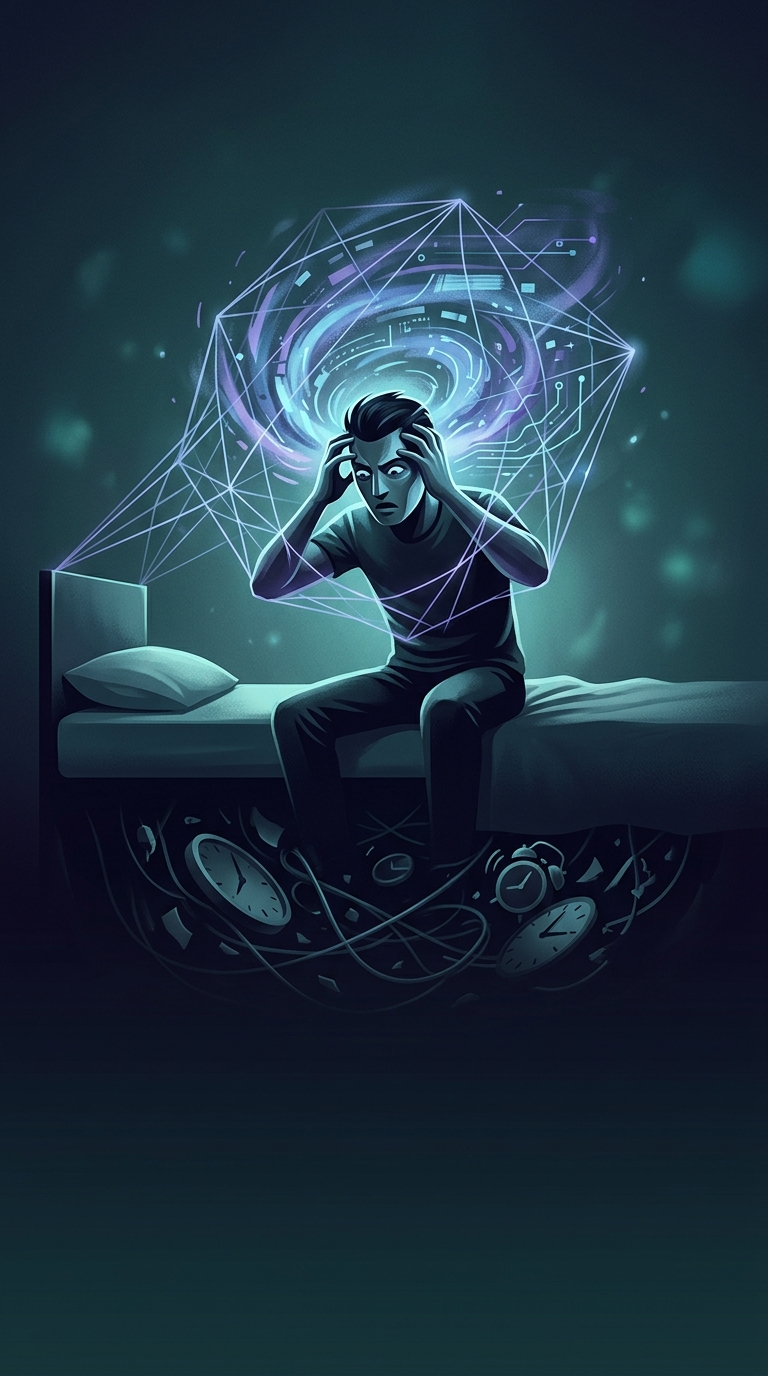
How the Day Finds Its Way Into Dreams
Dreams often borrow pieces of recent experience, but they rarely replay the day like a recording. A conversation, an errand, or a familiar room may return as a fragment, while the people and setting around it shift. The connection can be subtle enough that it becomes clear only after waking.
Memory Is Being Reworked, Not Replayed
During sleep, the brain remains active. It processes and reorganizes memories, linking new information with older experiences and associations. A small detail from the day can therefore appear beside something remembered from years ago, even when the two seem unrelated in the dream.
That mixing helps explain why an ordinary concern can surface in an odd scene rather than in a realistic retelling. The dream may preserve the feeling or a detail—such as a place or face—while changing the surrounding story. Recent experiences are only some of the material dreams draw on; older memories and spontaneous associations can contribute too.
Why a Minor Moment Can Stick
What enters a dream is not necessarily the day’s biggest event. A passing worry or familiar image may be memorable to the brain because it connects with something already stored, or because it carries emotional weight. But there is no simple rule that every dream has a hidden message or a single cause.
The result is a nighttime scene assembled from pieces with different histories. A room you saw today might appear in a dream with the atmosphere of an older memory—one reason the dream can feel strangely familiar without matching any real event.