Why a weekend story follows you into sleep
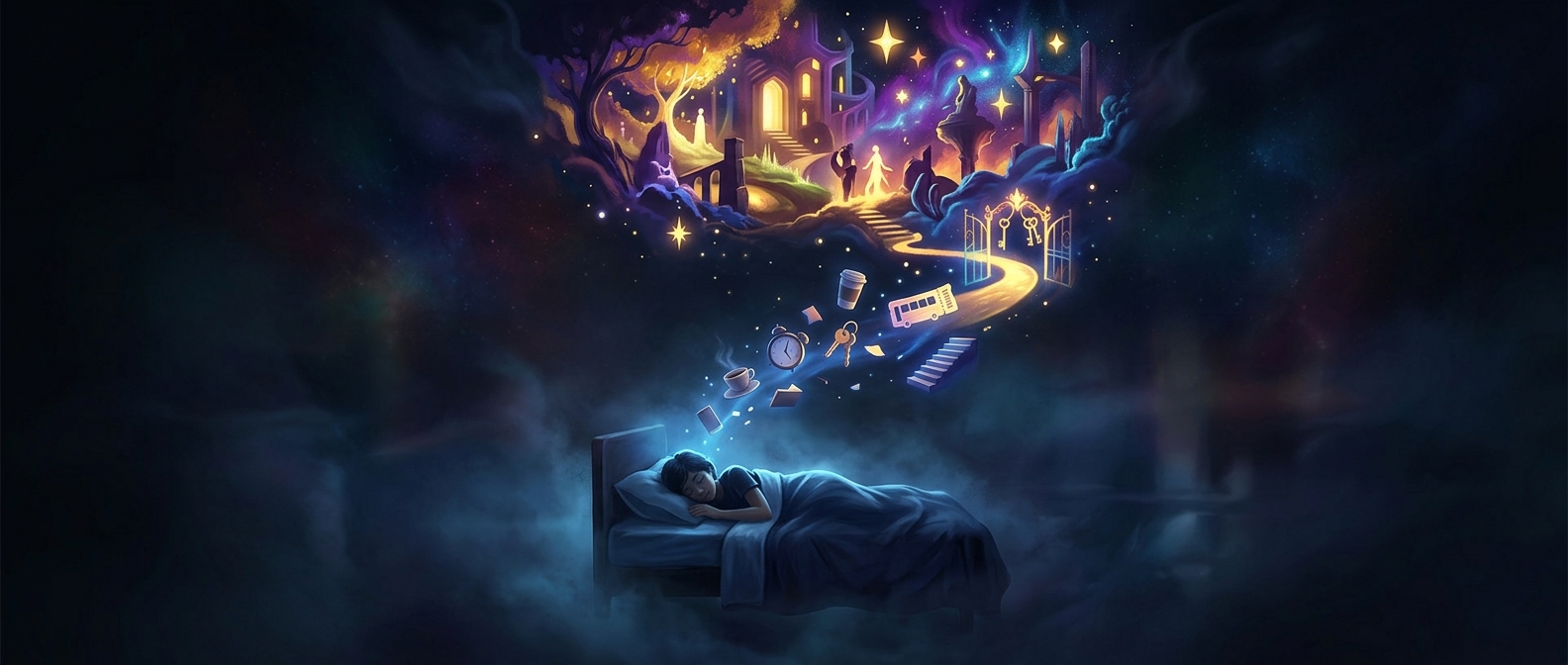
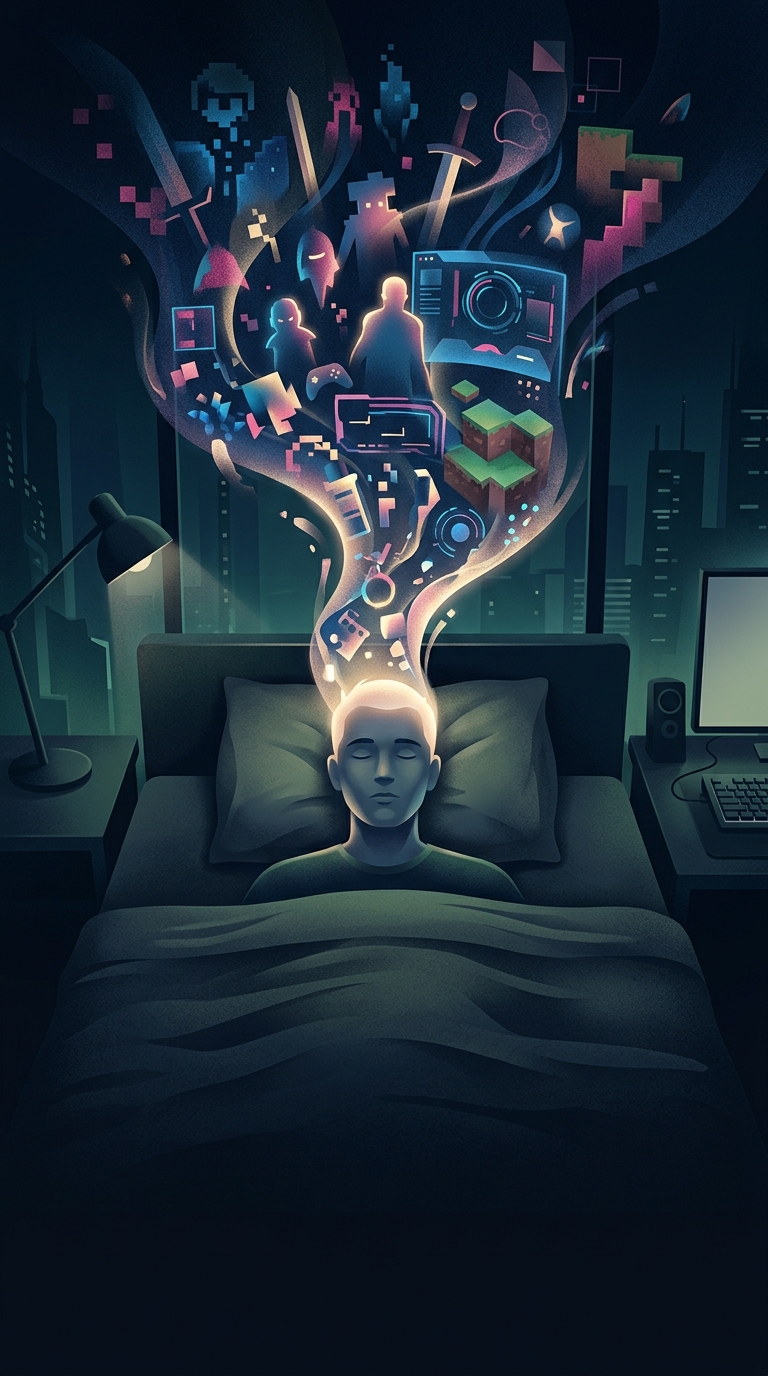
A show or game can dominate your attention for hours: you track characters, anticipate what happens next, and make repeated choices. When you later dream about it, your sleeping brain may be drawing on those recently active memories. This is sometimes called day-residue incorporation: waking experiences show up in dreams, often soon after they happen.
The brain reuses pieces, not whole episodes
During sleep, the brain processes and reorganizes memories rather than simply recording the day like a video. Recent experiences can become mixed with older memories, emotions, and unrelated details. A dream might borrow a game’s setting, a character’s face, or the feeling of being pursued without reproducing any actual scene.
Intense attention and emotion can make an experience more likely to stick in memory, giving it more material to draw on. Binge-watching or gaming also creates many repeated, closely related images and situations, so those fragments may be especially easy to weave into a dream. But dreaming about something does not mean the brain is deliberately rehearsing it or that the dream has a hidden message.
Why it can feel like a replay
Dreams can feel vivid because the brain is generating a scene from the inside, while the ability to check it against waking reality is reduced. Familiar characters and settings supply recognizable pieces; the sleeping brain supplies the transitions, which may be strange or impossible.
That is why a weekend spent in one fictional world can leave it lingering overnight—not as a faithful rerun, but as raw material your brain has recently handled and can recombine.