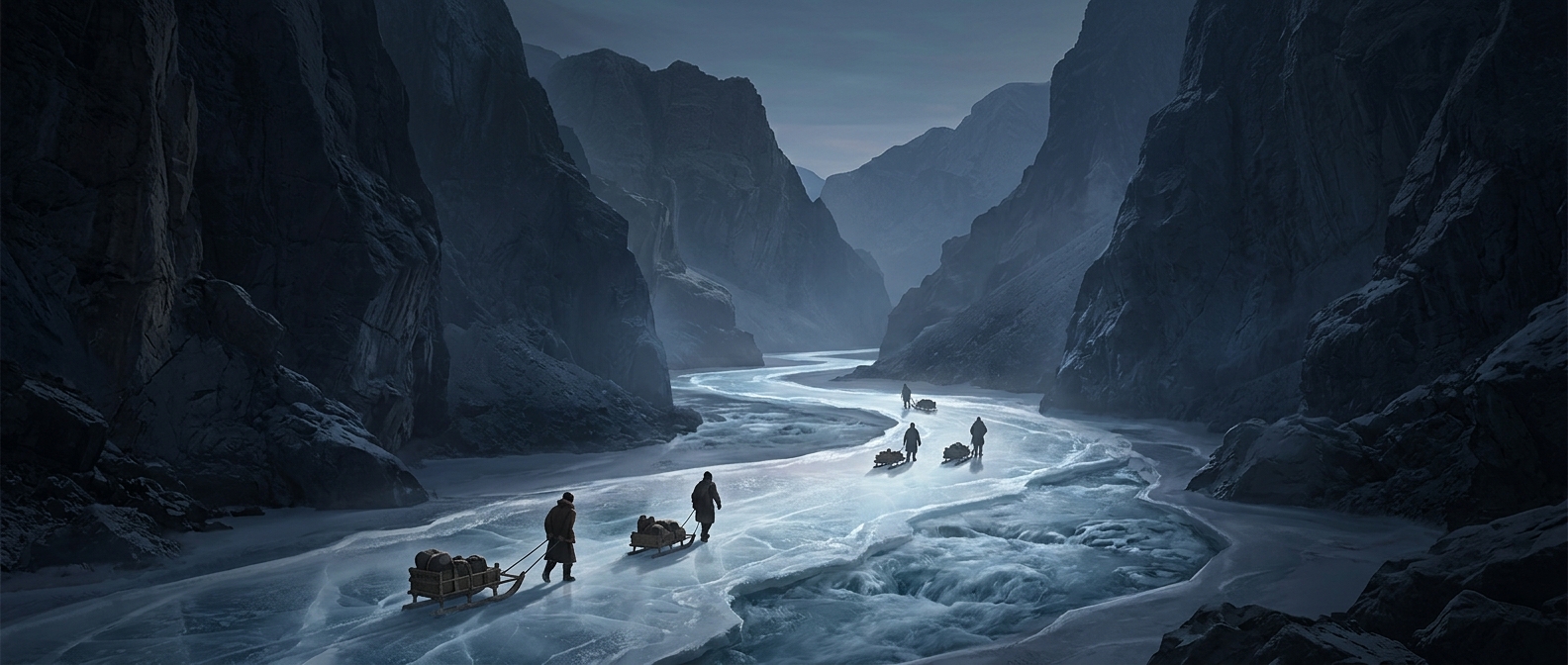
Why Tash Rabat mattered on a mountain route
At roughly 3,200 meters in Kyrgyzstan’s Tian Shan, Tash Rabat offered something a caravan could not easily find in the surrounding high country: a solid place to stop. A caravanserai was a roadside inn for traveling merchants and their animals, and this stone one served routes linking China with Central Asia. In a landscape where weather and distance could make an exposed camp dangerous, shelter was part of the infrastructure of trade.
Stone walls turned a stop into protection
Tash Rabat’s thick masonry and domed interior were practical features, not decoration alone. Stone provided a more substantial barrier against wind and cold than a temporary tent, while enclosed rooms gave travelers space to gather and rest. The building’s sheltered layout also made it easier for people moving through the mountains to spend the night together rather than scatter across an exposed valley.
That mattered when a journey depended on a group’s ability to keep moving. Merchants carried valuable goods; guides, guards, and pack-animal handlers helped get people and cargo across difficult terrain. A safe stopping point could reduce the risks of weather, exhaustion, and isolation—and help make long-distance exchange possible.
A surviving piece of travel logistics
The fortress-like appearance can suggest a stronghold, but its significance lies in the ordinary needs it met: shelter, rest, and a place to regroup. Its survival lets visitors see how trade routes relied not only on goods and daring travelers, but also on buildings positioned where protection was scarce. At Tash Rabat, the journey’s most valuable amenity was a roof and stone walls when the mountain outside offered neither.