Why a Late-Night Promise Loses to the Present
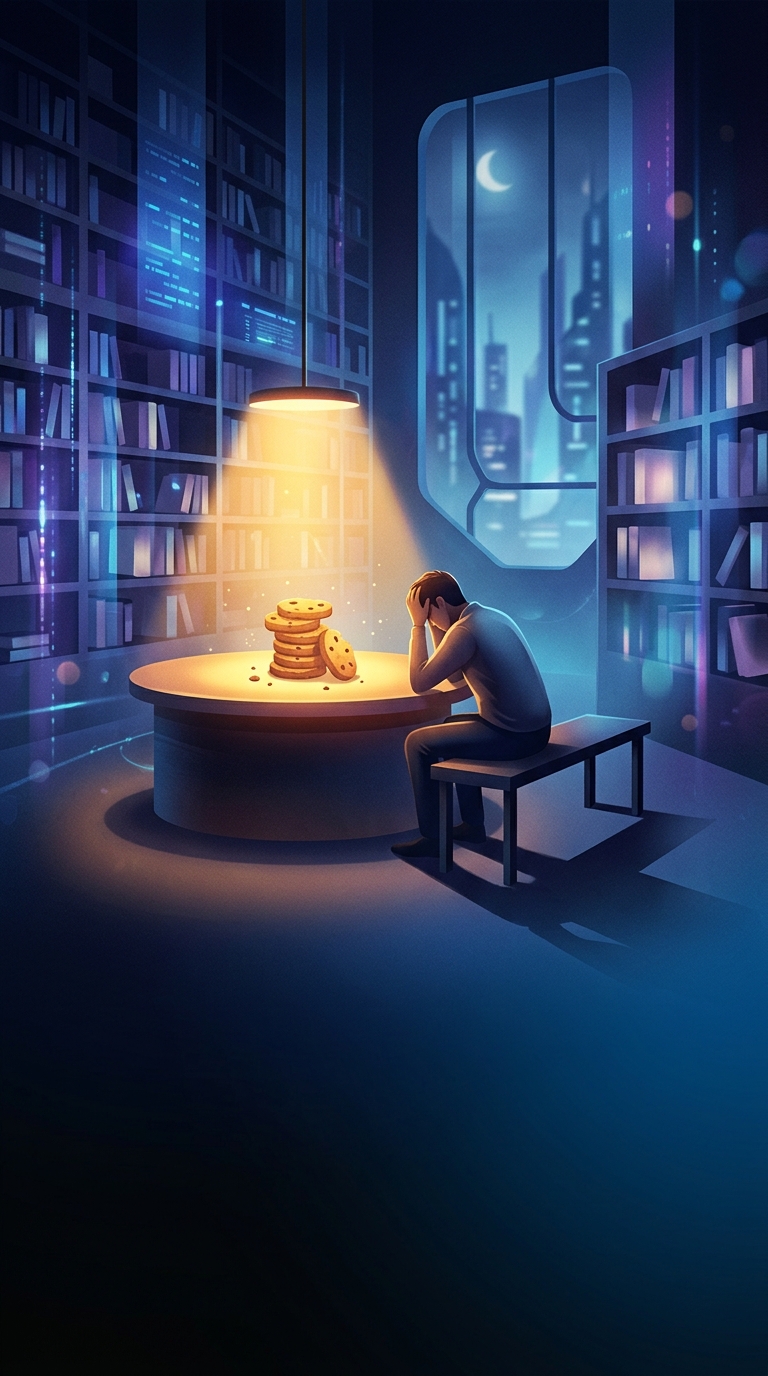
At 11 PM, a plan to eat differently tomorrow has to compete with something immediate: the taste, comfort, or convenience of food right now. The mind tends to discount delayed rewards—treating a benefit that arrives later as less valuable than one available at once. A healthier breakfast may matter in the morning, but a snack offers its payoff immediately.
That gap can make the choice feel lopsided. The person making the plan is imagining a rested future self; the person deciding what to eat is tired, hungry, or simply ready to stop exerting effort. Those states change what feels appealing, even when the long-term goal has not changed.
The Future Self Is a Weak Negotiator
Psychologists call one part of this pattern present bias: we give extra weight to what we can have now and underweight consequences that are farther away. It is not that someone forgets the plan. Rather, the plan has to compete with a reward that is vivid and close, while its payoff—feeling good about a routine or meeting a goal—is abstract and delayed.
Tiredness can make that contest harder. Self-control is not a simple battery that runs out, but fatigue can make it more difficult to pause, weigh options, and follow a rule that requires effort. A choice that seemed straightforward earlier can therefore feel negotiable late at night.
Make the Decision Before the Temptation
A practical response is to move choices out of the moment of greatest friction: decide on breakfast in advance, prepare it, or make the tempting alternative less convenient. This does not eliminate desire; it changes which option is easiest to act on.
The revealing detail is that the late-night choice is not just about food. It is a negotiation between a distant goal and an immediate reward—and the immediate reward gets a powerful home-field advantage.