Why evening snacks can be harder to stop
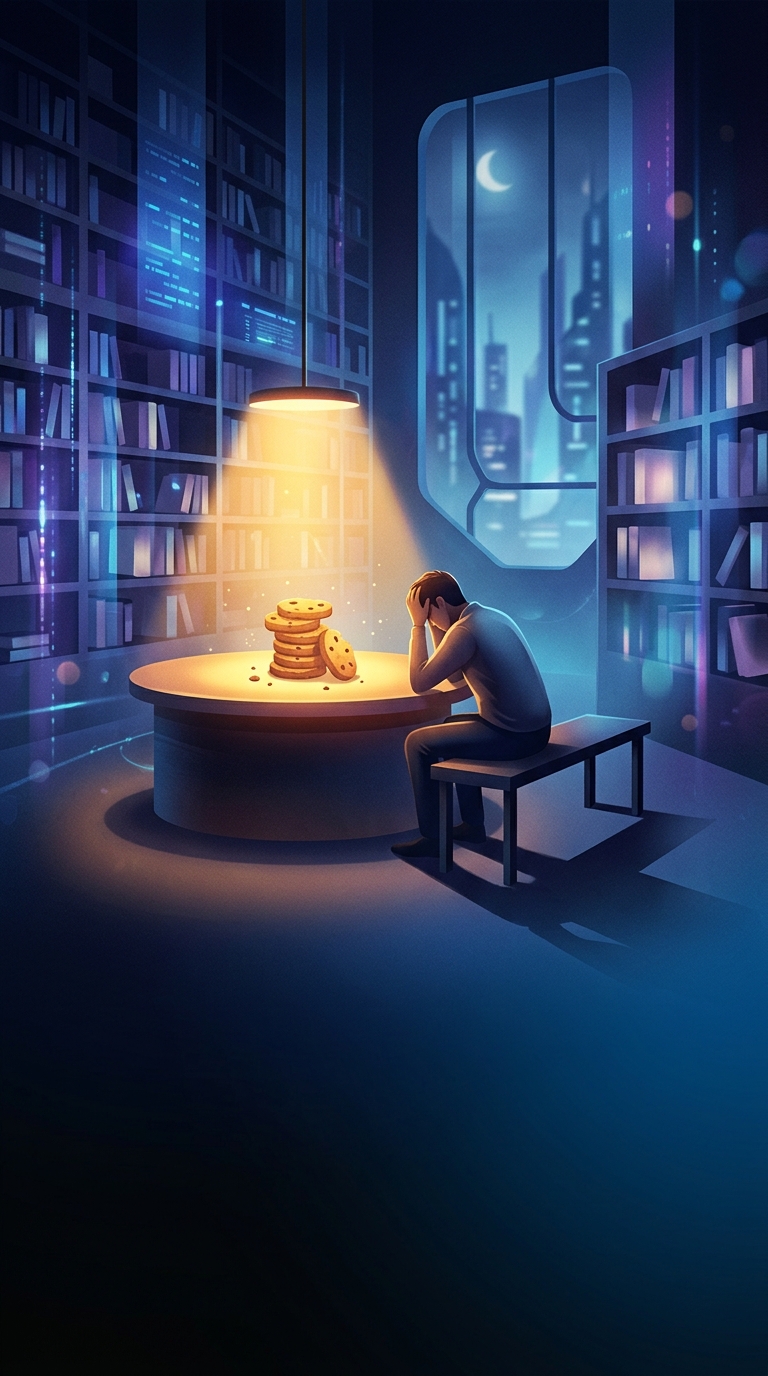
At night, several small influences can line up: you may be hungry, tired, and finally away from the tasks that kept your attention elsewhere. A cookie that was easy to ignore during a busy morning can become much more tempting when you are relaxing near the cupboard.
Hunger is only part of the story. The brain learns to link places, times, and routines with rewards. If evenings often mean television and snacks, settling onto the couch can cue the expectation of eating—even before you decide you are hungry. The cookies are also immediately rewarding, while the benefit of stopping is less vivid and further away.
Tiredness changes the choice
Self-control is not a tank that simply empties over the day, but tiredness can make it harder to pause, weigh options, and follow a plan. When you are worn out, a familiar, rewarding choice may win over the effort of checking whether you are still hungry. That can make “just one” turn into several, especially when the sleeve is open and within reach.
The setting matters too. Eating from a package makes it harder to notice how much you have had than putting a portion on a plate. And if you have spent the day restricting food, genuine hunger can make a tempting snack harder to resist later.
Make the evening choice easier
A practical fix is to change the setup rather than rely on a late-night test of willpower: decide on a portion before you start, put the rest away, or keep the package out of arm’s reach. The key is that evening eating reflects a mix of appetite, habit, fatigue, and convenience—not a sudden lack of character.