Why choices can feel harder later
Every decision asks the mind to compare options, hold goals in view, and suppress distractions. After a day of doing that, another choice may feel more demanding—not because a fixed tank of willpower has necessarily run dry, but because attention and motivation have been taxed. When a task feels effortful, the brain may favor a quick reward or the easiest available option over continued deliberation.
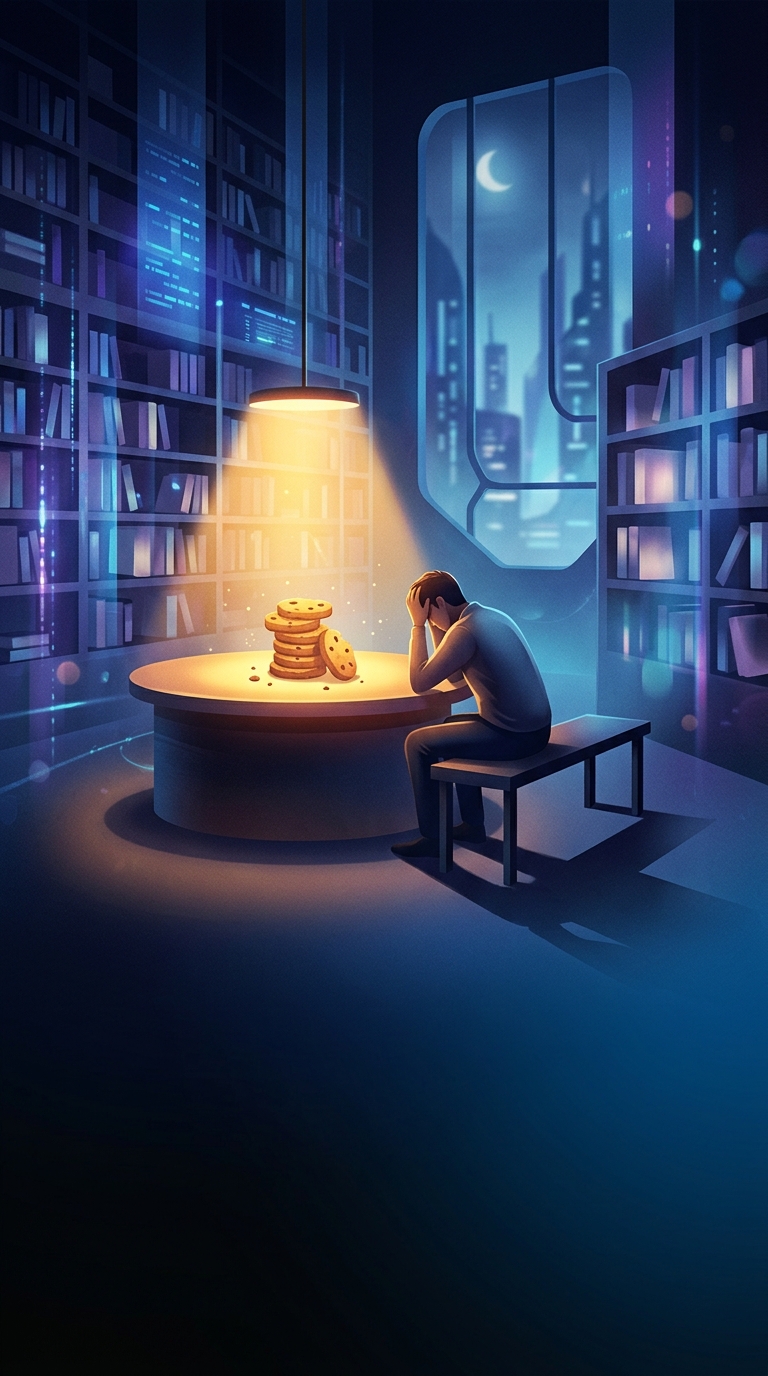
That shift helps explain a familiar pattern: someone can stick to a plan through a busy day, then find it harder to resist an unnecessary purchase at night. The later decision is not proof of a weak character. It is being made under different conditions, including accumulated effort, fatigue, stress, and the appeal of immediate relief.
What “ego depletion” does—and doesn’t—mean
Psychologists have used ego depletion to describe the idea that using self-control in one task temporarily reduces the ability to use it in another. Early experiments seemed to support a simple limited-resource account. Later research, however, has produced mixed results, and the strong claim that self-control behaves like a fuel supply that gets used up has not held up as a settled explanation.
Nor is there good reason to treat ordinary lapses in restraint as a direct sign that the brain has run out of glucose. The experience of feeling depleted is real; its cause is more complicated than a single depleted substance or a universal battery meter. Expectations, incentives, mood, and the demands of the task can all affect how much effort people are willing or able to invest.
Why the effect matters in daily life
The practical lesson is not that choices become impossible after a certain hour. It is that the same decision can become harder when attention is strained and a tempting shortcut is close at hand. People can reduce that burden by making routine choices in advance, removing easy access to unwanted temptations, or postponing costly decisions until they are rested.
Those strategies change the situation rather than demanding endless resistance. A late-night impulse is easier to manage when the purchase is not one click away—and when the decision was made before the day’s demands piled up.