One scene, two short workdays
A baby may appear in a film for only a few minutes, but getting those minutes can take hours. The crew has to place the child, adjust the camera and lights, rehearse movement, and capture enough usable footage from different angles. An infant cannot be asked to repeat an action on cue, and feeding, sleep, or distress can interrupt a take at any point.
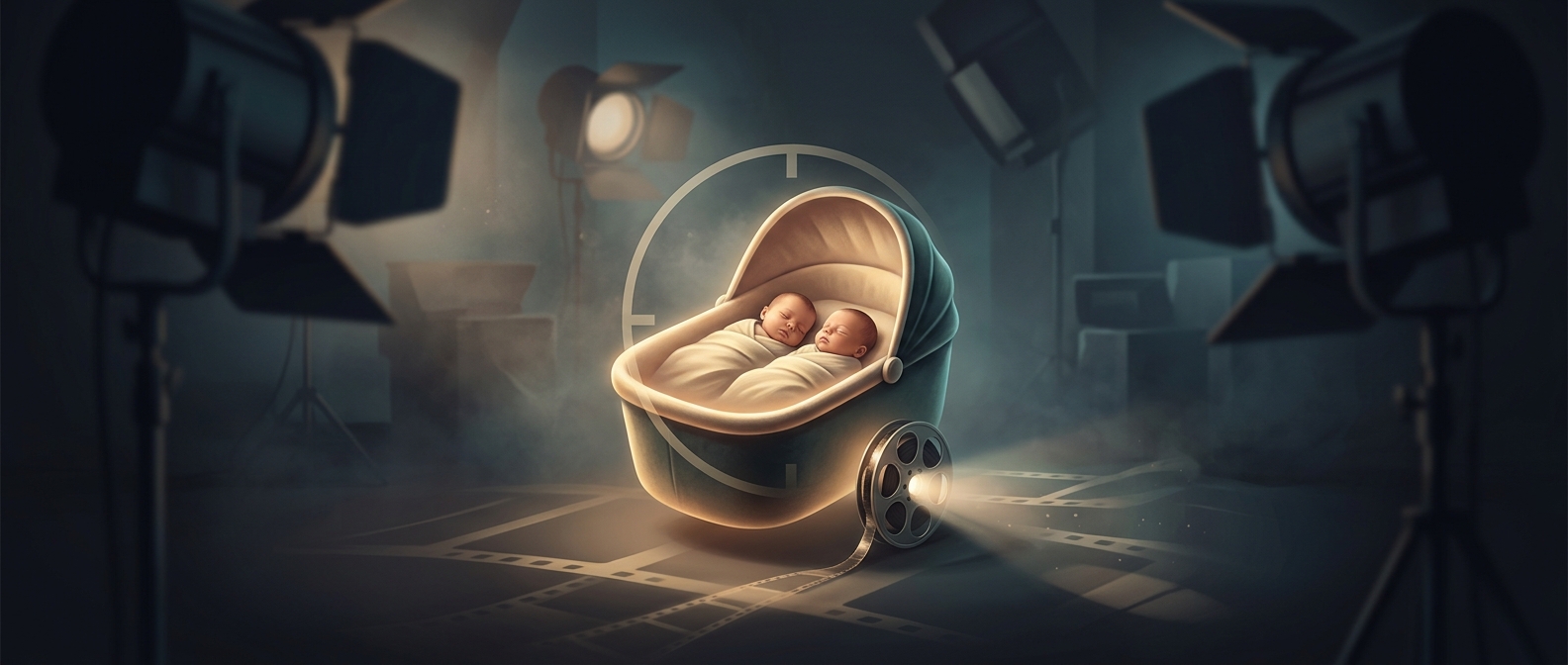
When a production has identical twins, it can divide that limited on-set time between two babies. One can take over when the other needs a break, giving the crew another chance to film without asking a single infant to stay on set longer. The twins’ close resemblance also makes the switch less noticeable in edited scenes.
Editing makes the handoff disappear
The audience sees a continuous character; the production sees separate takes. Editors can combine brief moments filmed with each twin, while matching costumes, camera positions, and lighting helps preserve the illusion that the same baby was present throughout. The approach is especially useful for scenes that need repeated coverage, such as close-ups and wider shots, because each setup can require a fresh take.
Twins are not a guarantee of an easier shoot: each infant has a different temperament and schedule, and both still need care and breaks. But casting two nearly identical babies gives filmmakers flexibility while keeping the child’s time on set manageable. The seamless result can depend on a simple production trick: the baby in one shot may be the baby’s twin in the next.