Frostpunk Turns Child Labor Into a Survival Calculation
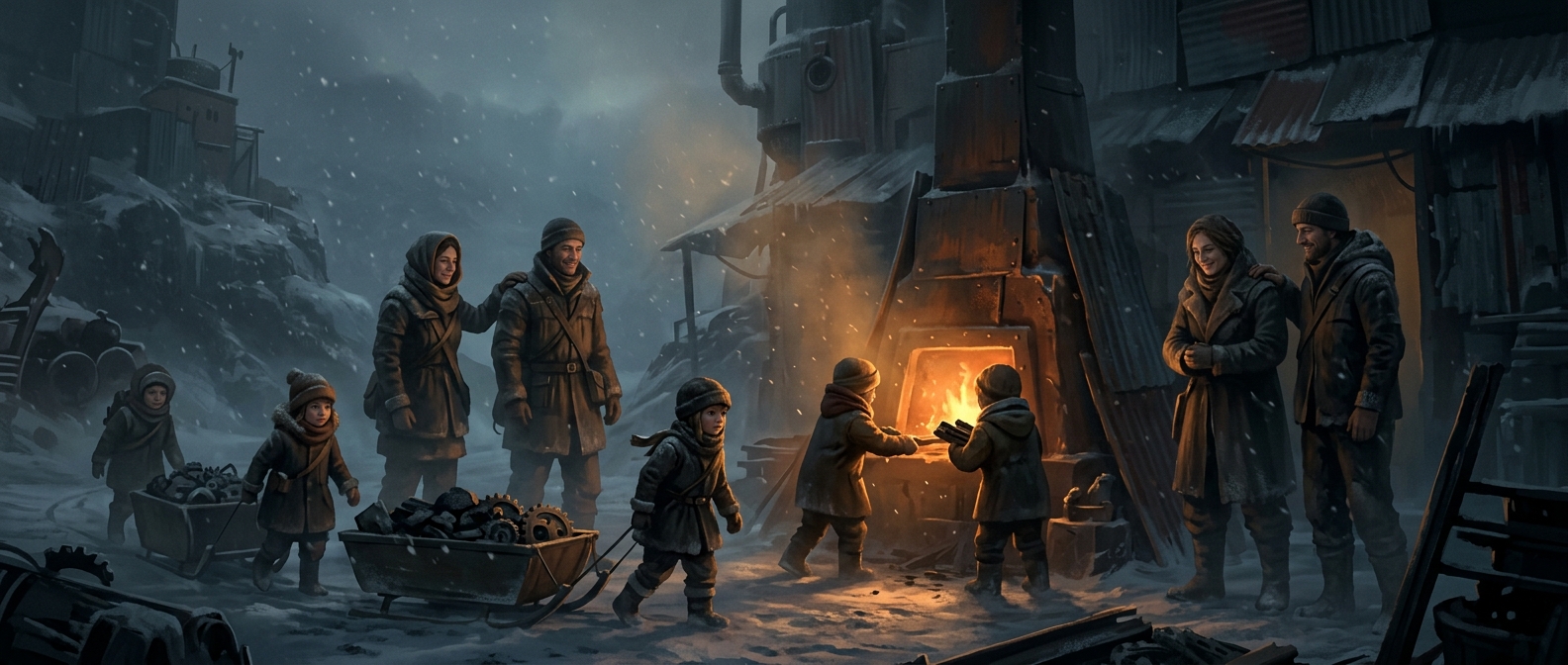
In Frostpunk, the coal mine is part of a tightly linked survival system: coal fuels the city’s generator, and the generator’s heat helps keep residents alive in lethal cold. When coal stocks run low, the problem is not abstract. The player has to find more workers, cut other demands, or risk letting the city freeze.
That pressure gives child-labor laws their force. Passing a law can make children available for work, and the harsher option sends them into dangerous jobs rather than limiting them to safer tasks. It expands the workforce when adults alone may not meet the city’s needs—but it also exposes children to danger. The choice is presented as a policy the player actively authorizes, not as an event that happens beyond their control.
The Law Changes More Than the Workforce
The game makes governing part of its survival challenge. Laws can help solve an immediate shortage, but they also shape how the city functions and what kind of society the player is building. A few more workers may mean enough coal to keep heat flowing; the cost is that vulnerable residents bear some of the danger.
This is why the decision can feel uncomfortable even when its practical logic is clear. Frostpunk asks players to weigh lives and risks against a system with no easy spare capacity. Keeping the generator supplied is essential, but the game makes the human price of that supply visible: the coal that warms the city can come from children sent underground.