Why cargo ships need helicopter pilots
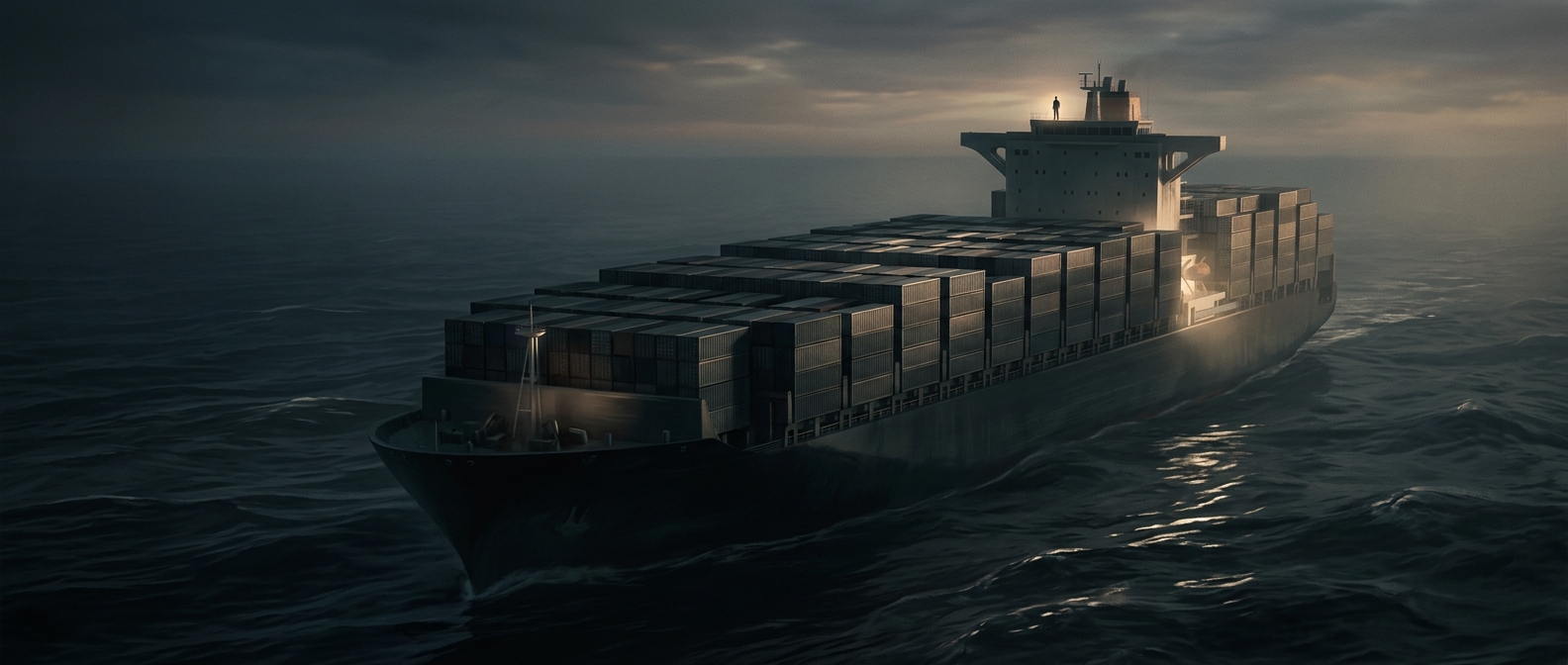
Many large cargo ships travel far from shore, where a pilot boat cannot easily meet them. A maritime pilot—a specialist who knows local channels, hazards, and port procedures—must board before the vessel enters confined waters. A helicopter can deliver that expert directly to a ship at sea, avoiding the need to slow or divert the vessel for a boat transfer.
The landing is a coordinated approach
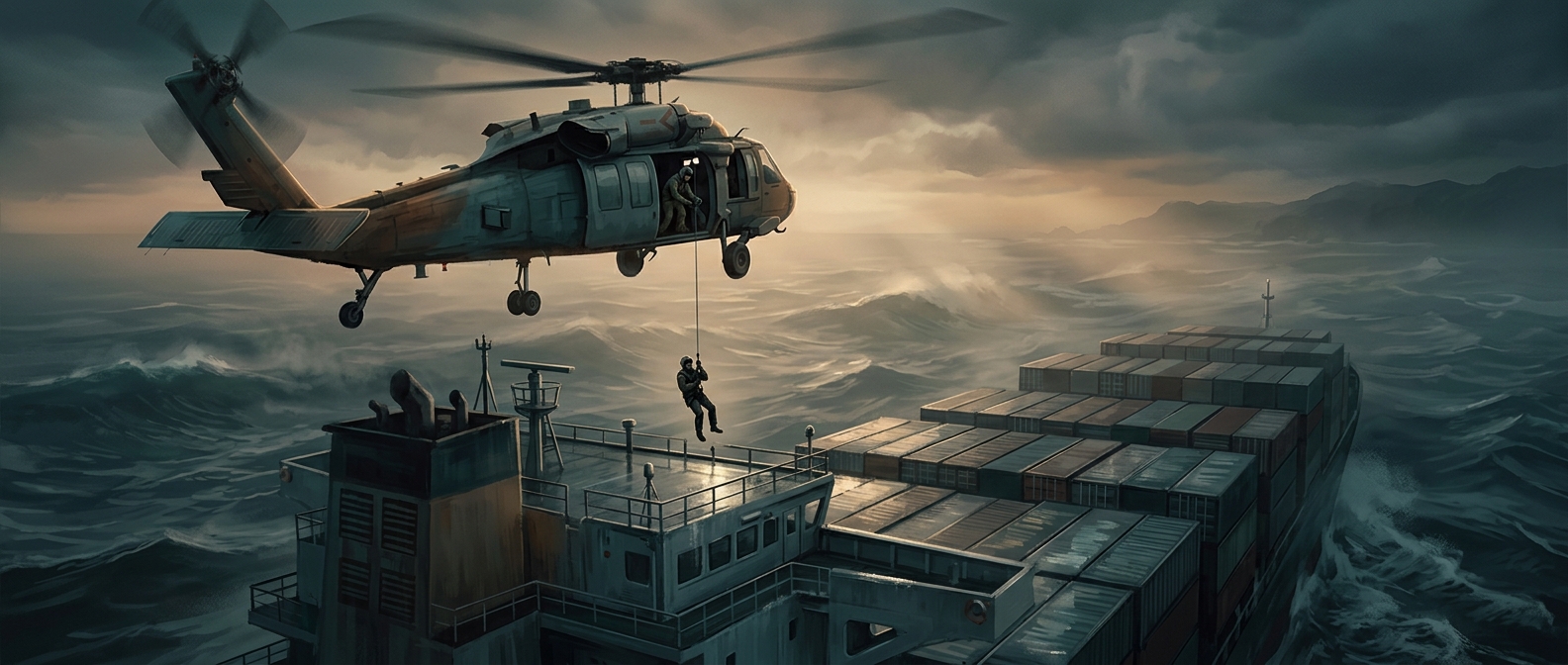
The helicopter pilot first lines up with the ship’s course and speed. Matching its forward motion reduces the relative movement between aircraft and deck: instead of chasing a ship that is sliding away underneath, the helicopter can hover almost over one spot on it. The pilot then descends while judging the deck’s changing position and angle.
That deck is not a fixed platform. Waves make the ship heave up and down, roll from side to side, and pitch bow to stern. The pilot must choose a moment when the deck’s motion and the helicopter’s are compatible, then make a firm touchdown. Once on deck, the aircraft needs to be secured quickly so it cannot shift as the ship moves.
Why timing matters
The transfer depends on more than flying skill. The ship’s crew must prepare a suitable landing area and coordinate closely with the helicopter team; weather, visibility, sea conditions, and the ship’s movement can make an approach unsafe. If conditions are unsuitable, the operation may be delayed rather than forcing a landing.
The payoff is practical: the ship can keep making way while the pilot boards, preserving time on a voyage where stopping or changing course could be costly. For a few seconds, the helicopter turns the moving deck into a temporary meeting point between two vehicles in motion.