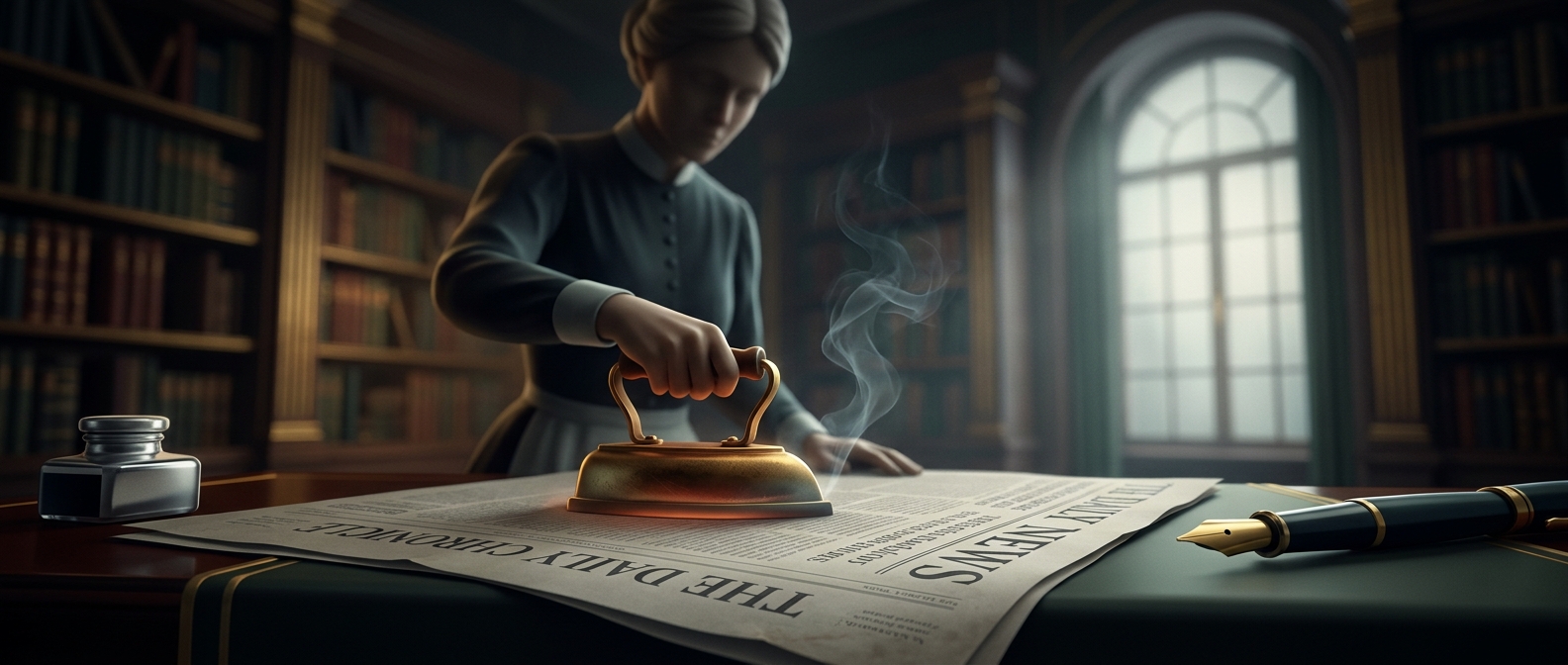
A Newspaper Prepared for Clean Hands
Freshly printed newspapers could leave a dark trace on a reader’s fingers. Ink on the page was not always fully dry or firmly absorbed when the paper reached a household, and rubbing a finger across a headline could transfer it. For a master who wanted to read without staining gloves, cuffs, or hands, that small inconvenience became a servant’s task.
Why Use an Iron?
The iron’s heat and pressure were meant to make the sheets more presentable before they were handed over. Pressing could flatten the paper and help it feel ready to handle; the point was not to improve the news, but to prepare the object for a reader who expected service as well as information. The practice depended on the household’s routines and the condition of the paper, rather than being a universal step in newspaper production.
The Work Behind the Morning Reading
This was a tiny example of domestic labor organized around a master’s comfort. A servant took care of an annoyance the reader might otherwise have handled personally, turning a freshly delivered paper into something closer to a finished service. The telling detail is the sequence: before the news reached its reader, someone else had to make sure it would not leave its mark.