When Silence Became Part of the Etiquette
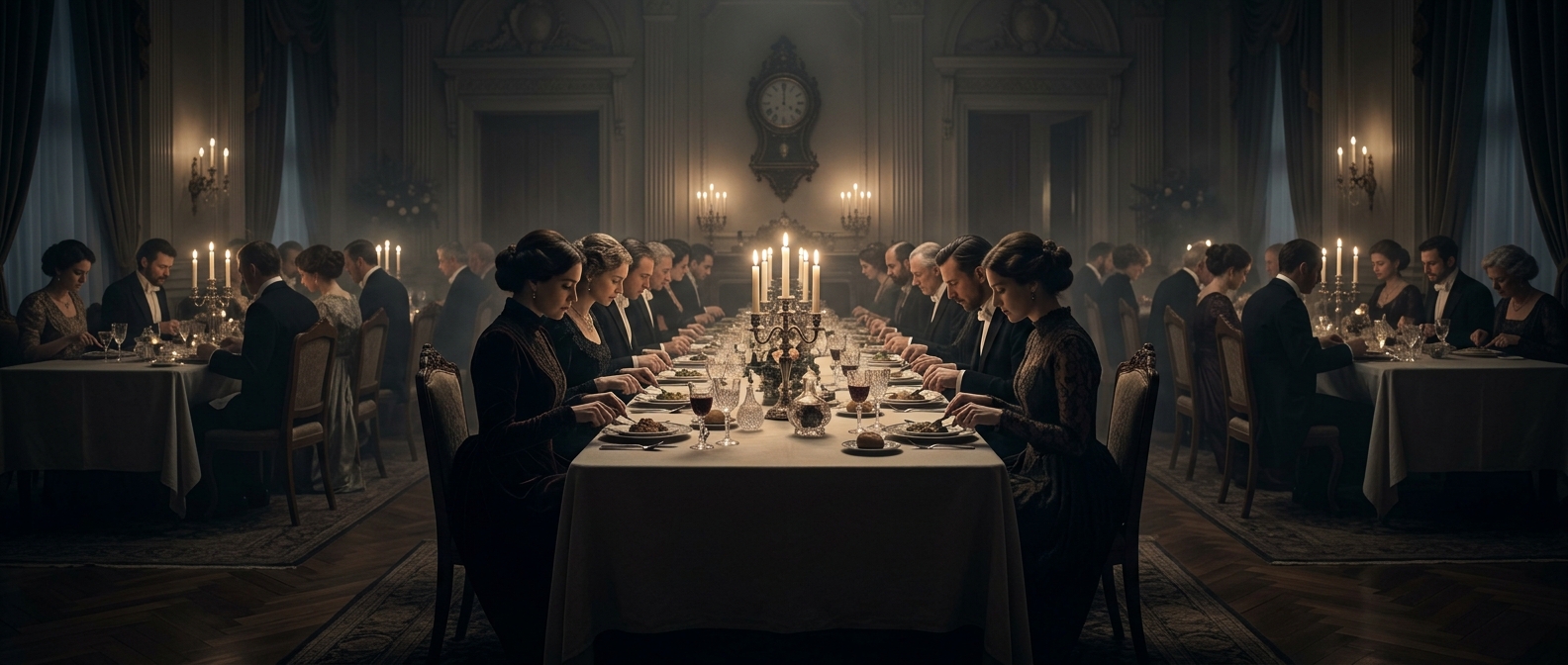
In certain elite dining rooms, good manners meant more than using the right fork or waiting for the host. Guests were also expected to control the conversation. What might now feel like an awkward pause could then signal restraint: diners were not meant to turn a carefully arranged meal into an ordinary social chat.
That rule changed what a dinner party communicated. A host presented the food and the setting; guests showed respect by attending to them rather than competing for the room’s attention. Conversation was not simply absent—it could be treated as a breach of the occasion’s formality, especially if it seemed to distract from the meal or the chef’s work.
A Meal as a Display of Rank
Etiquette rules draw boundaries between what a group considers refined and what it considers common. In these circles, keeping quiet could serve as a visible sign of self-command and shared knowledge: guests demonstrated that they understood how this particular gathering was supposed to proceed. Someone who chatted freely risked appearing not merely talkative, but unfamiliar with its standards.
The expectation was not universal, even among wealthy diners. It belonged to particular social settings, and its meaning depended on the company and occasion. But it reveals how formal dining could make silence part of the performance. At a table where small talk might seem natural, saying nothing could be the clearest way to show that one knew the rules.