MTV began as a programmed stream of music videos
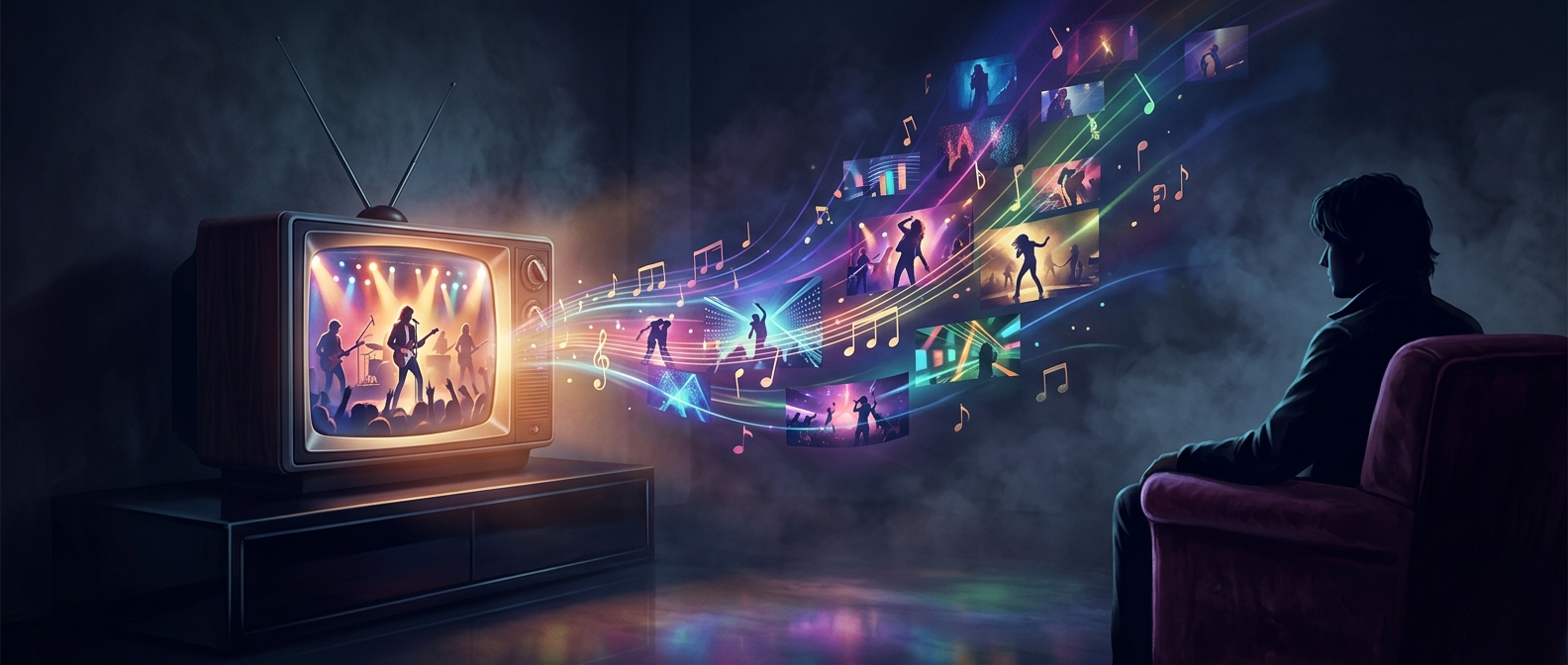
When MTV launched in 1981, its central product was a sequence of music videos, linked by brief appearances from video jockeys, or VJs. They introduced clips and gave the channel a human voice, but the videos—not studio performances or long-form shows—filled most of the schedule. The format made television feel closer to radio: viewers could tune in and encounter a changing mix of songs without choosing each one themselves.
That model depended on a growing supply of videos from record labels. A clip could promote a song repeatedly while giving viewers a visual image of its performer. In turn, the channel gained a distinctive identity from the videos it selected and the artists it put on screen. MTV was not simply broadcasting music; it was helping make the music’s images part of how audiences encountered it.
The schedule expanded beyond the clips
A channel built around videos also faced a practical limit: it needed enough material to keep the rotation fresh. MTV gradually added other kinds of programming, including animation and reality series. The Real World, which debuted in 1992, made unscripted life in a shared house into a continuing television format, rather than a brief break between songs.
The change was not a single overnight switch. Music videos remained part of MTV’s identity even as shows took up more of its schedule and attracted viewers in a different way. The channel’s evolution shows how a format can reshape its own medium: MTV first made the music video a television staple, then increasingly used television’s longer-running shows to hold an audience between—or instead of—videos.