How volcanic vents build Antarctic ice towers
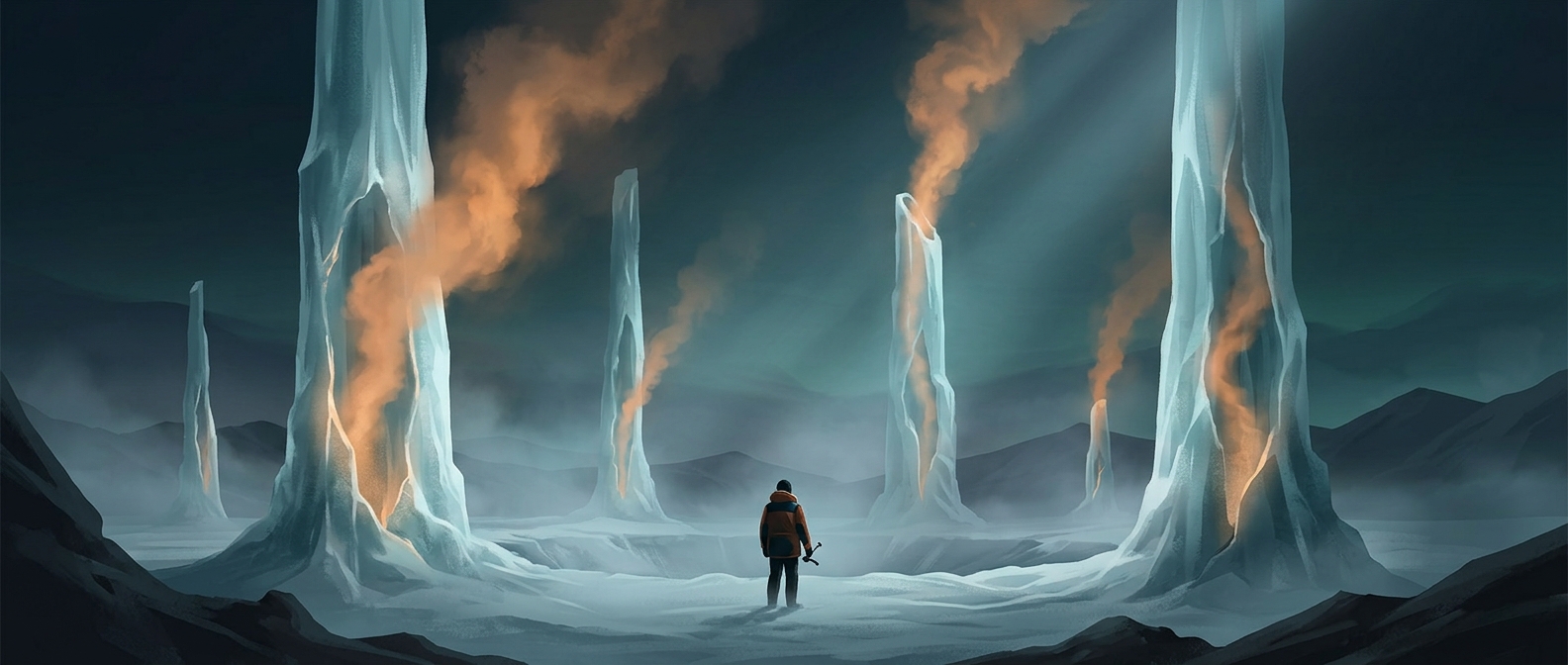
At an Antarctic volcano, a vent can release warm, water-rich gas into air cold enough to freeze that moisture almost immediately. Ice accumulates around the opening, gradually forming a chimney. The shape is not carved from a solid mass: it is built as vapor freezes onto the tower’s inner and outer surfaces.
A chimney with an active core
The vent continues sending gas upward as the ice forms. That flow keeps an opening through the structure, much as a fireplace chimney channels smoke. The outer walls can remain frozen while warmer gas passes through the hollow center. The tower is therefore both a product of freezing and a pathway for continuing volcanic emissions.
Its growth depends on a delicate balance. The vent must supply enough moisture and heat to sustain the upward flow, while the surrounding air must be cold enough for ice to accumulate. Shifts in either condition can change how quickly the walls build up or whether they endure. Because the structure is ice around an active opening, it is not simply a permanent monument: its form reflects the vent’s ongoing behavior and the harsh conditions around it.
These chimneys make a hidden process visible. Instead of seeing volcanic gas disappear into the polar air, observers can trace its route in the ice itself—from the vent below, through the hollow tower, and out into the cold.