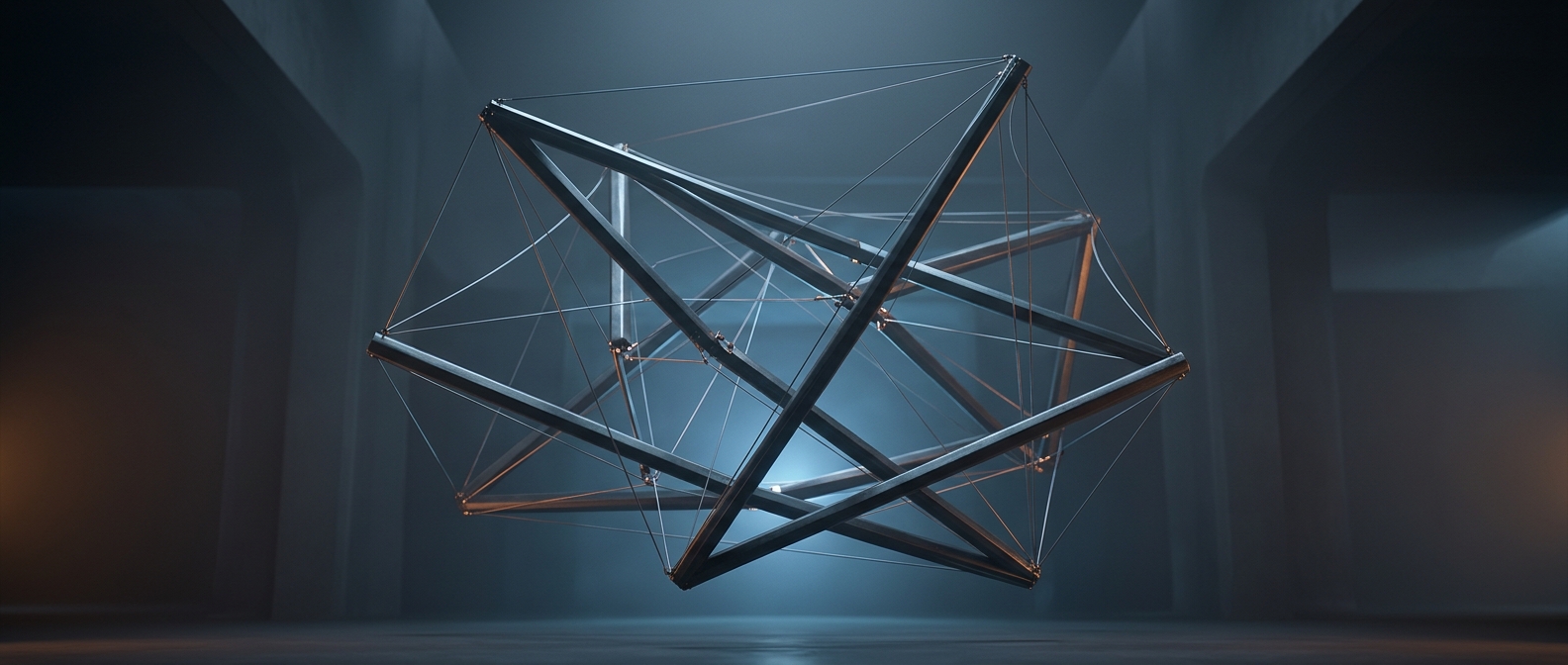
The bars are held apart by a network of pulls
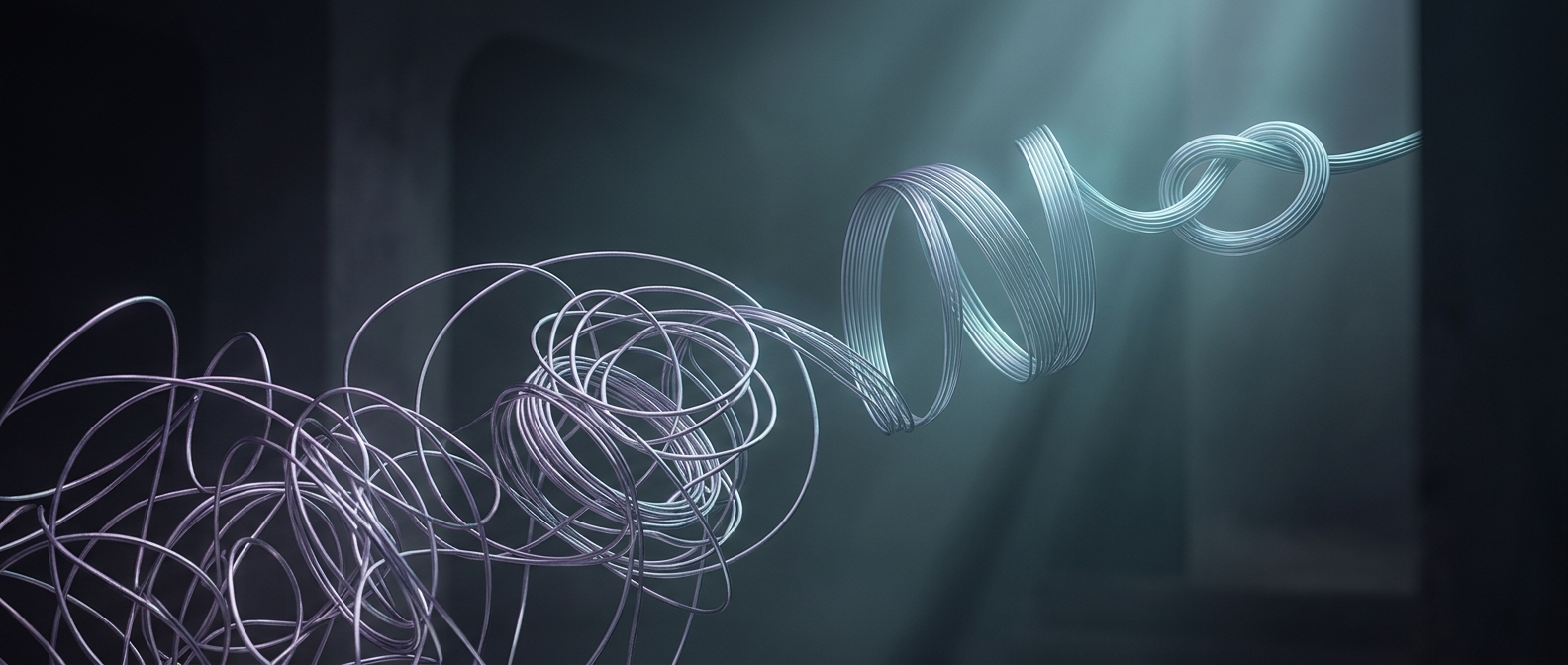
In a tensegrity structure, rigid bars do not prop one another up. Instead, they act as compression members—parts pushed inward at their ends—while cables form a connected network of tension members, parts pulled tight. The cables attach to the bars at carefully chosen points, keeping them apart and positioning each one within the structure.
The bars can look as if they are floating because no bar rests directly on another. But the structure is not unsupported: each bar’s force travels through taut cables to other bars, and those bars push back against the pulls. The whole assembly settles into a balance of opposing forces.
Why the arrangement stays in place
The cables must have the right lengths and attachment points, and they need to be tightened enough to remain taut. This initial tightness is called prestress. It removes slack, so a small shift in one part changes the pull across several cables rather than leaving the structure loose.
That balance is also why tensegrity is sensitive to its geometry. Move an attachment point or alter a cable’s length, and the pattern of forces changes; a bar may shift, or a cable may go slack. When designed correctly, a load on one area can be redistributed through the connected network instead of being carried by a stack of supports.
The visual trick, then, is a real structural tradeoff: the bars provide stiffness, while the cables give the structure its shape and hold the bars in place. What appears to be a collection of disconnected pieces is actually one carefully balanced system.