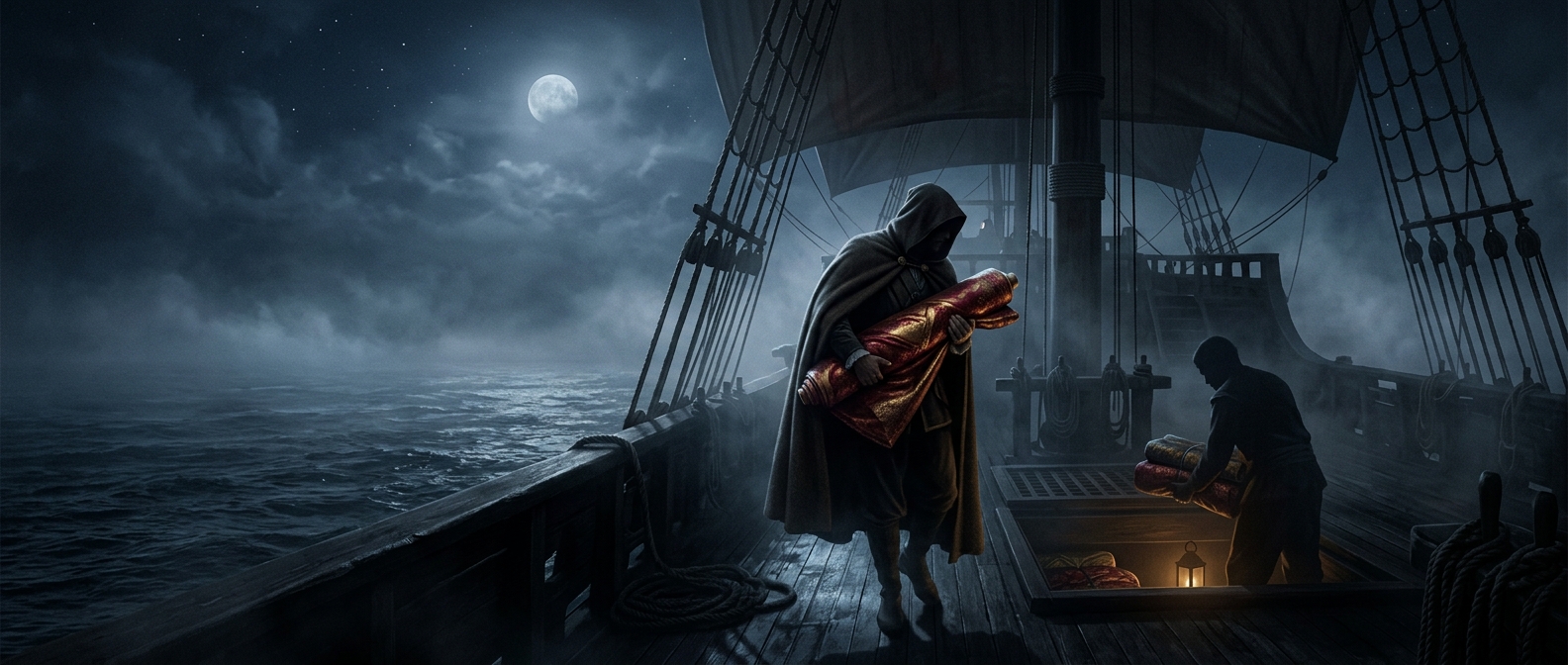
Why the Manila Galleon’s cargo limit invited evasion
For Spanish officials, the Manila–Acapulco route was more than a sea lane: it was a tightly controlled channel for trade between Asia and the Americas. Rules capped the value or quantity of goods that could be shipped, helping the Crown regulate commerce and collect taxes. But the limit also created a sharp divide between what a galleon could legally carry and what buyers in Mexico wanted.
Chinese silk and porcelain were prized goods, and merchants could make money by bringing more of them across the Pacific than the permitted cargo allowed. A tax on declared trade made the undeclared portion especially attractive: if it escaped inspection, it could avoid the charges attached to the official shipment.
Turning the ship into hidden cargo space
The galleon’s paperwork described its authorized cargo; it could not make every corner of the vessel easy to check. Silk might be stowed in cabins or sailors’ quarters, while other goods could be concealed in spaces among the ship’s stores or fittings. The point was not that the ship had a secret, purpose-built compartment, but that a crowded vessel offered places beyond the neat inventory presented to officials.
Captains had reason to cooperate because they were part of a trade system in which merchants, officers, and ship crews all had access to the voyage and its cargo. Smuggling exploited that access. It also carried risks: discovery could bring confiscation or penalties, so hidden goods had to be balanced against the possibility of losing the profit.
The limit shaped the trade it tried to contain
A cargo ceiling could restrict legal imports, but it could not erase demand for Asian goods or the incentives created by the gap between official and unofficial trade. Each extra bolt of silk hidden aboard was a small wager that the galleon would reach Acapulco—and that its contents would not all be found. The ship’s real cargo, in other words, could exceed the cargo the Spanish authorities had authorized and recorded.