A Crank Made the Washing, Not the Whole Job, Mechanical
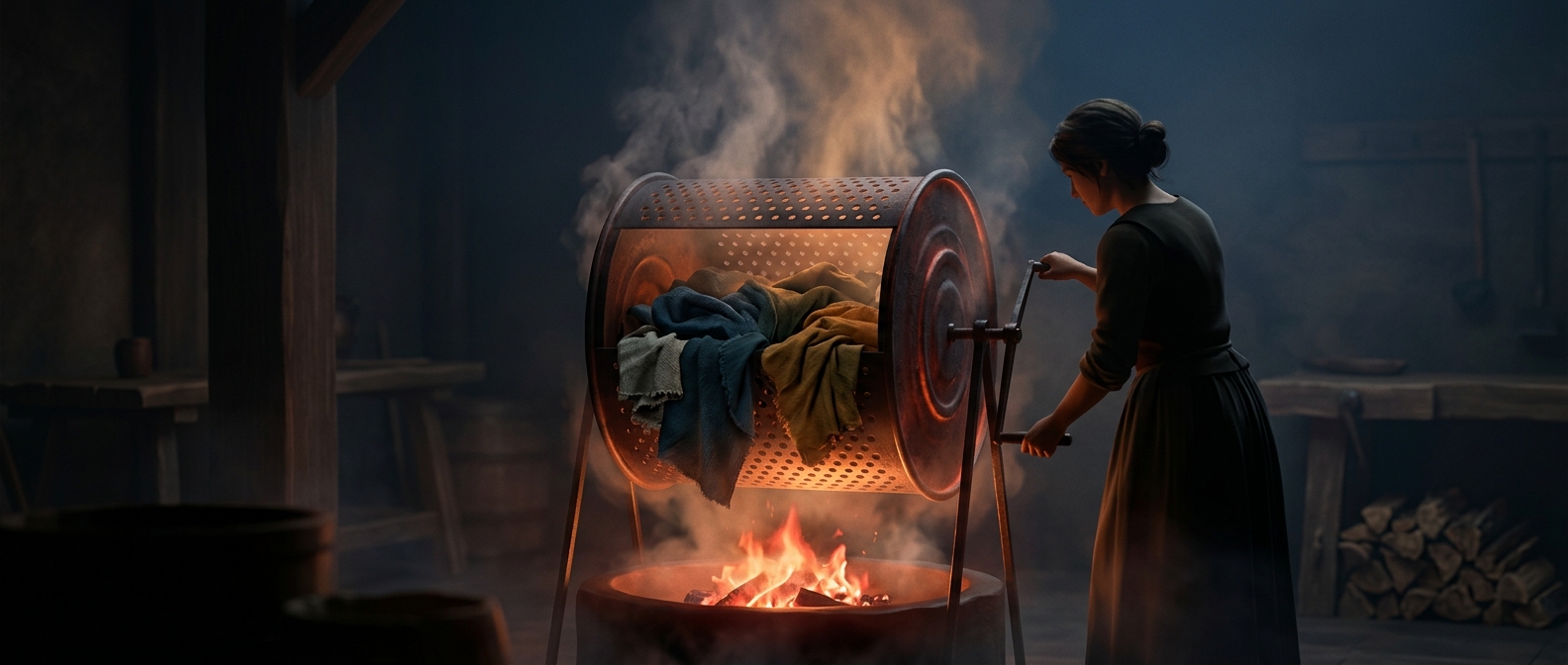
A hand-cranked washer used a rotating barrel to move clothes through soapy water. Instead of rubbing each garment against a board by hand, the user turned a handle that kept the load shifting and rubbing against itself. That motion could loosen dirt, but it did not make the work effortless: a full barrel of wet fabric and water was heavy, and the crank demanded sustained force.
Laundry Still Had Several Manual Stages
The washer addressed only part of the process. Someone still had to heat water, fill the machine, add and remove the clothes, rinse them, and wring out excess water. The hot water mattered because it helped with cleaning, but it also made the work physically demanding and required care around scalding liquid.
So the machine did not simply replace hand labor with a handle. It reorganized the labor. Scrubbing every item could give way to operating the crank, while lifting, hauling water, tending heat, and handling soaked garments remained.
The Useful Change Was Repetition
A crank gave the user a way to keep the clothes moving at a steadier pace than hand-scrubbing each piece. That mattered most for a large batch: the machine could repeat the same motion across the load, even though a person still supplied the power and managed everything around it.
The early washer’s promise was therefore practical rather than miraculous. It could reduce one exhausting task, but laundry remained a sequence of hot, wet jobs—and the person beside the machine was still its engine.