A rotating drum turned fire into drying heat
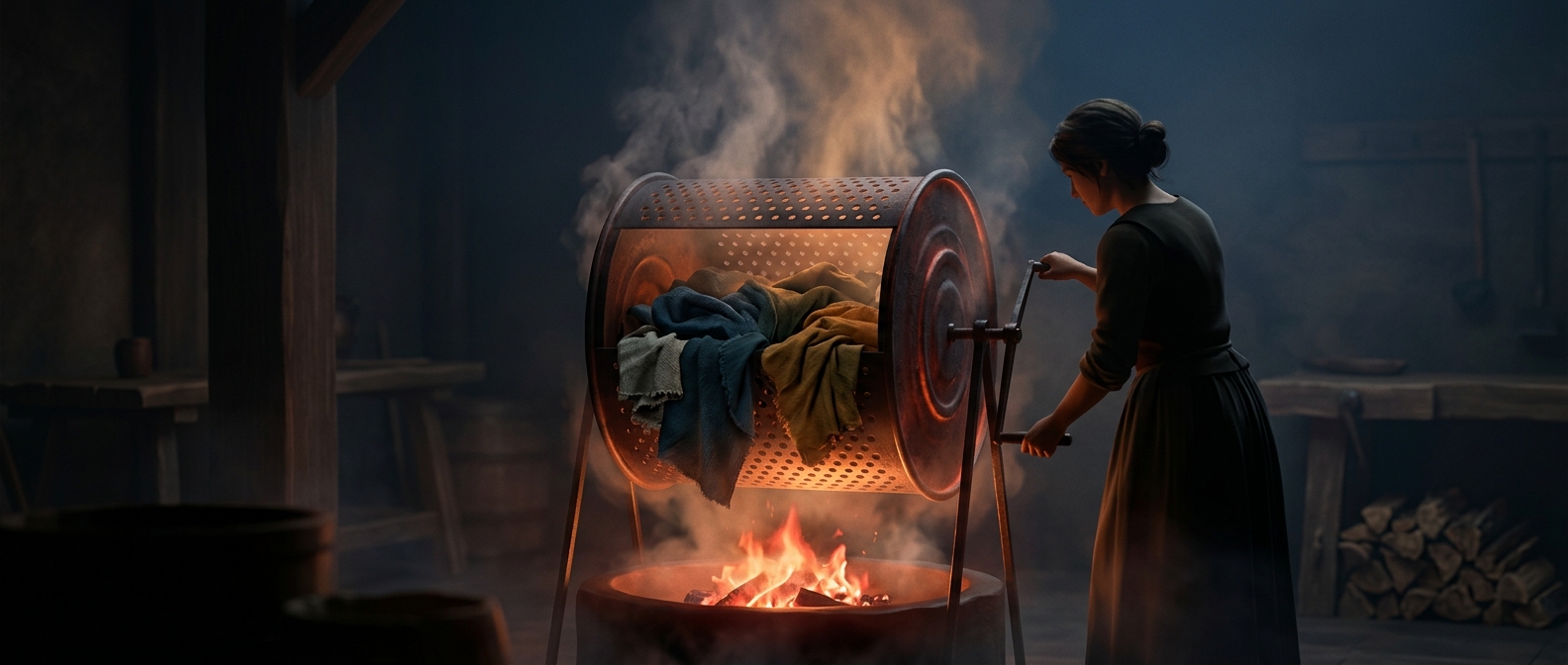
Before electric dryers, getting wet clothes dry could depend on weather, indoor space, and hours of waiting. One early mechanical approach put garments inside a metal drum set above an open flame. As the drum turned, the clothes shifted instead of sitting in one position, and heat from below warmed the container.
The basic idea was to make drying more active: rotation repeatedly moved different parts of each garment toward the heat. A metal enclosure also kept fabric from resting directly on the fire. But it did not separate the drying process from the flame. Heat still had to travel from an exposed fire into the drum, making temperature difficult to control.
Faster drying brought a combustible tradeoff
That arrangement concentrated the central problem of early machine drying. More heat could drive moisture out sooner, but too much could scorch cloth or ignite it. An open flame also made the appliance dependent on careful tending; unlike a modern dryer, it could not simply regulate its own heat and stop when a cycle ended.
The drum therefore offered a practical mechanical improvement without solving the safety problem. It moved garments through warm air, but the source of that warmth remained a fire beneath flammable material. The faster method worked by bringing clothes closer to heat—and that closeness was precisely what made it hazardous.