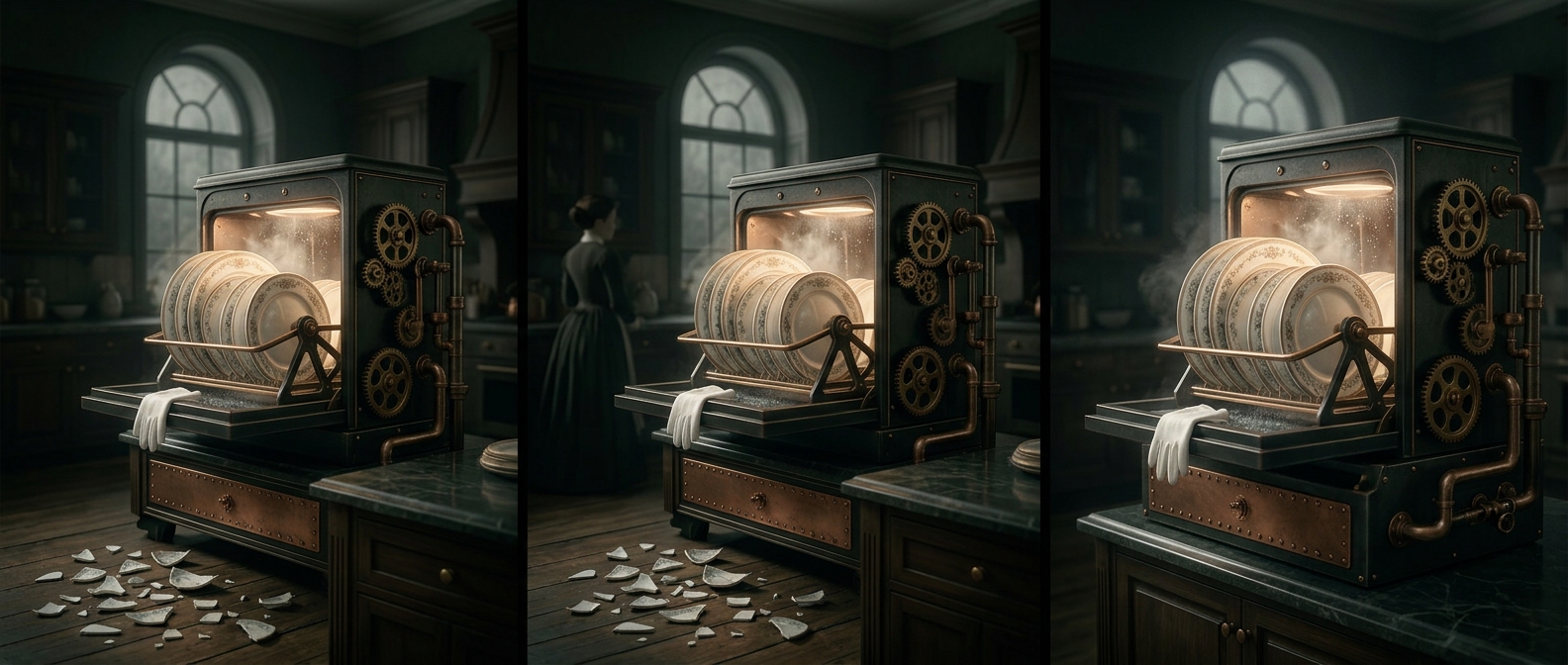
A rack solved the problem hands could not
Josephine Cochrane’s key design choice was to keep dishes from rubbing against one another. In her machine, plates, cups, and saucers sat in fitted wire compartments inside a copper wash chamber. The rack held each piece in place while water was directed over it, replacing the hand scrubbing and stacking that could chip delicate china.
That distinction made the machine more than a basin with a pump. A dishwasher had to clean effectively without letting its contents collide—and its holders had to fit different shapes of tableware. Cochrane designed separate rack arrangements for plates and cups, turning a household frustration into an engineering problem: how to secure fragile objects while washing them with moving water.
From household fix to commercial machine
Cochrane patented her design in 1886. Early dishwashers were large and costly compared with washing by hand, so they found a more natural place in hotels and restaurants, where kitchens handled many dishes at once. There, protecting expensive tableware and reducing the labor of repeated washing could justify a machine that an ordinary household might not buy.
The original problem was personal, but the solution depended on a principle that still shapes dishwashers: the dishes must be held steady while water does the cleaning. The machine’s promise was not simply cleaner plates—it was that fragile china could come out of a wash without being knocked together.