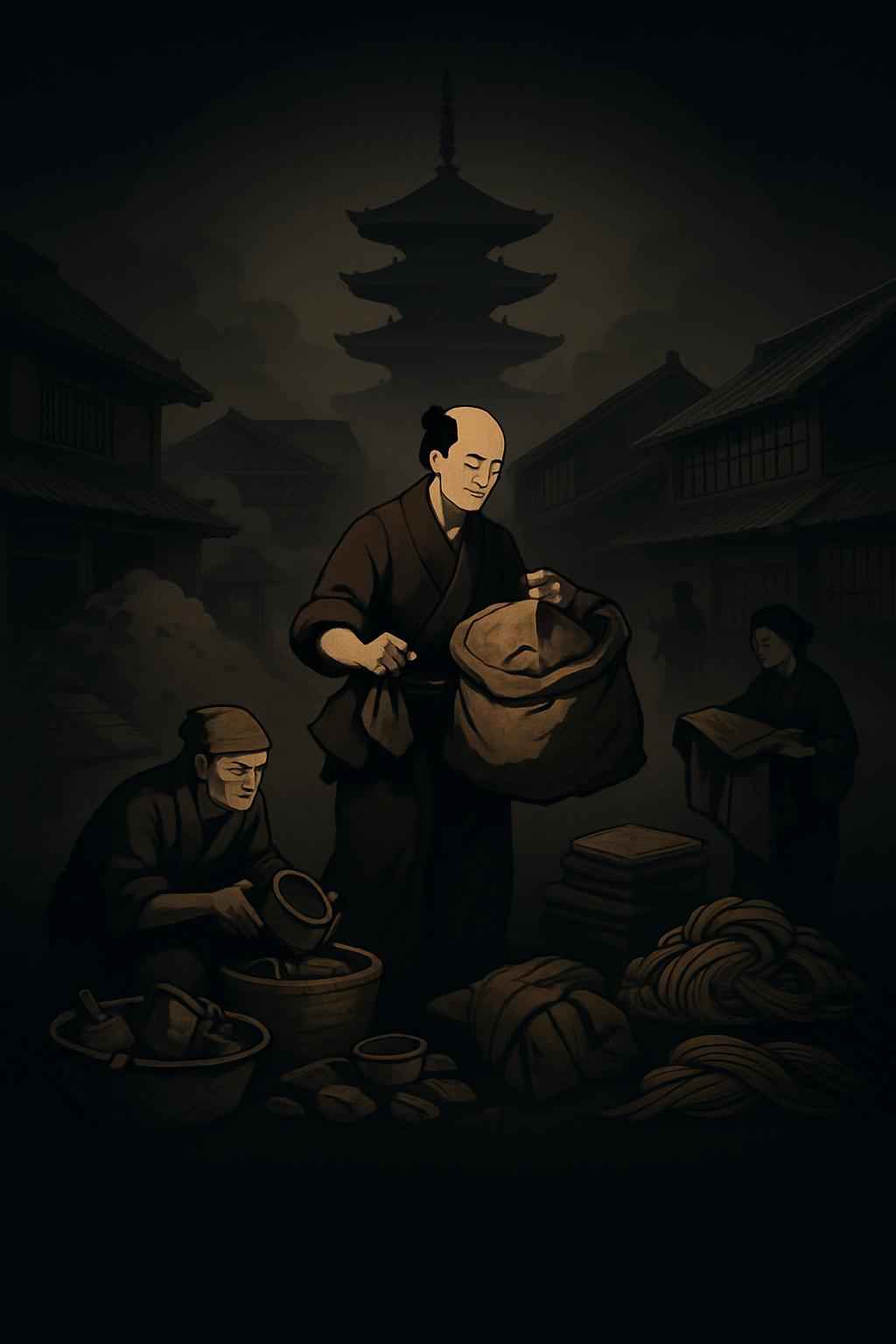
Edo’s waste economy ran on useful leftovers
In early modern Edo, today’s Tokyo, dense neighborhoods made discarded material both a nuisance and a resource. A household’s leftovers could become another person’s raw material, so reuse was woven into ordinary commerce rather than treated as a modern environmental program.
Ash shows how the chain worked. Wood and other fuels left ash after cooking and heating; merchants collected it and sold it to makers who could use it in pottery glaze. The material had value because it supplied an ingredient that would otherwise have to be obtained elsewhere. What looked like the end of a fuel’s usefulness was, for a potter, a starting point.
Old cloth had another life as paper
Rag dealers gathered worn textiles, including old kimonos, and passed them along for papermaking. Once cloth was too threadbare to wear, its fibers could still be processed into paper. Dealers also resold usable garments, matching items to buyers who could wear them rather than send them straight to the fiber supply.
That distinction mattered: reuse did not require every object to be transformed. A garment could first circulate through resale, then enter papermaking only after it had lost its practical life as clothing. Each step preserved some of its value.
A chain of trades, not a single recycling system
The system depended on specialists who knew what different materials were worth and where they could go next. Households did not need to find a new use for every scrap themselves; collectors and merchants connected waste to workshops, resale markets, and other buyers. Their livelihoods gave discarded goods a route back into circulation.
The result was a city where throwing something away often meant releasing it into a trade network. A worn kimono might still clothe someone else before becoming paper, while household ash could help finish a pot. In Edo, an object’s final use often belonged to someone beyond the household that first bought it.