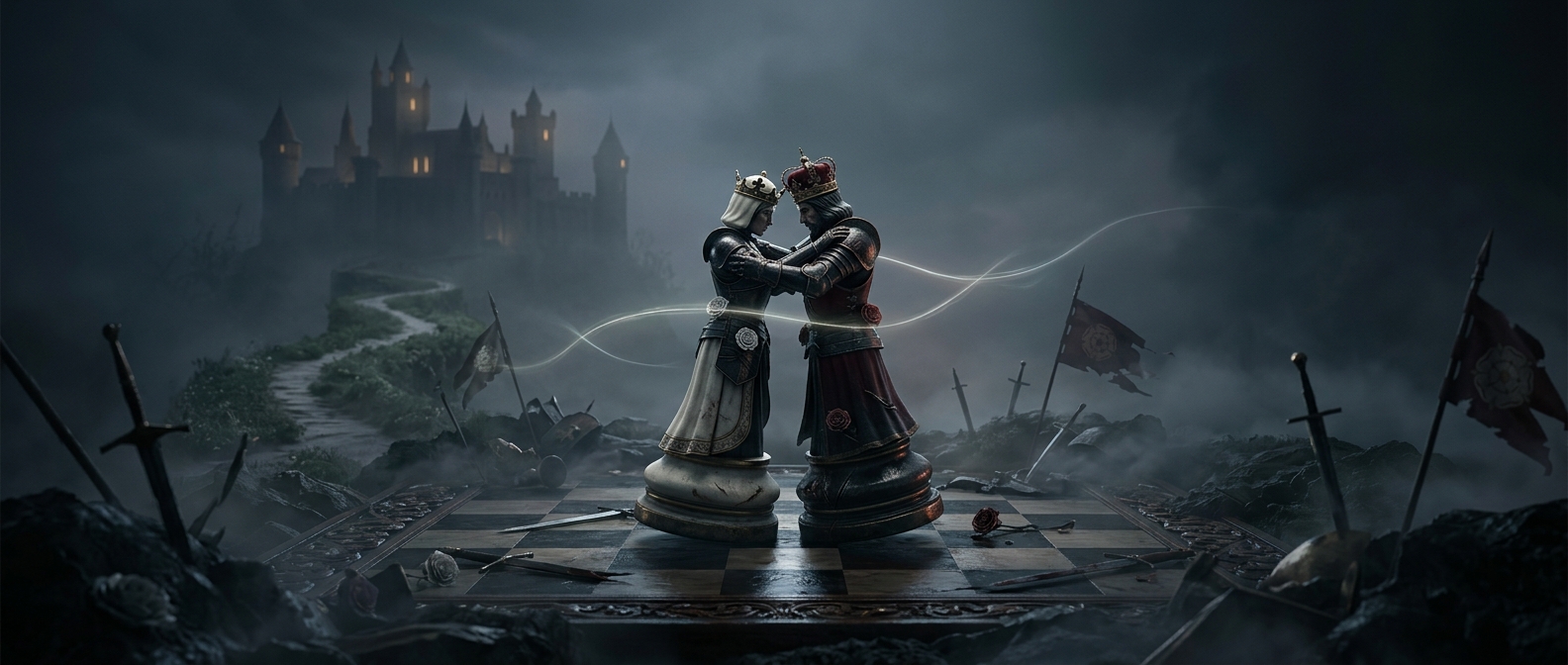
A throne with two plausible heirs
The conflict grew out of a problem that medieval inheritance could not neatly settle: more than one noble family could point to a royal ancestor and argue that its claim was stronger. The houses of Lancaster and York both descended from Edward III, but through different sons. The Lancastrian Henry VI wore the crown; Richard, Duke of York, had a competing claim through his own line of descent.
A claim alone did not decide the matter. A king also needed to govern, command loyalty, and reward supporters. Henry VI’s periods of incapacity weakened confidence in his rule, while York’s supporters gained influence and then lost it. When political struggles turned to armed clashes, powerful nobles brought their households and followers into the fight. Their loyalties could change as fortunes shifted, so the conflict was not simply two permanent camps facing one another.
How a family dispute became a succession crisis
The fighting began in the 1450s, paused and flared again, and continued through changes of monarch and leadership. Each victory could remove a rival from the throne, but it could not erase that rival’s relatives or supporters. That made settlement fragile: a defeated branch might return with a new claimant, while former allies could become enemies over access to power.
The eventual settlement came through marriage as well as battle. Henry Tudor, who became Henry VII after defeating Richard III in 1485, married Elizabeth of York, joining the victorious Lancastrian line to the Yorkist one. The union gave the new dynasty a way to present the divided claims as a single royal inheritance. It did not make the preceding decades a tidy contest between two teams; it turned a tangled struggle over who could rule into a claim that both sides had been brought together.