A placard identifies the cargo, not the emergency
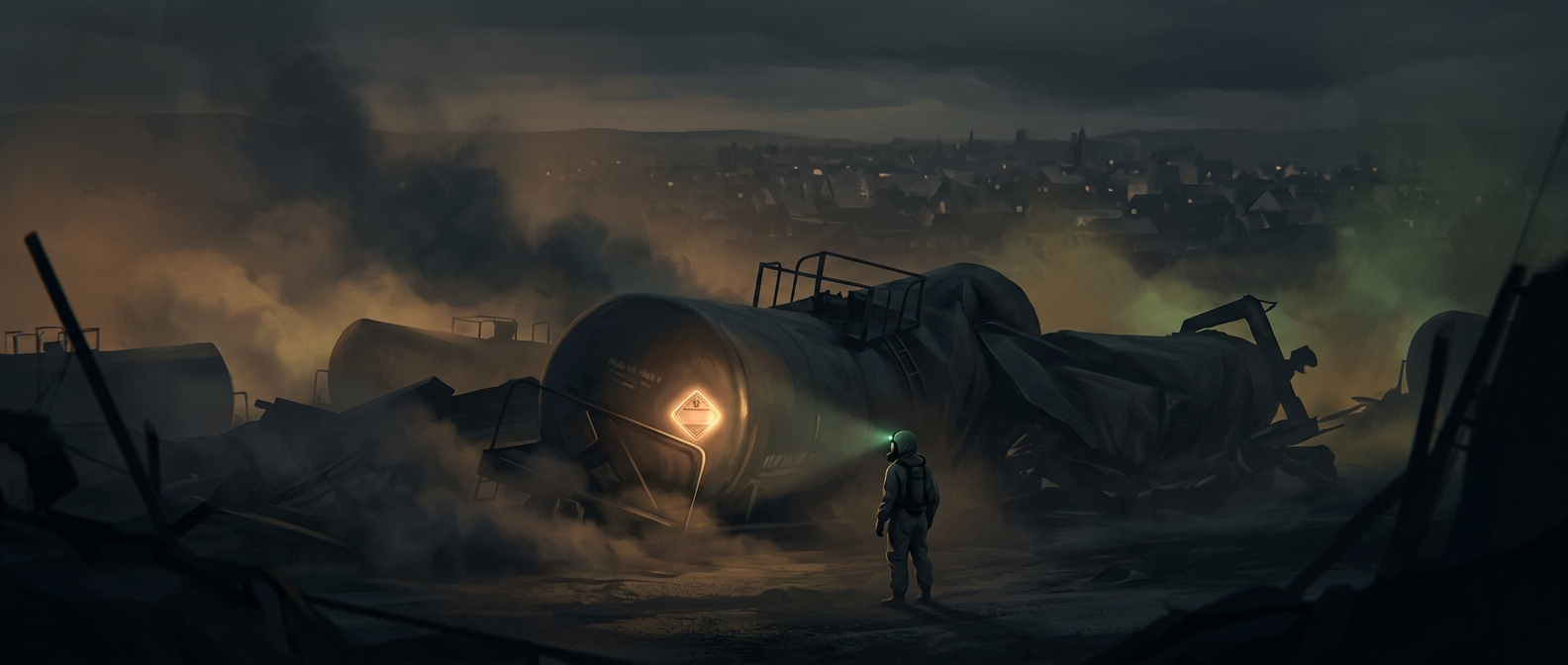
The number 1086 identifies vinyl chloride, a flammable gas shipped under pressure. That label helps firefighters and hazardous-materials teams recognize what dangers to consider. But a placard is fixed to the railcar: it does not change when a car is damaged, when its contents begin escaping, or when conditions inside the tank worsen.
That distinction matters because knowing the chemical is only the start of the response. Vinyl chloride can ignite, and a pressurized tank can release its contents rapidly if its shell or fittings are compromised. The placard cannot tell responders whether either is happening.
The crucial information must come from the scene
Responders need to build a live picture from other evidence: which cars carry which materials, what the wreckage looks like, whether instruments detect gas, and whether heat or fire is affecting a tank. Shipping records can help identify a car’s contents; monitoring and on-site assessment can help show what those contents are doing now.
That picture can be hard to obtain after a derailment. Cars may be overturned or piled together, access may be unsafe, and damage to a tank or valve may not be visible from a distance. A correct chemical label therefore does not settle the urgent questions of whether a leak exists, how serious it is, or whether the tank is becoming more dangerous.
Why the gap matters
The East Palestine derailment made the difference between hazard identification and condition assessment especially stark. A placard can quickly tell crews what kind of material they are dealing with; it cannot substitute for the inspections, measurements, and judgment needed to decide what action the damaged equipment requires. In an emergency, the label is a starting point—not a live status report.