A voice with two identities
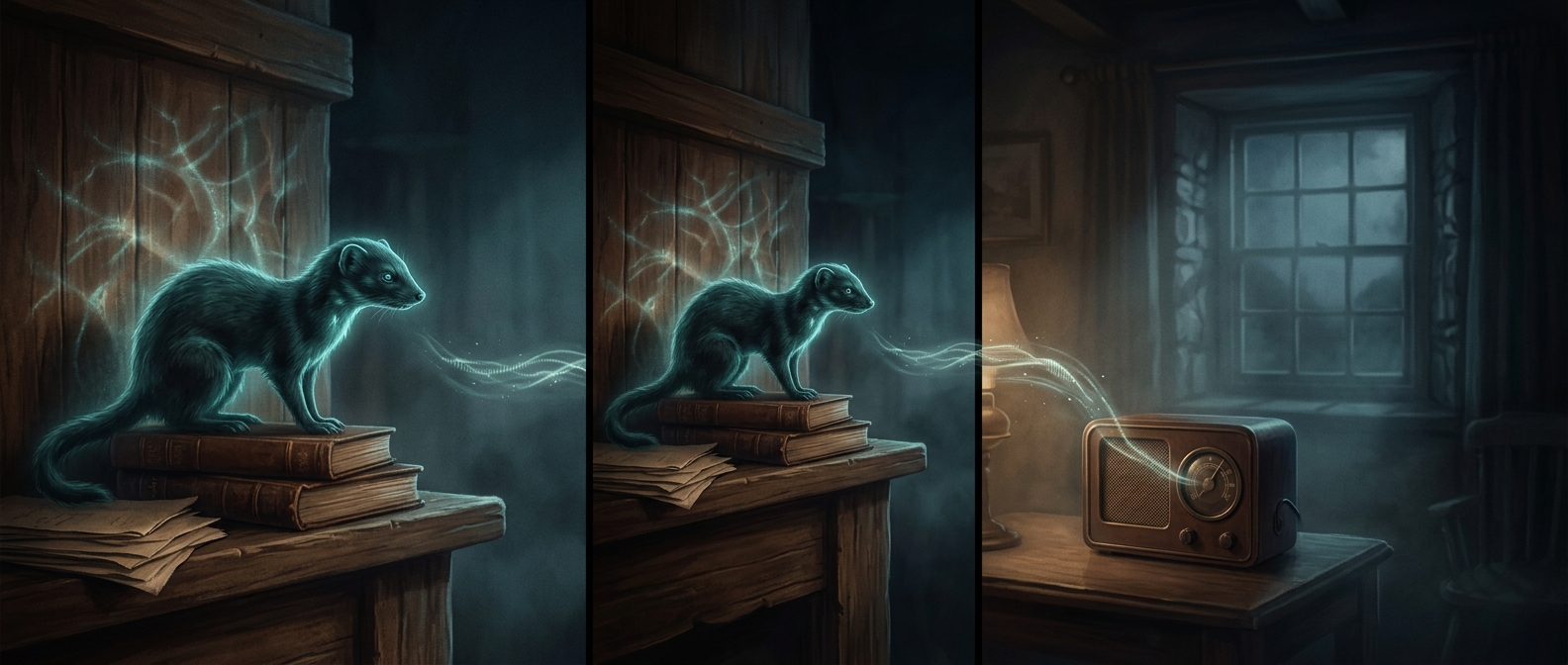
In the 1930s, the Irving family of the Isle of Man described a presence they called Gef: sometimes a talking mongoose, sometimes an “extra-dimensional” spirit. That shifting identity was central to the story. A mongoose was an animal one might imagine hiding around a farmhouse; a spirit could explain why the voice seemed to behave in ways the family thought no ordinary animal could. The claims made Gef difficult to pin down—and easy to argue about.
“Poltergeist” is a label for a supposed haunting associated with disturbances such as unexplained noises or objects being moved. Gef’s alleged repertoire went beyond rattling a room: the family said he could sing, complain about meals, and throw rocks. Those details made him sound less like a vague haunting and more like a fussy, disruptive housemate.
How the story took on a life of its own
The claims reached newspapers, turning a private household account into a public mystery. Each reported feat invited a different explanation: an animal, a trick, or the spirit the family said Gef was. The more personality the stories gave him, the more readers had to contend with a peculiar question: not just whether something was happening, but what kind of being could be responsible.
That ambiguity is part of what made Gef memorable. The family’s account presented him as both creature and supernatural presence, without resolving the tension between those descriptions. The result was a haunting with the habits of a house pet—and a name the press could repeat.