Why Mount Fuji appears on the overnight run west
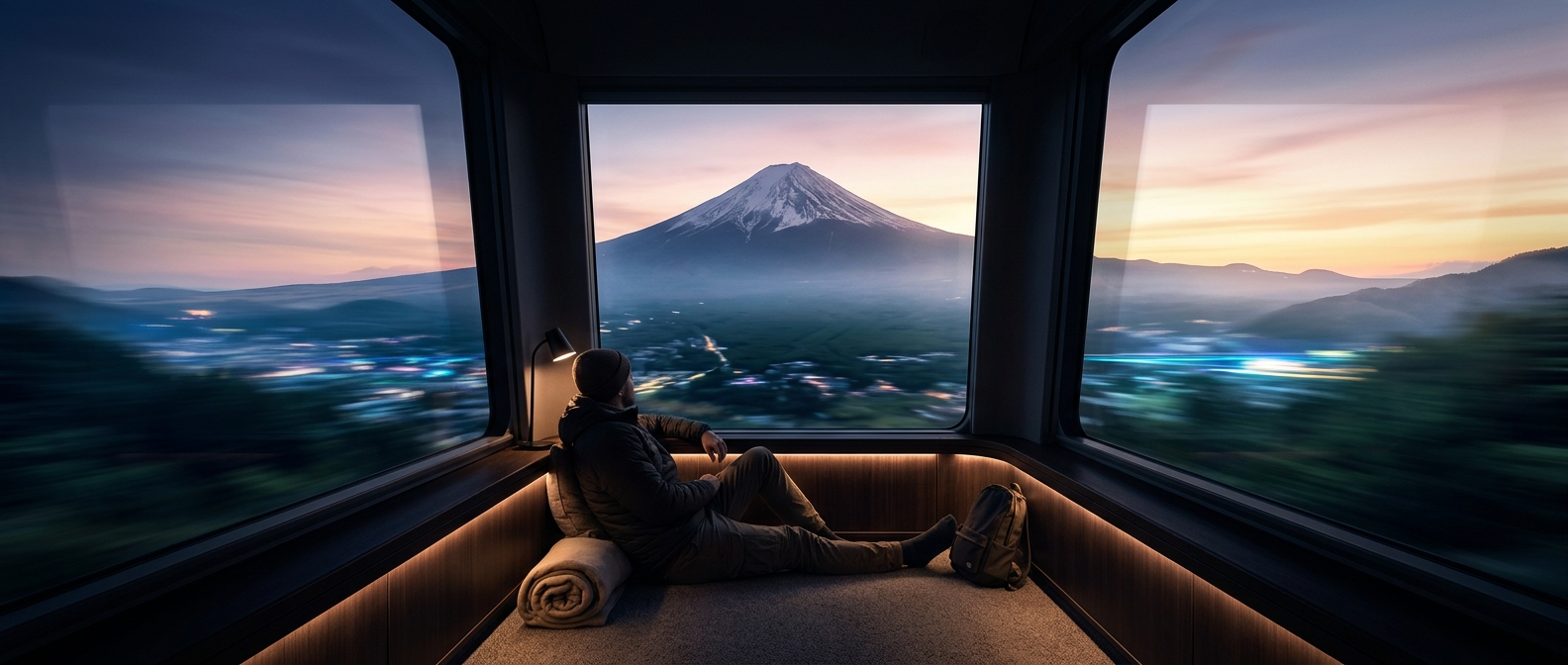
The Sunrise Seto and Sunrise Izumo leave Tokyo heading west, using the Tokaido rail corridor that links the capital with central and western Japan. Along this route, the tracks pass south of Mount Fuji. As the train crosses the Shizuoka region in the early morning, the mountain can come into view from the north-facing side of the train, often with dawn light behind it.
The timing is part of the appeal: passengers can sleep through much of the distance and encounter the landscape as the day begins. But the view depends on conditions—cloud, darkness, and the train’s schedule can all affect whether Fuji is visible.
A shared place to stretch out
The “nobi nobi” area is a compromise between an ordinary seat and a private sleeping compartment. Each passenger gets a carpeted space to recline, with partitions marking off neighboring places. It makes lying down possible without reserving a fully enclosed berth, while the large windows keep the passing countryside in view.
That design also shapes the experience. The spaces offer less privacy than a cabin, but they let travelers trade a costly private room for a simpler overnight ride. In the morning, the same window that framed the dark countryside becomes a viewing spot for Fuji—if the sky cooperates.