Why a Pizza Box Can Handle a Greasy Ride
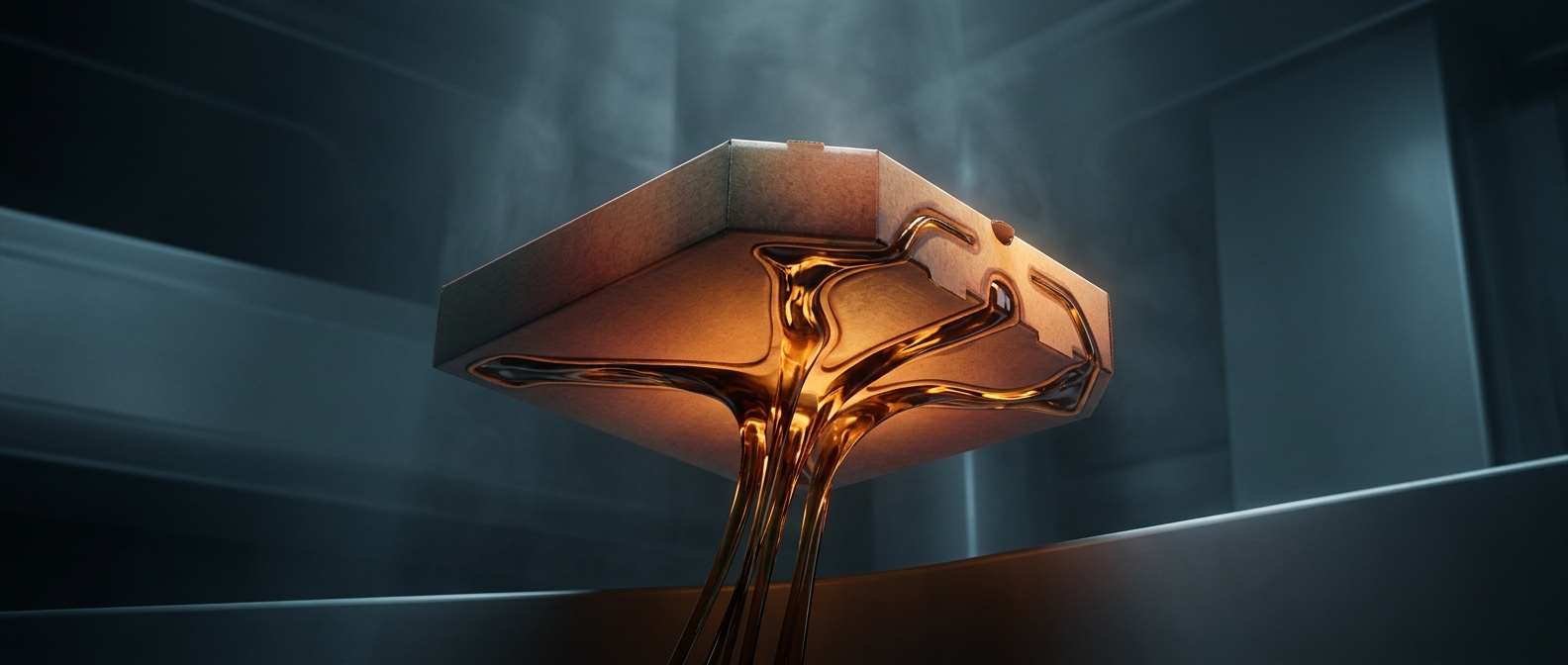
A pizza box has to do more than keep a pie in place. It must stay stiff while warm food releases steam and oil, then survive being lifted, tilted, and carried. The cardboard’s absorbency helps manage some of that grease: instead of letting every drop collect as a slippery puddle on the surface, the paperboard can take it up into its fibers.
That does not mean grease strengthens cardboard. Too much oil can soften paper fibers and weaken the box. The useful effect is limited: absorbing some surface grease helps keep it from sloshing around, while the box’s shape does most of the work of supporting the load.
The Hidden Structure Doing the Heavy Lifting
Many pizza boxes use corrugated cardboard: two flat sheets sandwich a wavy layer. That wavy middle acts like a series of tiny supports, giving a thin sheet more stiffness than a single flat layer. Folded corners and side walls add further rigidity, helping the box hold its shape when carried.
Heat and moisture still create a tradeoff. Steam can soften paper, and trapped condensation can make the crust soggy, so boxes often have openings that let some vapor escape. The box is therefore balancing two jobs: retaining enough heat for the trip while letting moisture out and tolerating a modest amount of grease.
The practical result is a package that uses both material and geometry: paperboard takes up some oil, but its folded, layered construction keeps the pizza from becoming the box’s only support.