The Line Is a Graphic Placed in the Field’s Perspective
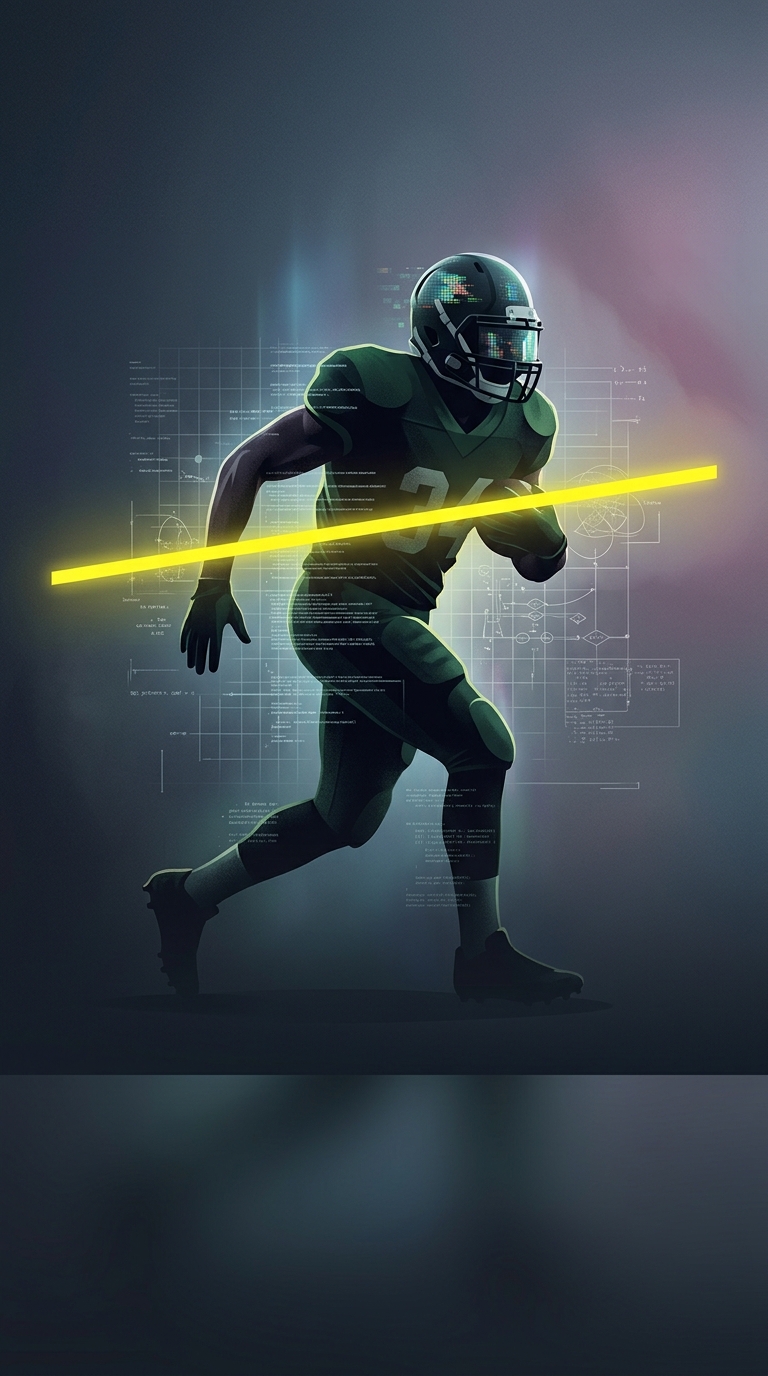
The yellow first-down marker is added to the broadcast video, not painted on the stadium turf. To make it look as though it lies on the grass, the graphics system maps the field’s geometry—its yard lines and boundaries—onto the camera image. It then places a digital line at the distance the offense must reach for a first down, projecting it at the same angle and scale as the field.
That projection has to change as the camera pans, zooms, or moves. The system uses the camera’s position and lens information to keep the graphic anchored to the field instead of letting it slide across the picture.
Why Players Appear in Front of It
A line drawn over the whole image would cover players, officials, and the ball. The system therefore identifies those foreground objects and masks them: it leaves their pixels untouched while inserting the graphic into the visible field behind them. This is why a player crossing the marker appears to pass in front of it, even though the line is only part of the video image.
The process must keep up with live action and handle changing views, including camera cuts. If the field mapping or foreground mask is off, the line can appear to drift or briefly pass over a player. The convincing effect depends on combining accurate field geometry with a clean separation between the turf and everything moving above it.
A Helpful Marker, Not a Ruling
Because the line is a broadcast overlay, it helps viewers judge the distance to the first down; it does not establish where the ball actually was. The officials’ on-field spot remains the basis for the ruling. The graphic’s job is to make that distance instantly legible on screen—while still letting the players, rather than the pixels, remain in front.