A safer liner in a wartime sea
After the Titanic sank in 1912, its sister ship Britannic was modified before entering service. The changes included stronger protection against flooding and more lifeboat capacity. But they could only help the ship withstand certain kinds of damage; they could not make its hull impervious to a blast.
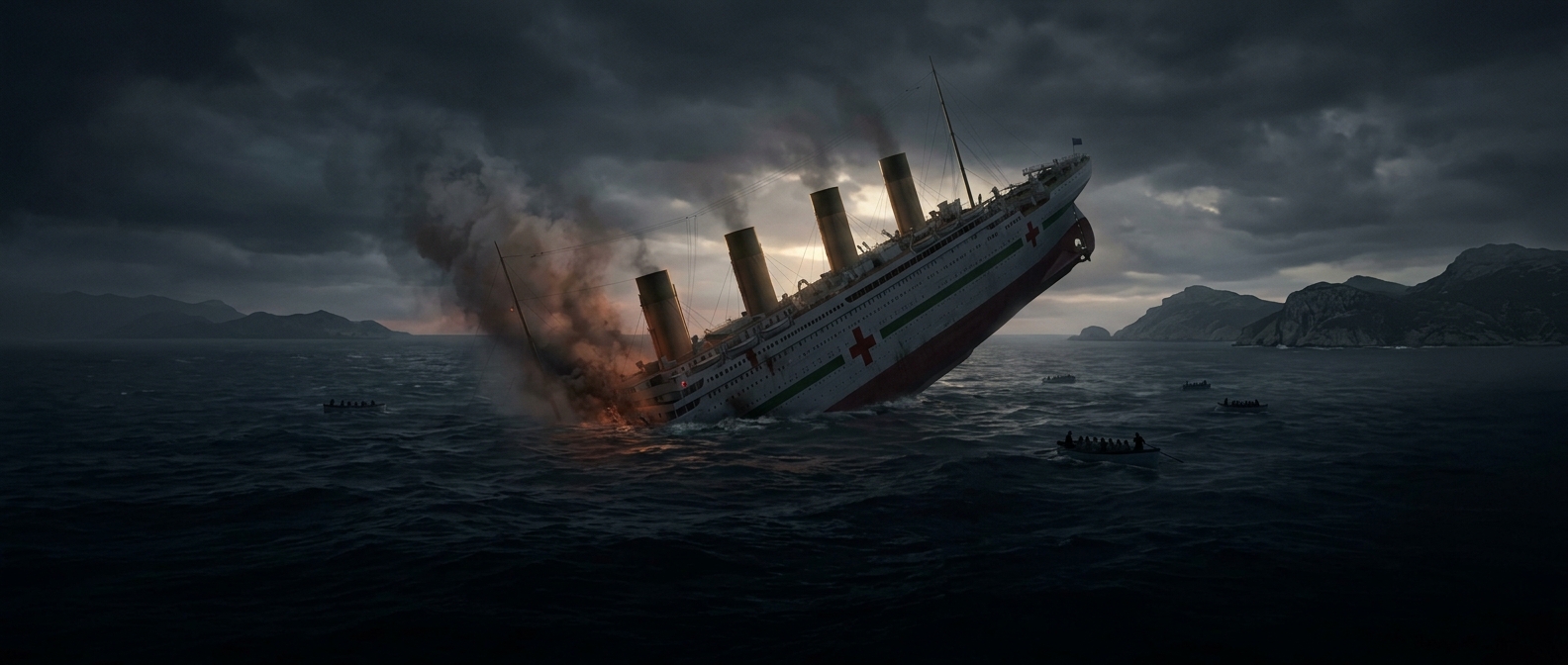
By 1916, Britannic was serving as a hospital ship in the First World War, carrying wounded servicemen across the Mediterranean. On November 21, near the Greek island of Kea, an underwater mine exploded against the ship. The blast opened the hull to the sea. Watertight compartments—sections designed to be sealed off from one another—could slow flooding, but they could not seal the breach itself or guarantee that water would remain confined as the ship tilted.
What the redesign could—and couldn’t—do
The Titanic disaster had shown the danger of flooding overwhelming a ship’s compartments and of too few lifeboats. Britannic’s improvements addressed those vulnerabilities. A mine created a different problem: sudden damage below the waterline, where the surrounding sea could pour directly into the ship. Britannic sank in about 55 minutes, and most people aboard survived, in part because there were lifeboats and rescue ships nearby.
The contrast is a reminder that safety measures are designed around particular failure modes. Better compartmentalization can buy time after a breach; it cannot prevent every breach. Britannic’s redesign could reduce the danger of a Titanic-like disaster, but wartime service exposed it to a hazard that the modifications were never meant to eliminate.