A Mask Could Protect the Dead—and the Living
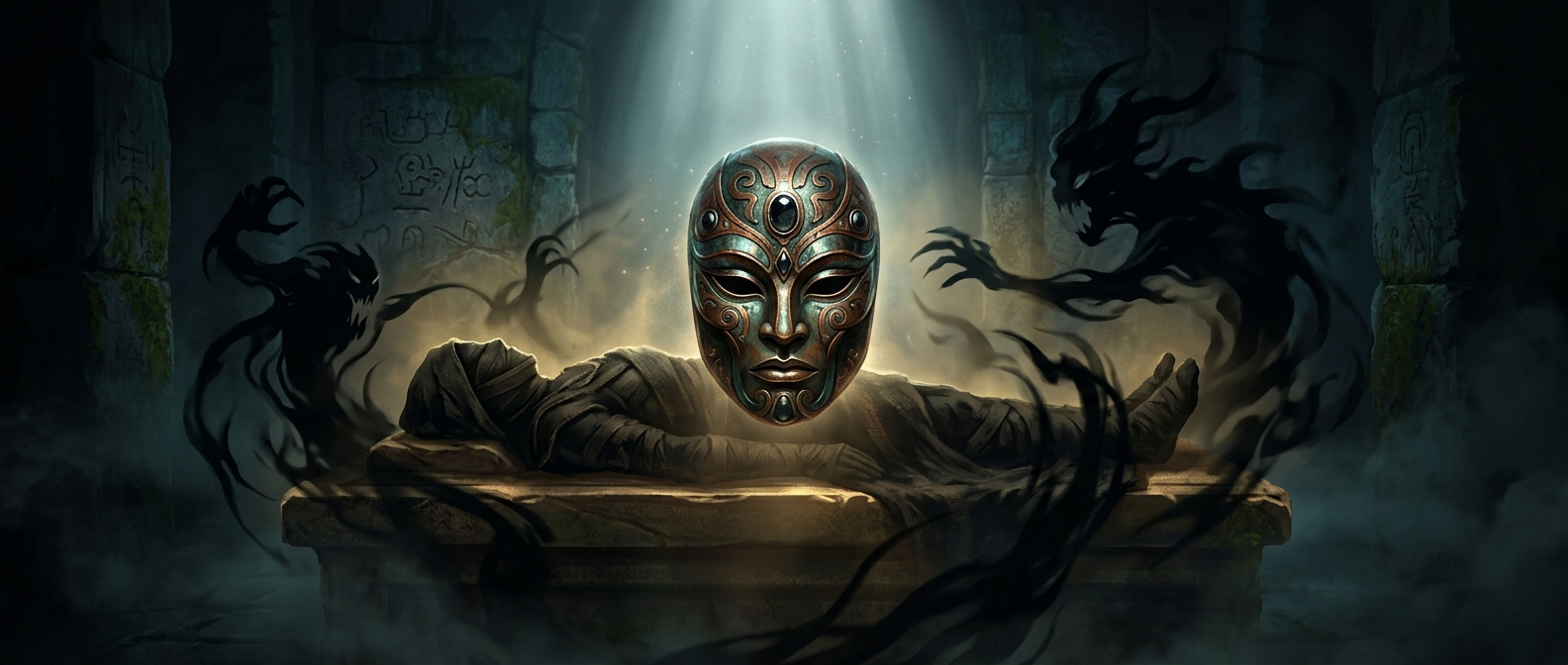
In some ancient funerary traditions, a face covering was more than an ornament. It could help transform the deceased into someone—or something—harder for hostile spirits to recognize. The logic rested on a world in which death did not immediately end a person’s relationship with the living: the dead might need protection on their journey, while demons or other dangerous beings could threaten that passage.
Gold and carved bone gave such coverings a striking physical presence, but the material alone does not tell us what a particular mask meant. Funerary customs varied across cultures and periods, and a mask might also honor the dead, preserve an image of them, or mark their status. The disguise interpretation belongs to some traditions, not to every ancient burial mask.
Changing the Face, Changing the Journey
A mask alters the most recognizable feature of a person: the face. In a ritual setting, covering it could signal that the deceased was no longer simply an ordinary person, or could make the dead less visible to beings imagined as seeking them. This is a symbolic mechanism, not a claim that masks physically concealed a body from anything supernatural.
The idea also connects burial practice to a practical human concern: how to make a dangerous transition feel governed rather than helpless. Preparing and covering the body gave mourners a concrete act to perform on behalf of the dead. The mask’s power lay in what it made possible for the community to imagine: a protected passage beyond the reach of a threat.