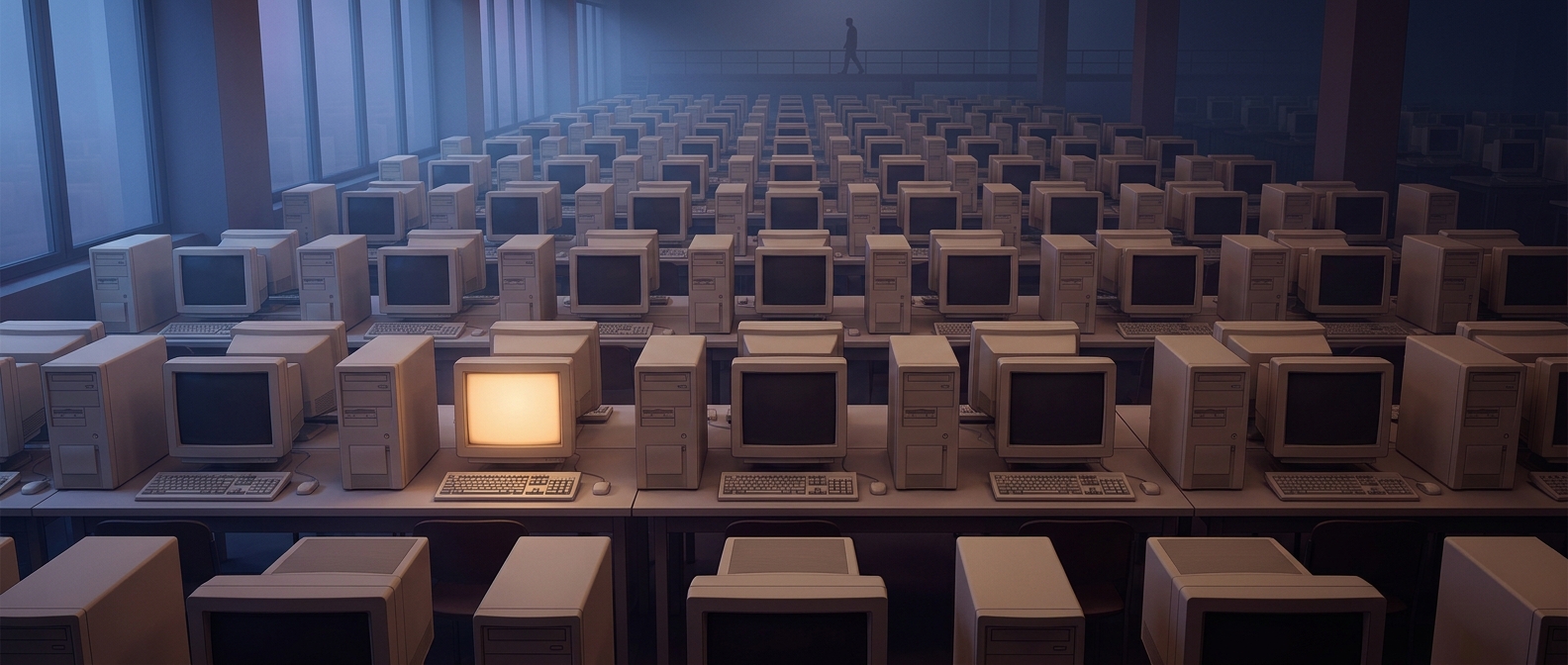
Beige made a computer look like office equipment
Early computers were often large, expensive machines placed in workplaces, where they had to sit among desks, filing cabinets, and other business equipment. Putty-colored plastic helped them look like part of that setting rather than like a novelty or a piece of entertainment hardware. Black and bright colors could make a machine stand out; beige kept its visual presence subdued.
That choice was a design decision, not a technical requirement. The casing still had to protect the electronics and provide a usable exterior, but its color also signaled how the computer was meant to fit into daily life: as a practical tool at work.
Color followed the computer into new settings
As computers spread beyond the office, their appearance could carry different associations. A machine used at home did not need to blend into a row of business equipment in quite the same way. Black plastic eventually became a familiar alternative, but it took more than two decades to catch on—evidence of how long the office image shaped the look of personal technology.
The change was more than a fresh coat of color. It marked a shift in what a computer could look like: not just another piece of workplace furniture, but an object with its own place in the home.