The Predicta’s compact design trapped heat beside fragile boards
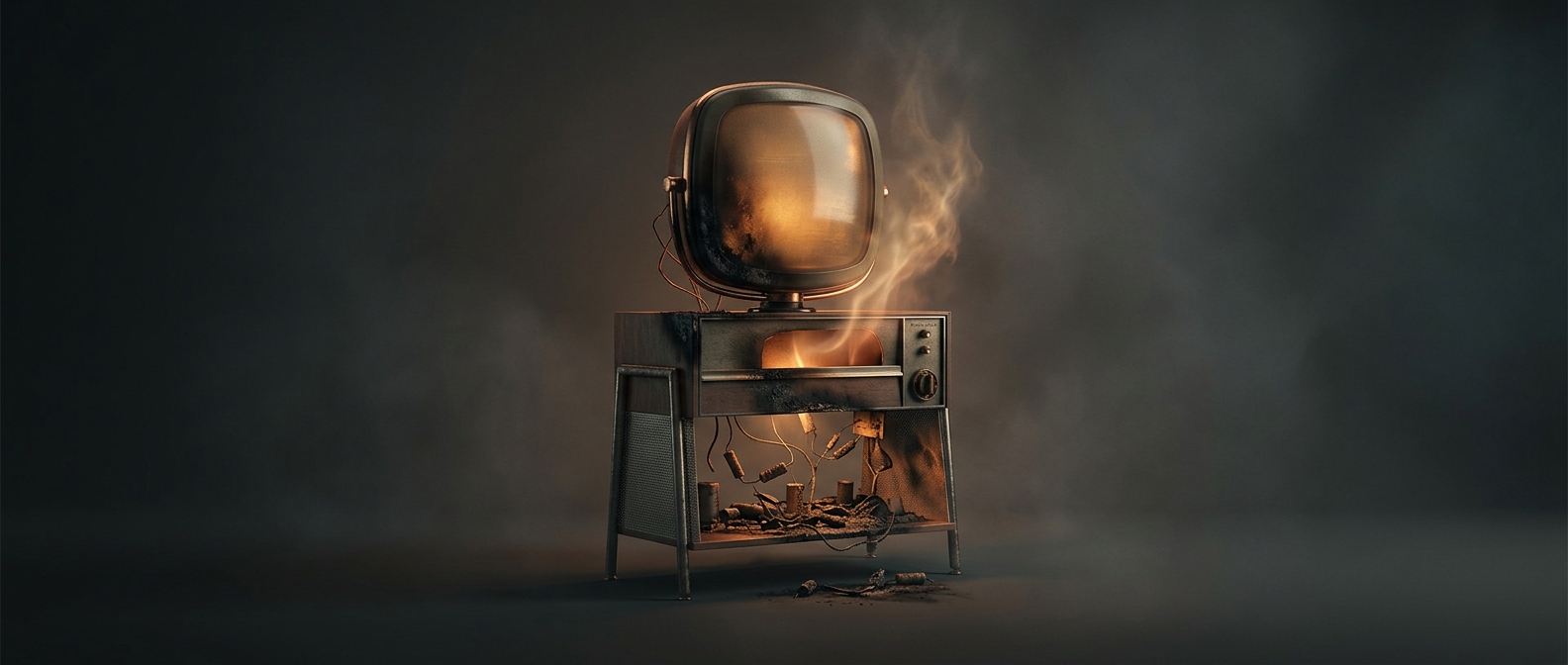
The Philco Predicta made the television’s picture tube look like a separate, swiveling display, but the electronics that drove it still had to fit inside the set. Those electronics relied on vacuum tubes: glass components that control electrical signals by heating an internal element. In normal operation, the tubes shed substantial heat.
That warmth became a problem when it built up near the Predicta’s inexpensive phenolic circuit boards. Phenolic is a paper-and-resin laminate used to support electrical components and connect them through printed conductive paths. It was cheaper than more heat-resistant materials, but repeated heating and cooling could stress the board and the parts attached to it.
Heat turned a cost-saving choice into a reliability problem
As the boards warmed, they could warp or become brittle. Movement and thermal stress put strain on component leads and soldered connections; a connection could crack, or a component could work loose. Once a circuit path failed, the result might be an intermittent fault or a television that stopped working altogether.
The trouble was not simply that the set used tubes—tube televisions routinely had to manage their heat. The Predicta’s difficulties came from the combination of hot electronics, a tightly packed design, and boards that did not tolerate the conditions well. The futuristic styling made the set visually distinctive, but it could not make the heat inside disappear.
That is why restoring a Predicta can mean more than replacing a failed tube. A technician may also need to inspect the boards and their connections for damage left by years of heating and cooling. The design’s lasting lesson is concrete: in electronics, a component’s surroundings and the material holding it in place can be just as important to reliability as the component itself.