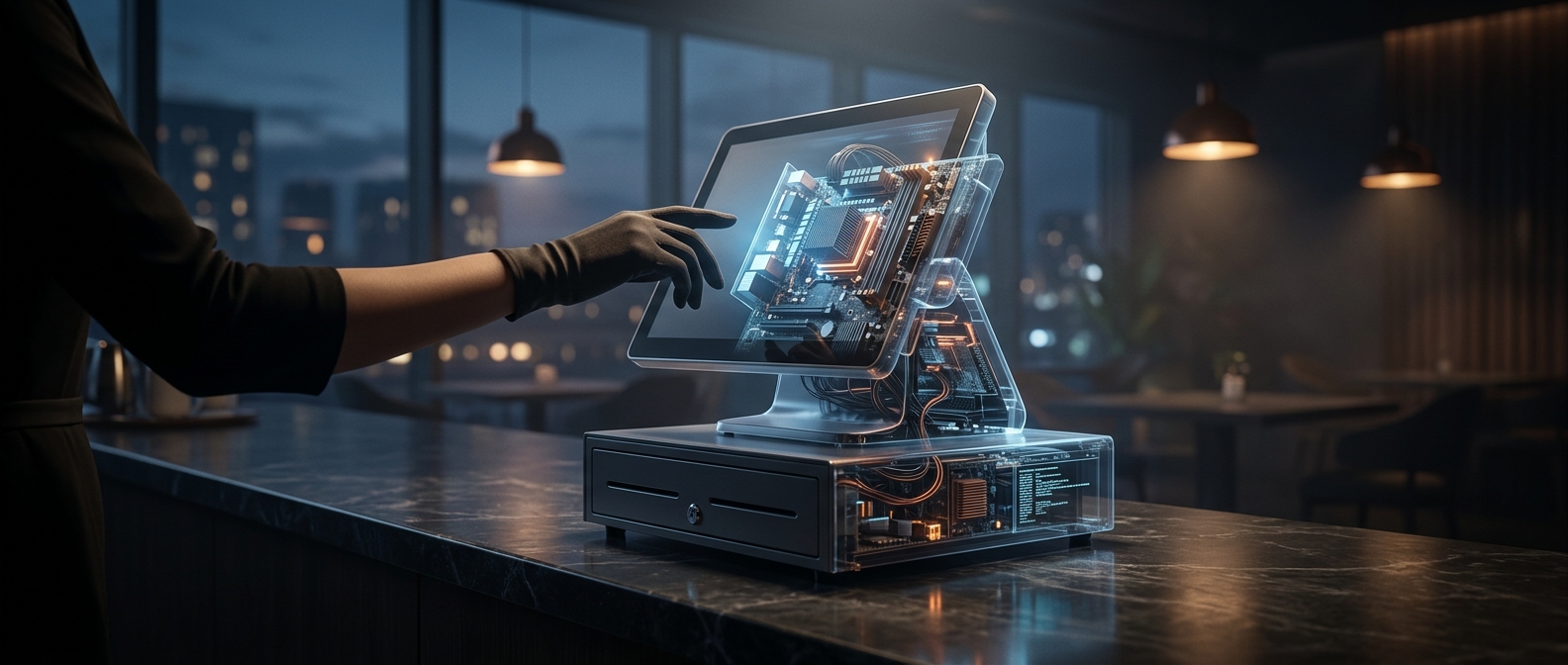
The register is a computer with a job-specific outfit
A modern point-of-sale register often runs ordinary computer hardware and an operating system, while specialized checkout software handles the sale. The bulky casing can hide familiar parts: a processor, storage, memory, and connections for a display, card reader, barcode scanner, receipt printer, and cash drawer. The cables matter because those devices have to work together as one checkout station.
When a cashier scans an item, the software looks up its price and adds it to the sale. It can then send separate instructions to the payment terminal, receipt printer, and cash drawer. The register is not just recording numbers; it is coordinating a small network of devices, each with its own driver or connection protocol—the software rules that let one device communicate with another.
Why old software can linger
Replacing a register is not always as simple as installing a newer computer. A retailer may depend on checkout software that has been tuned to its inventory system, payment process, and store procedures. Older peripherals may also work only with particular ports or drivers. Changing one component can therefore require testing the whole chain, from barcode scan to printed receipt.
That creates a practical tradeoff. Newer hardware and software can bring improvements, but a failed checkout system can interrupt sales across a store. Businesses may keep a setup that works—even if its operating system is dated—until they can replace and test the connected equipment safely. The familiar cash register has become a computer, but its most important design constraint remains the same: it must keep ringing up purchases.