How a Stripe Pattern Became a Price Lookup
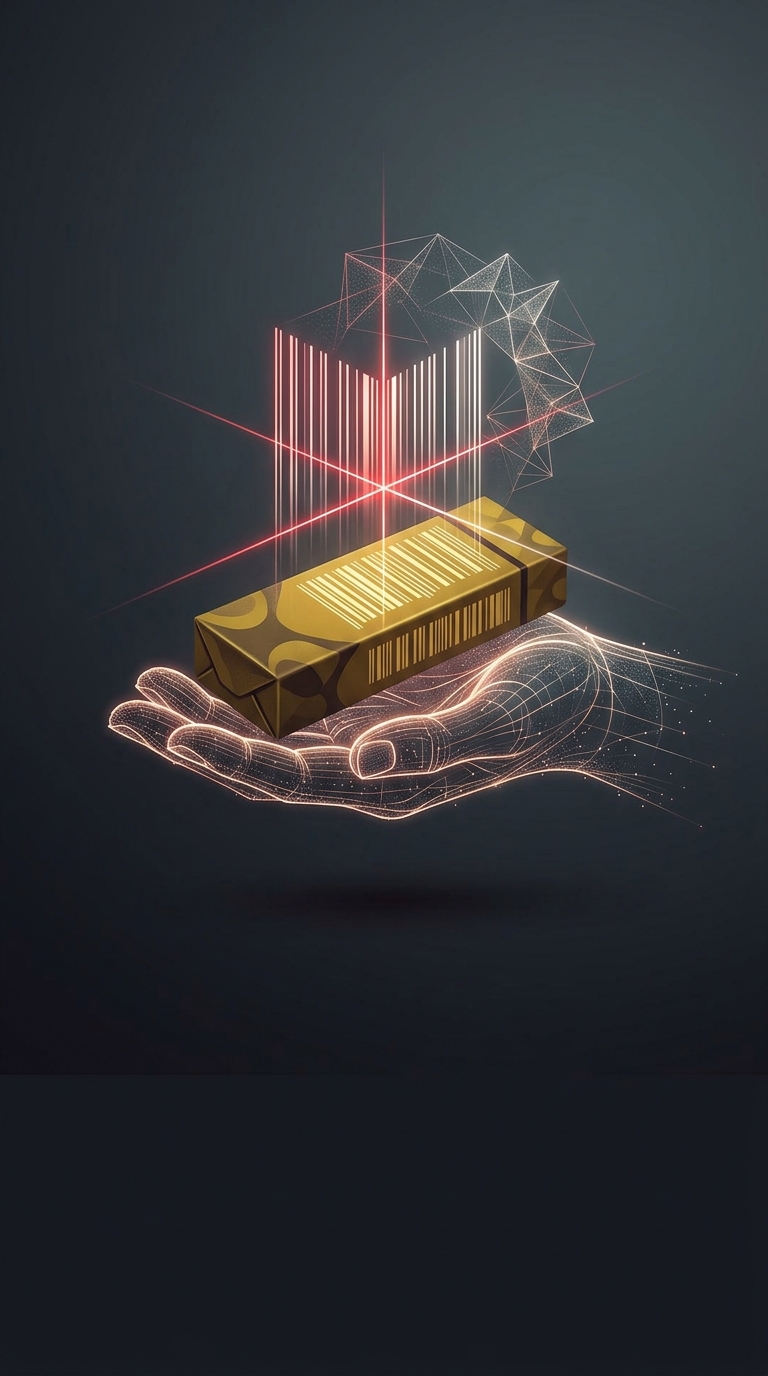
A barcode does not usually contain a product’s price. The UPC—the Universal Product Code—encodes a number that identifies an item. At checkout, a scanner reads that number, and the store’s computer uses it to retrieve the matching product and price from its records. The gum’s stripes were therefore a compact key to information stored elsewhere, not a tiny printed price tag.
A laser scanner reads the alternating dark bars and light spaces by detecting how they reflect light. Different widths form a pattern that can be translated into digits. The checkout system can then record the sale and update inventory, replacing the slower work of reading a label and entering its price by hand.
Why a Standard Mattered
For that system to work across stores and manufacturers, they needed to agree on a common way to identify products. A shared code let a package carry the same identifying number from factory to checkout, while each retailer could connect that number to its own price and stock records. The technology was not just the scanner; it was the coordination between printed codes, scanning equipment, and store computers.
That coordination also made the first test practical. A small, inexpensive pack of gum could be scanned at an ordinary checkout, showing whether the whole chain—from package to register—worked in a real store. The surviving pack is more than a novelty: it marks the moment a standardized product number began doing a job shoppers would soon take for granted.