Why a Zombie Horde Needed Rehearsal
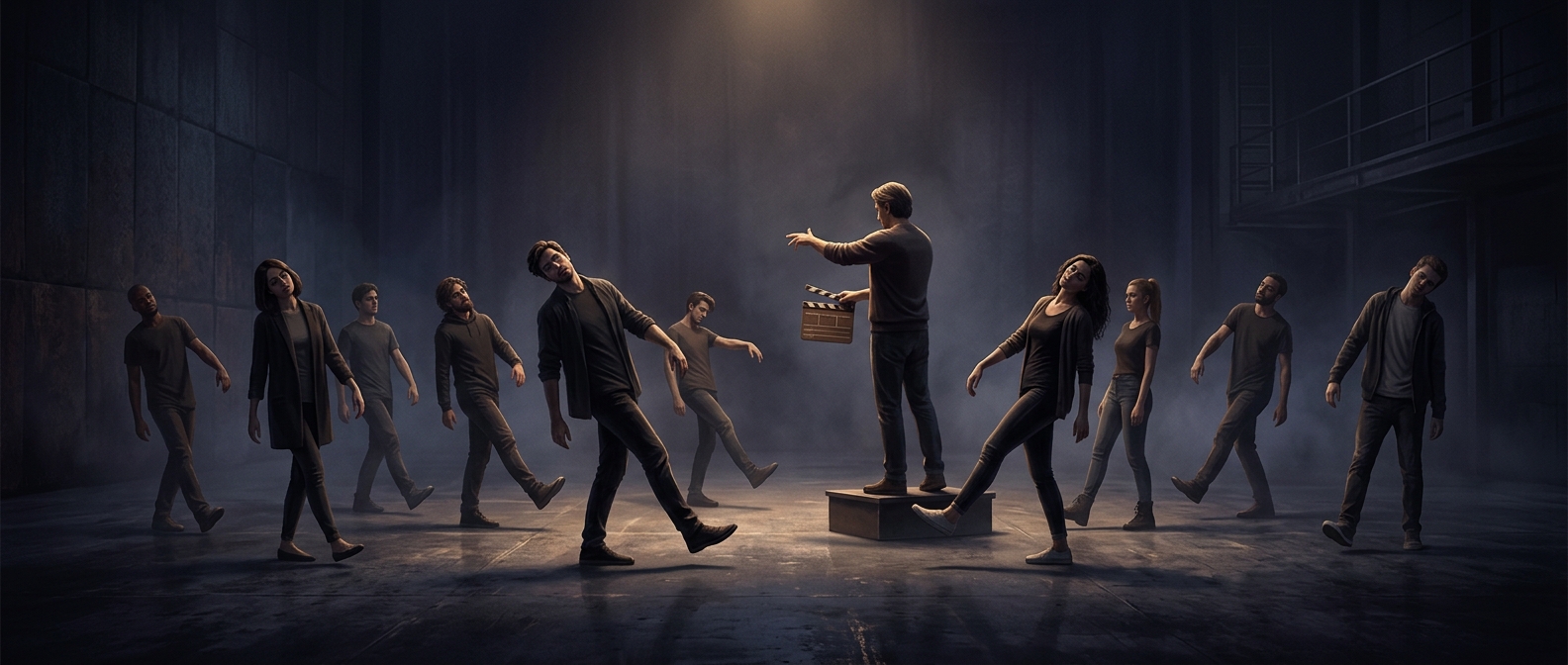
A crowd of undead can look convincing only if its movement reads as one shared threat, not a roomful of extras wandering in different directions. On The Walking Dead, extras learned a common physical vocabulary: limping, twitching, and staggering. That gave performers a starting point for appearing damaged and unsteady while keeping the horde visually coherent.
Consistency Without Identical Walks
The goal was not to make every zombie move exactly alike. If each extra repeated the same limp or jerk, the crowd could look choreographed rather than disturbing. A shared set of movement cues instead let performers vary their gait while staying within the same unsettling style. The result could feel like a mass of bodies moving together without seeming like a line of synchronized dancers.
That consistency also matters when scenes are filmed in pieces. A large crowd may be shown in different shots, with actors positioned and filmed separately; recognizable movement helps those shots feel as though they belong to the same horde. It gives directors and editors a visual thread they can carry through the scene.
The Body Becomes Part of the Effects
Makeup and costumes establish what a zombie looks like, but posture and timing sell the illusion in motion. A dragging step suggests a body that no longer moves normally; a sudden twitch can make it seem unpredictable. Teaching those choices turns the extras themselves into part of the production’s effects work. The memorable trick is that a convincing undead crowd depends not just on how its members are made up, but on how they move.