Why a landing can go wrong
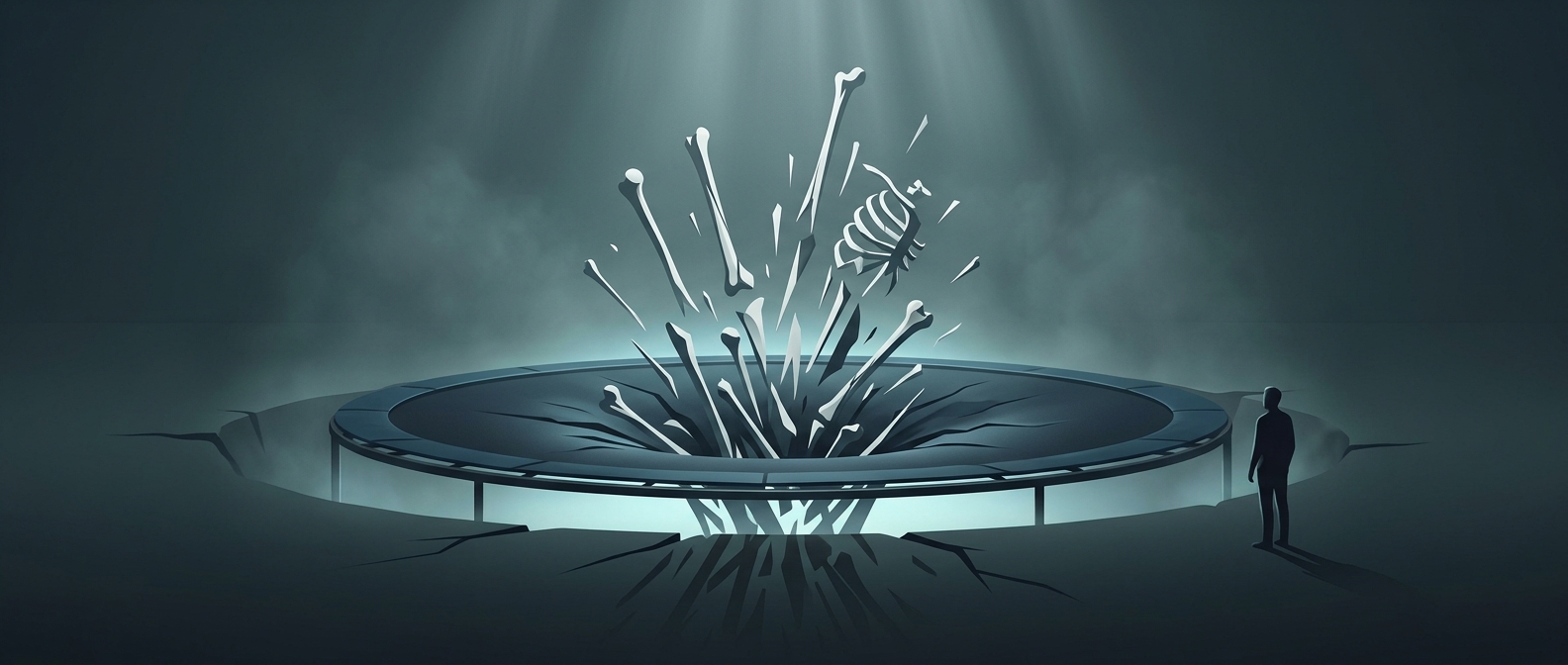
A trampoline stores energy when its mat and springs stretch under a jumper, then releases that energy as the surface snaps back. The rebound depends on where and when the jumper lands, so a person may rise or shift more than expected. If their body is still turning or moving sideways, they have less time to set their feet for the next landing.
A fracture can happen when the landing force is concentrated through a bent or twisted limb. A jumper who loses balance may also reach out with an arm to break a fall, sending force through the wrist or forearm.
How another jumper changes the rebound
With multiple people on the mat, each landing deforms a larger area of the shared surface. One person’s bounce can send the mat recoiling beneath someone else at a different point in their jump. Their feet may meet a rising or dipping surface instead of the one they expected, disrupting balance; jumpers can also collide directly.
The key risk is not simply bouncing high. It is having little control over the timing and direction of the next landing—especially when another person’s movement changes the mat underfoot.