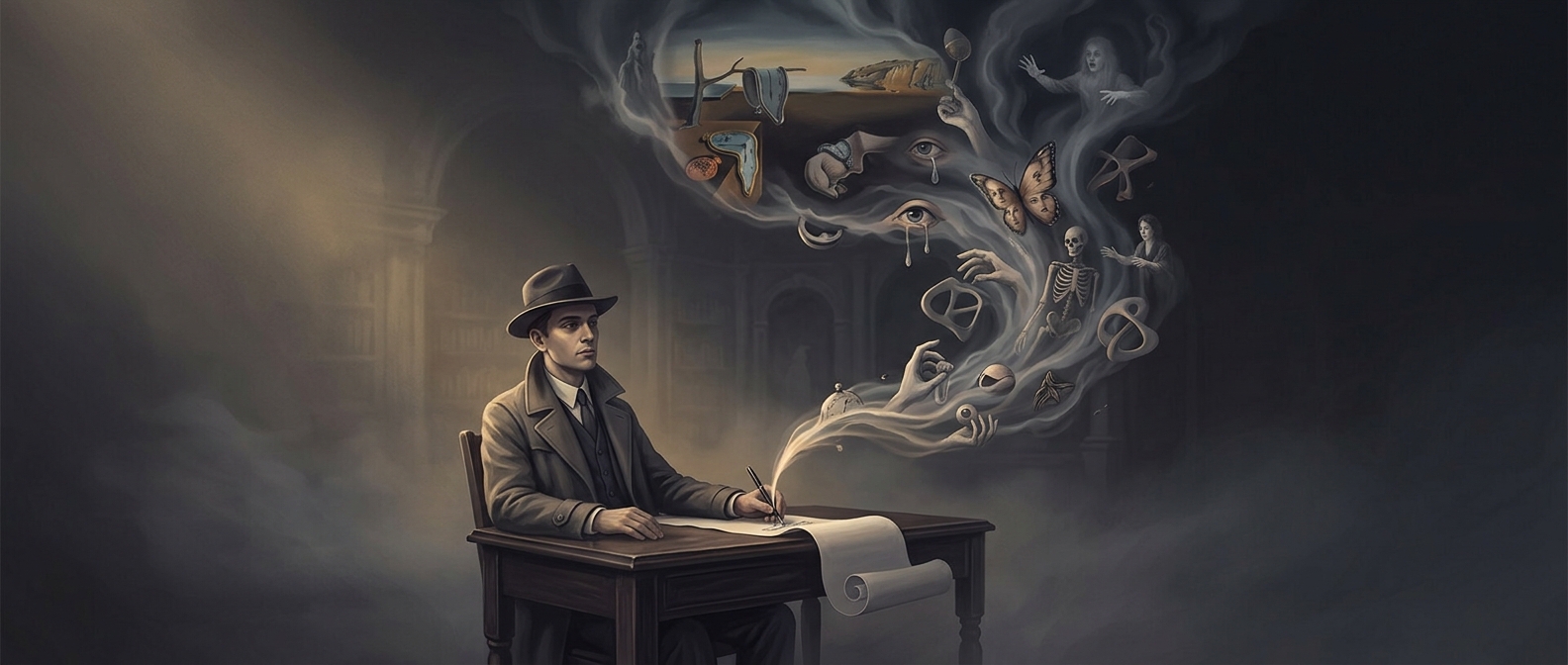
Writing before the inner editor can intervene
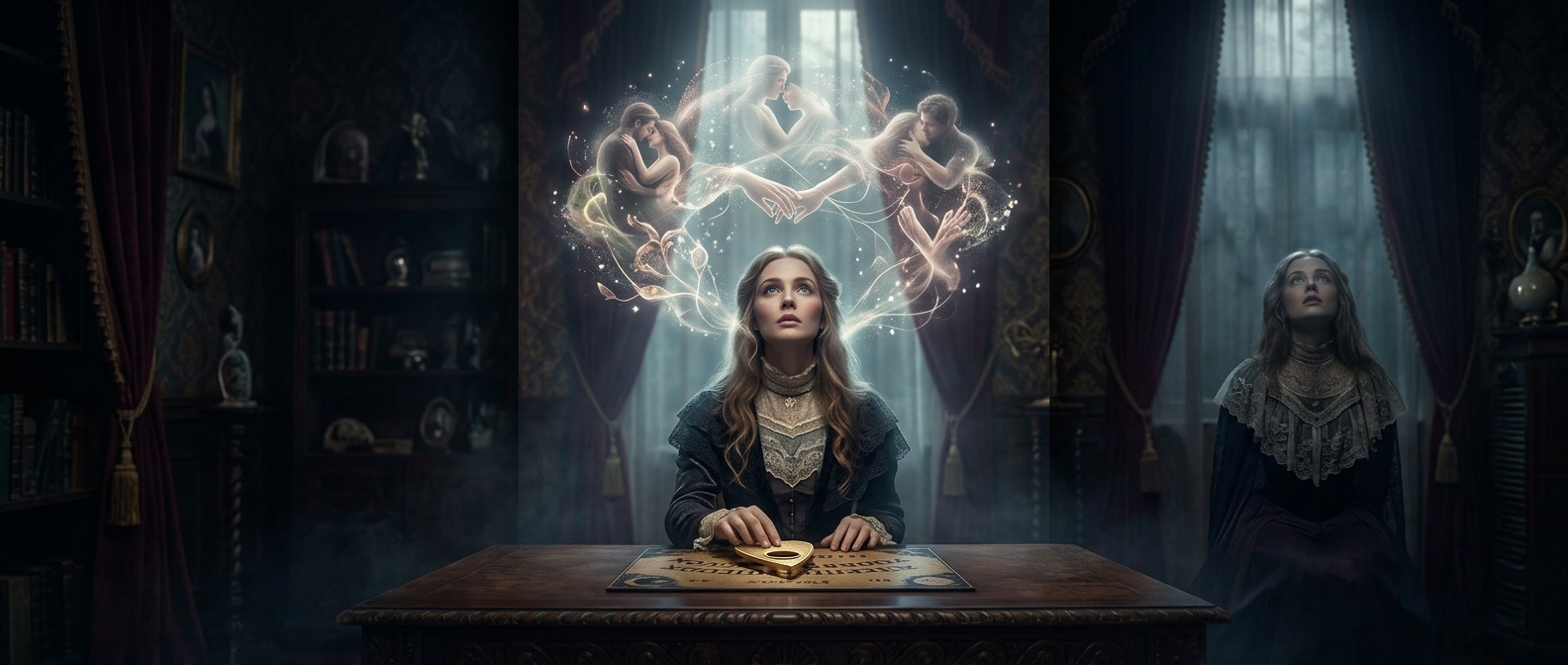
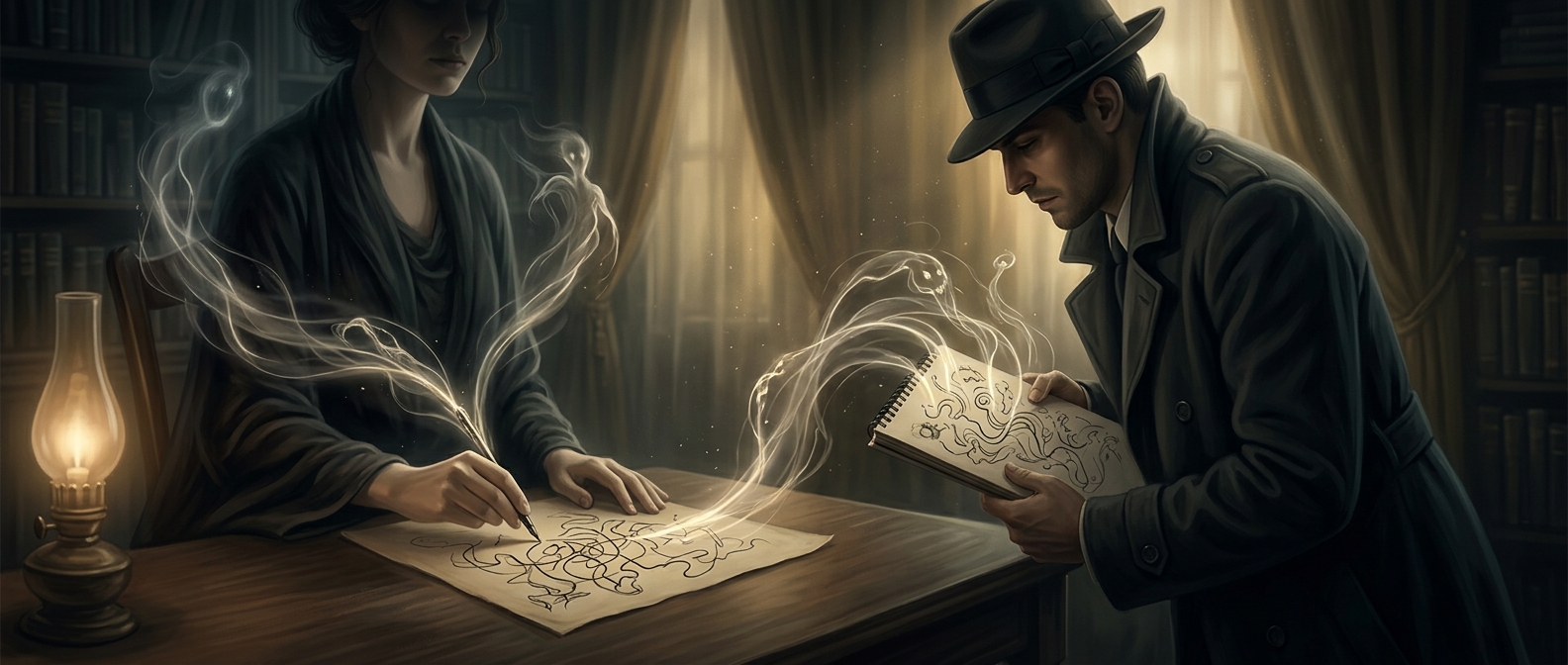
Automatic writing borrowed a familiar feature of spiritualist séances: a person wrote while trying not to consciously direct or revise the words. Mediums might understand the resulting text as communication from spirits. Surrealists kept the procedure but changed its purpose. They treated it as a way to loosen the habits of deliberate thought and let unexpected associations reach the page.
In practice, the writer tried to keep the words moving instead of pausing to judge whether a phrase was sensible, elegant, or appropriate. That mattered because ordinary writing involves constant selection: we discard awkward ideas and steer sentences toward a clear point. By postponing those decisions, Surrealists hoped to expose connections that careful composition would have suppressed.
A technique, not a séance
For André Breton and his fellow artists, the value lay in the writing process, not in proving that an outside spirit had taken control. The spiritualist model offered a procedure for reducing the writer’s sense of authorship; Surrealism recast that reduced control as access to the mind’s less-policed material. The text could be strange or disjointed precisely because it had not been shaped into a conventional argument or story.
Automatic writing did not mean that every unedited sentence was automatically profound. Its promise was more practical: it gave writers a way to generate surprising raw material before conscious judgment took over. A phrase that seemed nonsensical at first might suggest an image or connection worth developing later. The method’s lasting appeal is that it turns a familiar struggle—getting past the blank page—into a deliberate experiment in letting the first thought arrive before the editor does.