When a scripted death became a real one
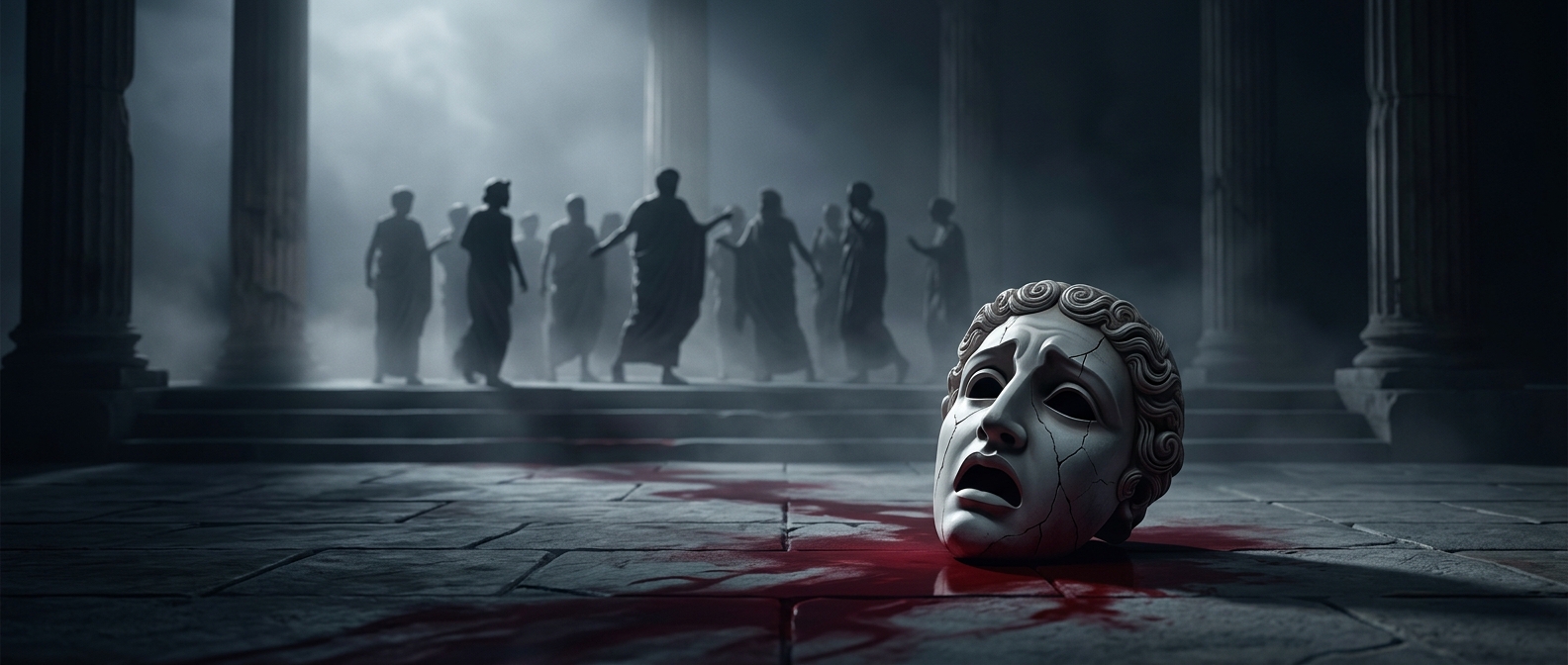
In some Roman performances, the “death” at the end of a scene was not acted. A condemned prisoner could be made to take an actor’s place and undergo the fatal punishment written into the story. The audience saw a familiar dramatic ending, but for the person onstage it was an execution.
This was possible because Roman public entertainment could combine drama with punishment. Executions were presented as spectacles, and stories of heroes, criminals, and mythological figures offered a script for staging them. A scene could therefore serve two purposes at once: tell a story and display the state’s power to punish.
The boundary between play and spectacle
Such episodes should not be mistaken for a routine feature of Roman theater. Accounts describe particular productions or spectacles; they do not show that actors were commonly replaced in ordinary plays. Nor was the condemned prisoner simply another performer: the scene’s apparent realism came from the fact that the violence was real.
That overlap changed what spectators were watching. A scripted death usually gives an actor a safe way to represent an ending; here, the story provided a frame for an actual execution. The moment when the audience expected the scene to conclude was also the moment the punishment became irreversible.