Why a resistor mattered inside a pacemaker
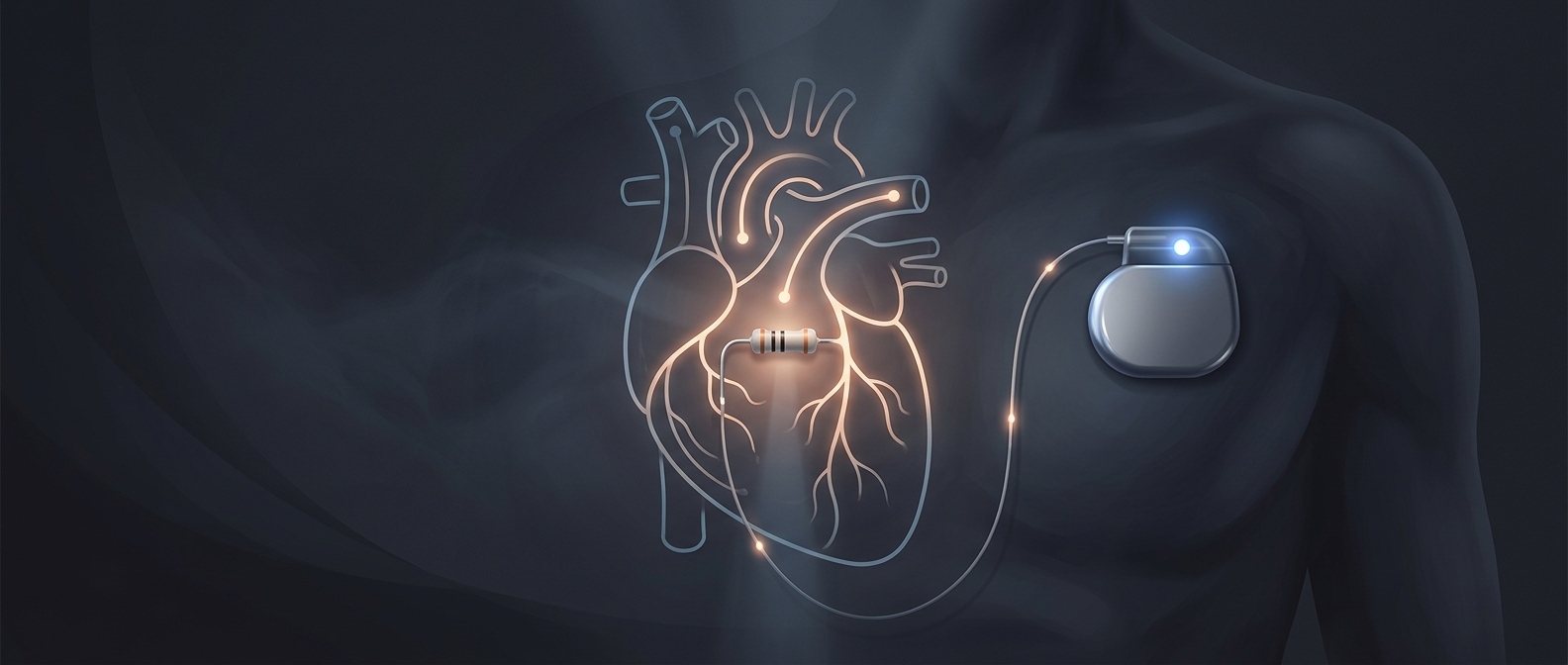
A pacemaker has to deliver tiny electrical pulses reliably, often for years inside a person’s body. That depends not only on its battery and circuitry, but also on components that control how electricity flows. A resistor does that by adding a known amount of electrical resistance, helping keep current within the range a circuit is designed to handle.
Otis Boykin developed a wire-wound resistor valued for being inexpensive and dependable across extreme temperatures. In a wire-wound resistor, a fine wire is wrapped around an insulating core; the wire’s material and length help set the resistance. Reliable components like this gave designers a practical way to build circuits that behaved predictably despite temperature changes.
Reliability made miniaturization practical
Pacemakers must fit inside a compact case, so their components need to be small as well as dependable. If a circuit element fails or its electrical behavior shifts, the device may not deliver pulses as intended. A stable, affordable resistor helped engineers build and reproduce smaller circuits without relying on bulky or costly parts.
The impact was part of a larger engineering chain: dependable components made it easier to shrink and manufacture electronic devices, which helped pacemakers become more accessible. Boykin’s resistor also had applications in guided missile systems, where electronics likewise needed to function under demanding conditions. In both settings, its significance lay in a modest part doing its job consistently—so the larger system could be trusted.