The Handle Gives the Hand a Firm Place to Pull
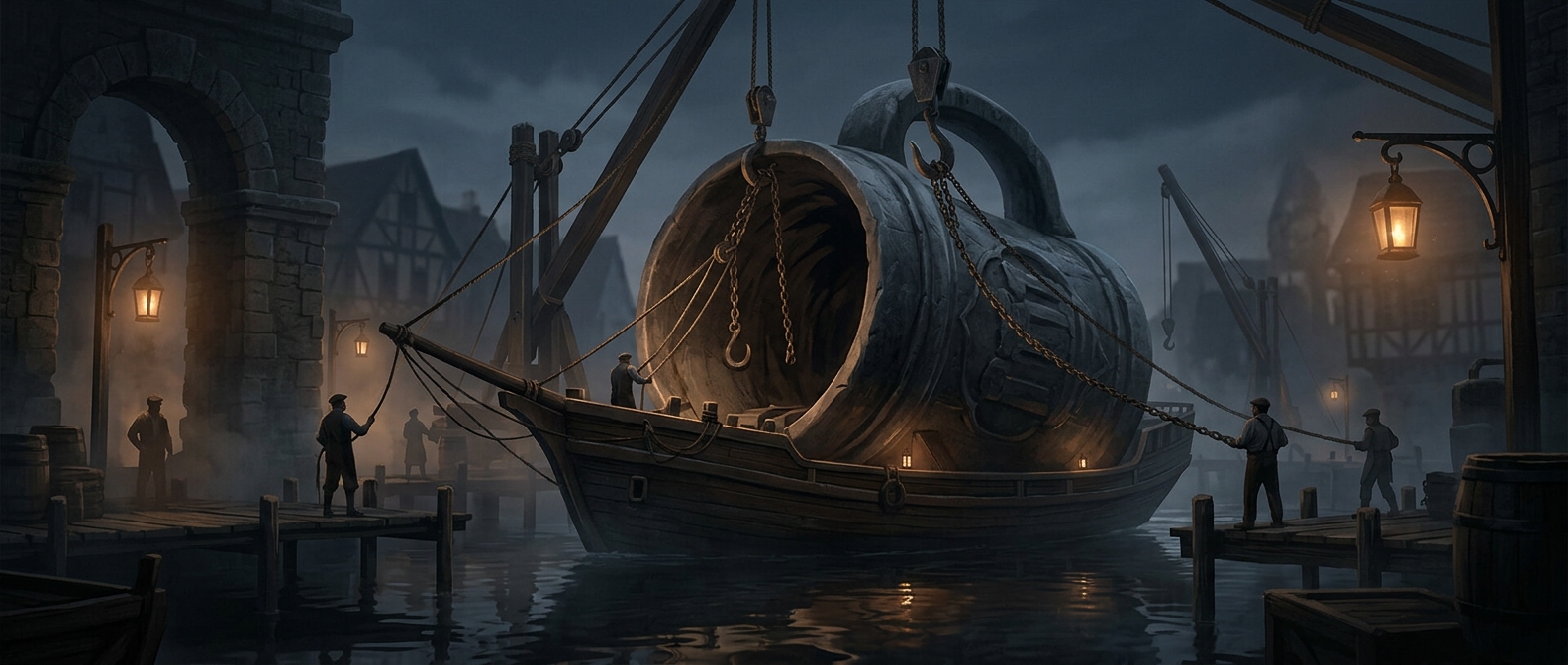
A full stein is heavy because the hand must support both the mug and its contents. The handle changes how that load is held: instead of squeezing a broad, cold bowl, the drinker hooks fingers through a loop and pulls upward. The handle transfers that force into the vessel through its attachments, giving the fingers a secure grip even when the bowl is wet.
That is useful leverage in the practical sense of control, not a way to make the beer weigh less. The wrist and arm still bear the stein’s weight, and holding it out from the body can make the arm work harder. The handle mainly makes it possible to lift and tilt the load without wrapping a hand around the bowl.
Why a Sloshing Drink Makes the Grip Matter
Beer does not stay still when a mug is raised or tilted. As the liquid surges toward one side, its weight shifts too, briefly tugging the stein off balance. A handle gives the drinker a defined point to resist that movement; a broad bowl held in the palm can be harder to control as the load shifts.
The tradeoff is that the handle itself has to carry the pull. A large stein therefore needs a handle sturdy enough to support a heavy, moving load, while leaving enough room for fingers to hold it securely. The result is a simple bit of load management: the handle does not lighten the stein; it gives the hand a better way to command it.