A smile built to conceal suffering
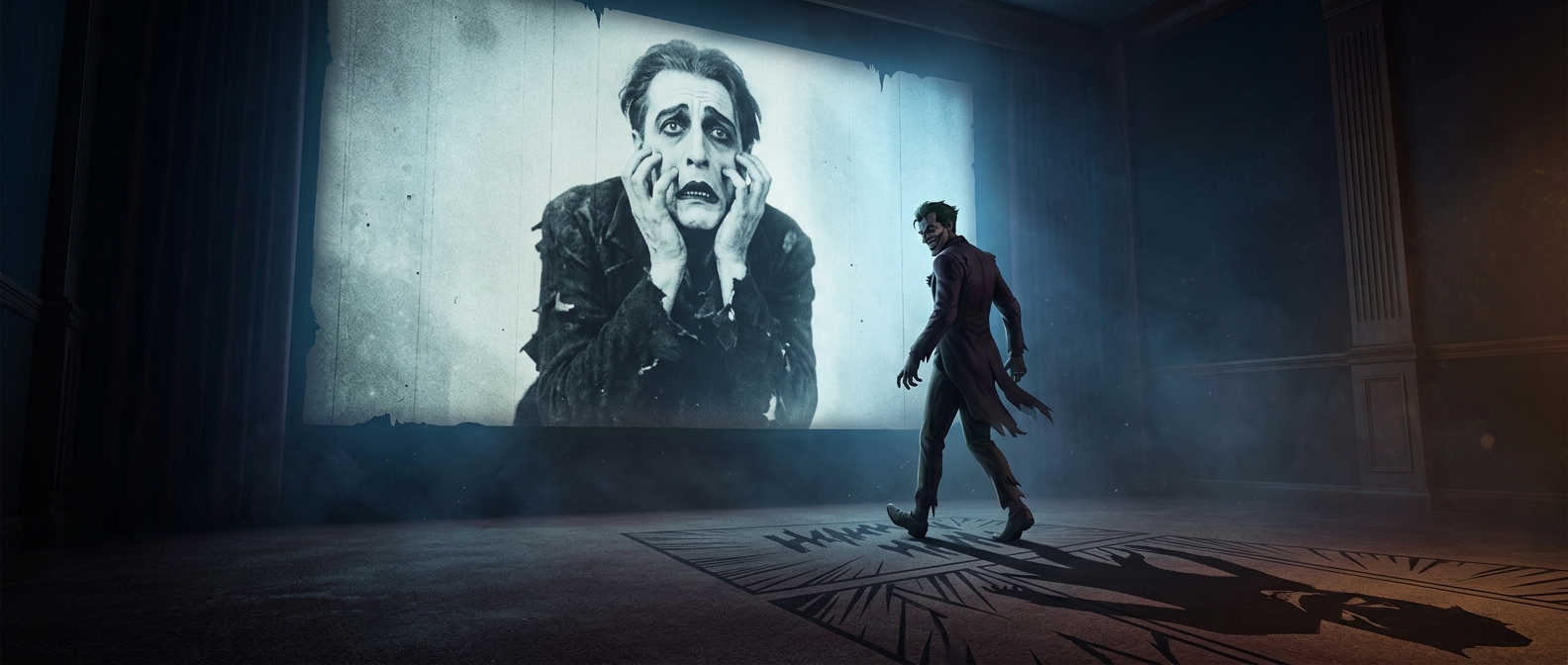
In the 1928 film The Man Who Laughs, Conrad Veidt plays Gwynplaine, a man whose face has been mutilated into a permanent grin. The story adapts Victor Hugo’s novel, but the film gave the character a stark visual form: a mouth stretched into a smile that he cannot control.
That expression carries two meanings at once. To onlookers, Gwynplaine appears to be grinning; the story makes clear that the smile is a mark of violence, not happiness. The mismatch turns a simple facial expression into something unsettling—and makes the character’s pain visible even when his face seems to deny it.
From tragic image to comic-book menace
The Joker’s creators could use that same contradiction for a very different effect. A fixed grin is instantly recognizable, even in a small black-and-white comic panel, and it makes the character seem cheerful and threatening at the same time. Unlike Gwynplaine’s imposed disfigurement, the Joker’s grin became part of a performance of danger and chaos.
The borrowing was therefore more than a shared mouth shape. The film supplied an image in which a smile could signal misery rather than joy, and comic-book artists redirected that tension into a villain’s unsettling theatricality. A face meant to make audiences pity its owner became a face that could make readers wary of what its owner might do next.