Why a long ride can leave ankles puffy
Blood returning from the feet has to travel upward against gravity. Veins help by using one-way valves: as leg muscles tighten, they squeeze nearby veins, and the valves keep blood from slipping back down when the muscles relax. This repeated action is often called the calf-muscle pump.
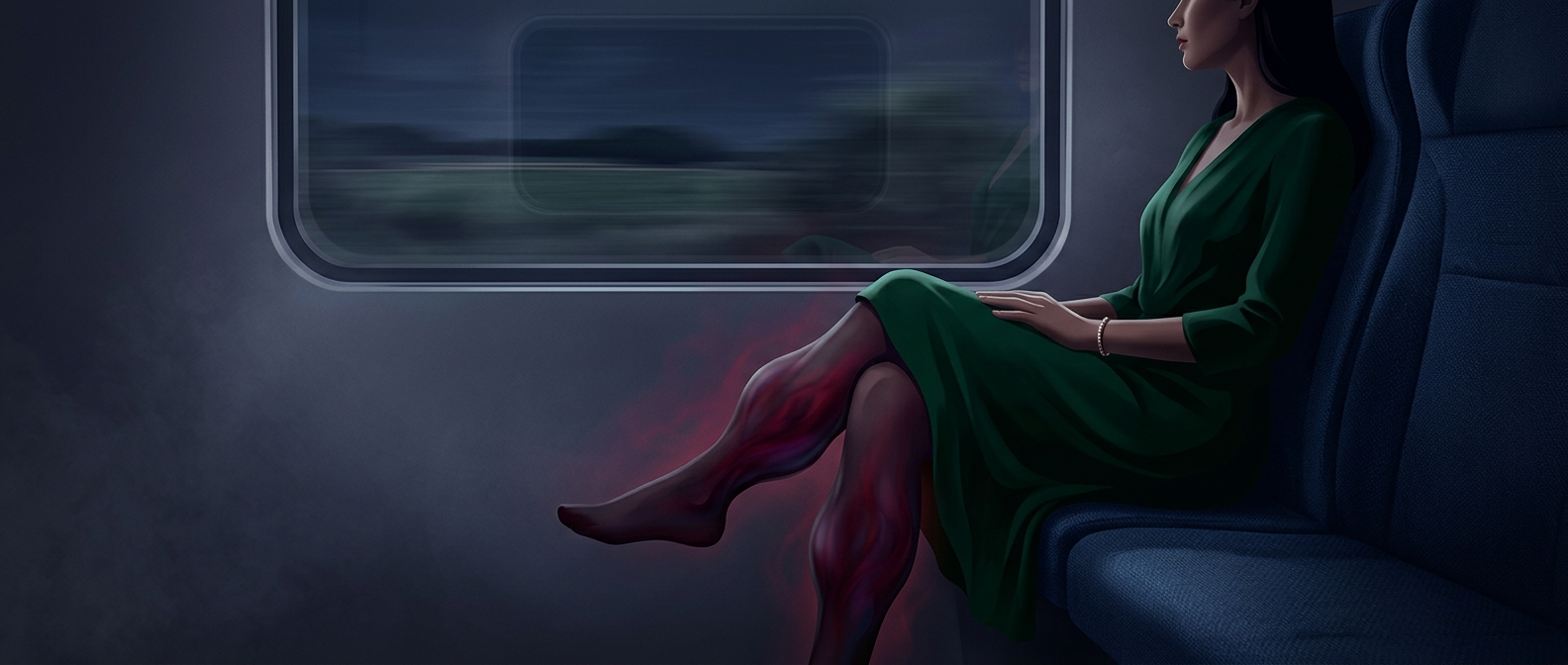
During hours of sitting, the calf muscles barely contract. Pressure therefore builds in the veins of the lower legs. Some fluid moves out of tiny blood vessels into the surrounding tissue, where it can collect around the ankles and feet. The result is swelling that may be more noticeable after a long flight, car ride, or bus trip.
Why movement changes the picture
Standing up and walking make the calf pump work again. Even while seated, flexing the ankles or lifting the heels and toes contracts the lower-leg muscles and helps move blood upward. These small movements cannot erase every effect of a long trip, but they interrupt the stillness that lets fluid accumulate.
The tradeoff is built into travel: a seat makes it possible to cover distance while resting, but keeping the legs in one position removes much of their normal pumping action. A few steps in an aisle or a brief stop on a road trip are not just a comfort break—they give the legs a chance to resume the job that sitting has paused.